
Review · DOI INTHANON NATIONAL PARK
Doi Inthanon Waterfall and Royal Project Chiang Mai
Doi Inthanon gives you Chiang Mai’s biggest nature day in one package: a thunderous waterfall, cool high-elevation forest, hill villages, royal gardens, and the highest point in Thailand. I especially like the small group of up to nine and the included Thai lunch, because both make a long day easier and more personal.
I also like the practical setup: hotel pickup, an air-conditioned van, bottled water, and an English-speaking guide. Guides such as Ice, Mumu, Sherri, and Puoy have made the day informative and warm. The main caution is the drive, roughly two hours each way, and guide quality can vary. Some people receive excellent explanations, while others get little more than directions.
Key points to know before booking
- Wachirathan Falls brings the drama early: Expect spray, noise, and a strong first look at Doi Inthanon’s wet mountain forests.
- The Ang Ka Nature Trail is short but special: Its mossy trees and wooden boardwalk feel very different from the rest of Chiang Mai.
- The Karen village adds human context: You can learn about local culture and see village-made goods, teas, coffee, and handicrafts.
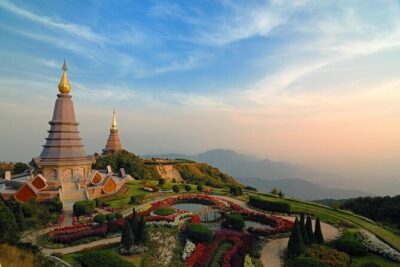
- The Twin Royal Stupas offer the best views: Their gardens and mountain setting are often the visual high point of the day.
- The price is not fully all-inclusive: Add THB 300 for Doi Inthanon National Park and THB 100 for the Twin Royal Stupas.
- The day depends heavily on your guide: Strong guides explain Lanna and Karen culture; weaker ones may simply point you toward each stop.
What this Doi Inthanon day is really like
The trip costs $50.10 per person and lasts about eight to nine hours. That sounds generous, but Doi Inthanon is far enough from Chiang Mai that a large share of the day goes to driving. I see that as a fair trade if you want to cover several major sights without arranging a car, navigating mountain roads, or sorting out entrance tickets on your own.
Pickup is offered from hotels within roughly two kilometers of Chiang Mai’s Old City, usually between 8:00 and 8:45 a.m. You then head south in an air-conditioned vehicle. The group size is capped at nine, which matters on a day with many stops. A small van can leave faster than a large coach, and it gives you a better chance to speak with your guide.
The vehicle is usually described as comfortable, though not every van is equally smooth. If you sit at the back, mountain-road bumps may feel more noticeable. Bring water, but the tour also provides bottled water. Restroom stops are part of the day, although toilet paper is not guaranteed, so carrying tissues is sensible.
More Doi Inthanon National Park Tours in Chiang Mai:
- Chiang Mai: Doi Inthanon National Park Eco-Friendly Tour
★ 4.6 · 6,667 reviews - Chiang Mai: Doi Inthanon National Park and Pha Dok Siew Trek
★ 4.5 · 527 reviews - Doi Inthanon National Park, Waterfall & Royal Project Day Tour From Chiang Mai
★ 4.5 · 352 reviews
Wachirathan Falls: the most immediate wow moment
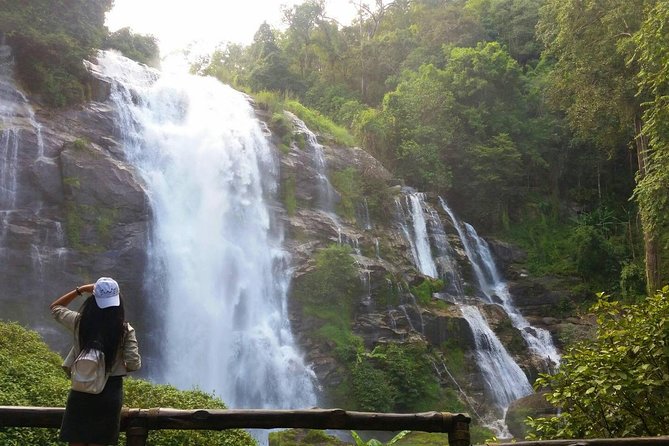
Wachirathan Falls, also called Diamond Waterfall, is one of the largest waterfalls in the Chiang Mai area. It is usually the first major stop after the long climb toward the park, and it gives you a strong reason to make the journey.
The waterfall is broad, loud, and often misty. You will have about 30 minutes here, enough for photographs and a close look, but not enough for a long walk around the area. Wear shoes with a good grip, since spray can make nearby surfaces slick.
This stop works well because it requires little effort for a big payoff. You do not need to be a serious hiker to enjoy it. At the same time, if you want a slow nature walk or time to sit beside the water, the schedule may feel tight.
The Karen village and the value of local context
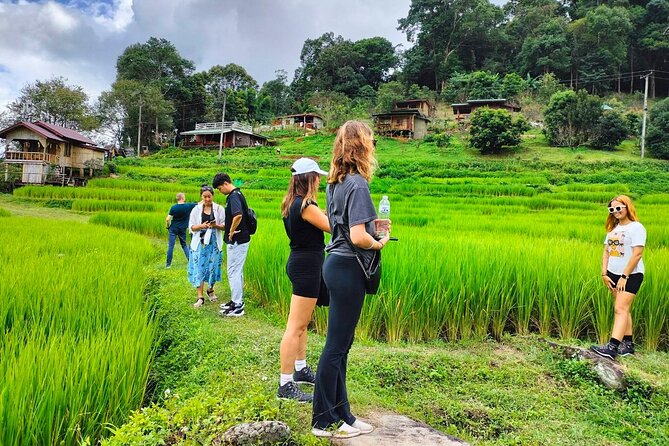
A visit to a Karen hill village gives the day more depth than a simple waterfall-and-viewpoint outing. The stop introduces you to local products and community life, with explanations about Karen culture and the area’s past.
Some guides are especially good here. Ice has been praised for explaining Lanna and Karen culture in a thoughtful way, while Sherri is known for years of local experience and a calm approach. When the guide walks with you and explains what you are seeing, this stop becomes much more than a shopping pause.
You may find teas, coffee, fruit, and handicrafts produced by local residents. Bring some cash if you like buying small handmade goods, since this is one of the more useful places to shop on the route. The key is to treat it as a cultural visit first and a retail stop second.
The experience is not perfectly consistent. Some guides give plenty of background, while others offer very little. If learning about village life is one of your main reasons for booking, pay close attention to the guide option and ask questions during the visit.
The Hmong market and Royal Project products
The Hmong market connects the mountain communities with products supported by Thailand’s Royal Projects. You may see produce and other goods associated with highland farming, along with local foods and small items for sale.
This stop can be interesting if you want to understand how agriculture and local income fit into the region. It also gives you a chance to buy fruit or snacks. Still, it is less scenic than the waterfall, forest, or pagodas, and some people find the stop repetitive if they have already visited the Karen village.
I would keep expectations modest here. It is not the highlight of the day, but it helps explain why the mountain communities matter to the area. If the schedule begins to slip, this is the stop I would want shortened rather than the Twin Royal Stupas or Ang Ka Trail.
More Waterfall and Lakes Park Tours in Chiang Mai:
- Chiang Mai: Doi Inthanon National Park, Waterfall & Lunch
★ 4.4 · 301 reviews - Chiang Mai: Doi Inthanon National Park & Waterfall Day Tour
★ 4.8 · 124 reviews - Private Sticky Waterfall & Floating Srilanna National Park
★ 5.0 · 9 reviews - From Split: Plitvice Lakes National Park Guided Tour
★ 5.0 · 3,002 reviews
Lunch in a mountain village
Thai lunch is included, with normal, vegetarian, or vegan options available. It is served at a local restaurant, with the exact menu likely depending on the day and group needs.
This is useful for two reasons. First, you do not need to spend time finding a restaurant in an unfamiliar area. Second, eating in a mountain community keeps the day tied to local life rather than making it feel like a string of viewpoints.
The food receives mixed reactions. Some people describe it as their best Thai meal of the trip, while others find it mild or adapted to international tastes. If you expect strong, fiery flavors, you may be underwhelmed. If you prefer a straightforward meal that keeps the group moving, it should do the job.
Tell the provider about dietary needs when booking, even though vegetarian and vegan meals are offered. Bottled water is provided, but you may want an extra snack for the long drive and mountain walking.
Ang Ka Nature Trail: short walk, cool forest
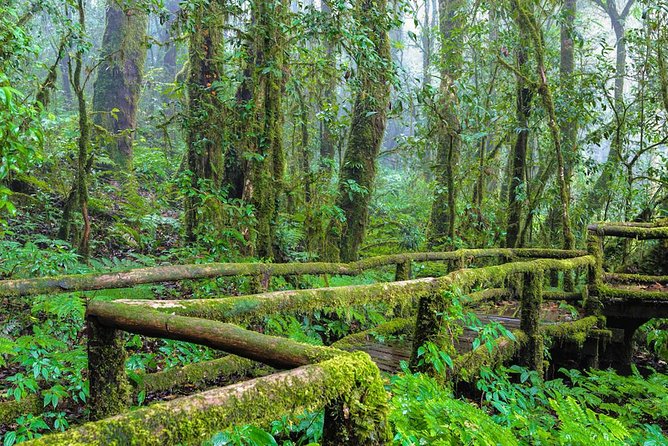
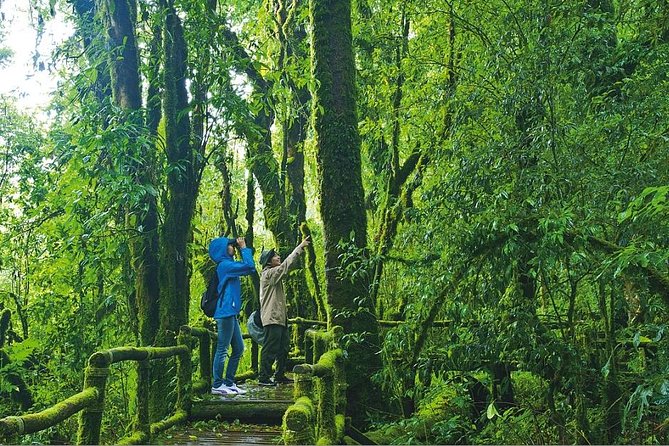
Near the summit, you visit Ang Ka Nature Trail, a short wooden boardwalk through dense rainforest. The trail winds among moss-covered trees and feels cool, damp, and quiet compared with the open areas lower on the mountain.
The standard stop lasts about 30 minutes. That is enough to enjoy the atmosphere and take photographs, but it is not a serious hike. Some departures shorten the stop, and several people feel the full half hour is already just enough. If the forest is your main interest, confirm how much time your group will have.
The optional longer-hike version changes the character of the day. Reports describe a hike of roughly two hours, sometimes including forest, waterfalls, rice fields, and a route toward the Karen village. It is not presented as highly technical, but parts may be slippery, and a downhill route can be hard on bad knees. Ask at booking if the longer hike is included in your exact package, since the standard schedule centers on the short Ang Ka walk.
Bamboo hiking sticks may be available on the longer trek. Wear sturdy shoes and avoid treating this as a sandals-only outing, especially during wet weather.
Thailand’s highest point, with realistic expectations
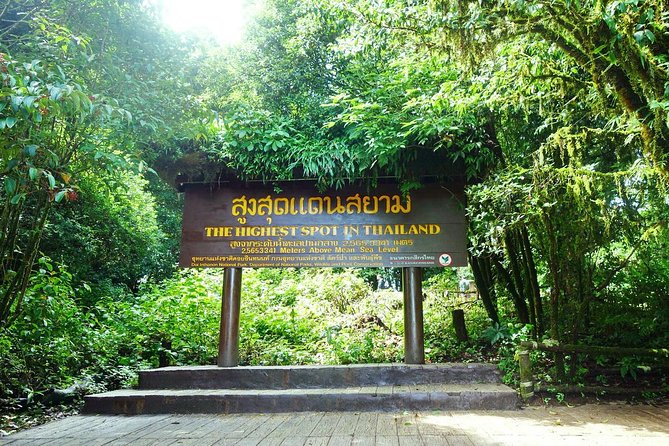
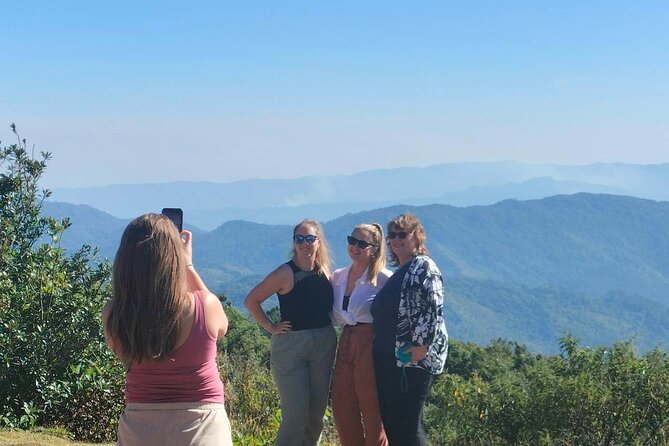
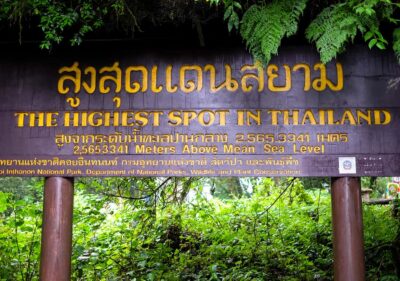
The summit area is a required stop for many first-time visitors to Doi Inthanon. Reaching Thailand’s highest point sounds like it should produce a huge panorama, but the actual summit is surrounded by tall forest. You get the satisfaction of being at the country’s highest elevation, along with a short walk in a cool mountain environment, not a sweeping viewpoint.
That distinction matters. If you want broad views, save your excitement for the Twin Royal Stupas. If you enjoy forest, fresh air, and the novelty of standing at the highest point in Thailand, the summit stop is worthwhile.
The mountain’s cooler conditions can also be a pleasant break from Chiang Mai’s heat. Bring a light layer if you are sensitive to cooler air, though the provided information does not promise a specific temperature.
Twin Royal Stupas and the finest views of the day
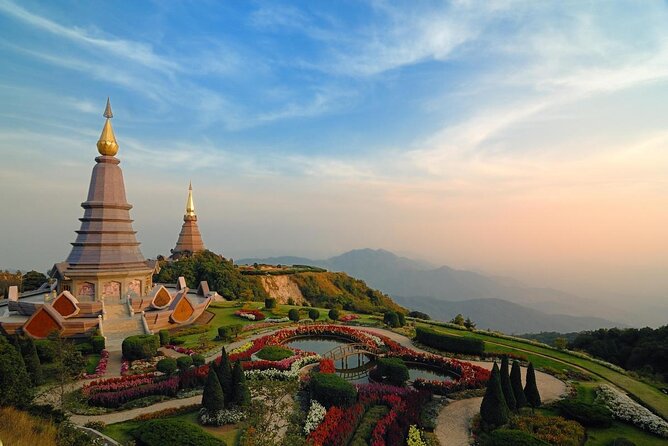
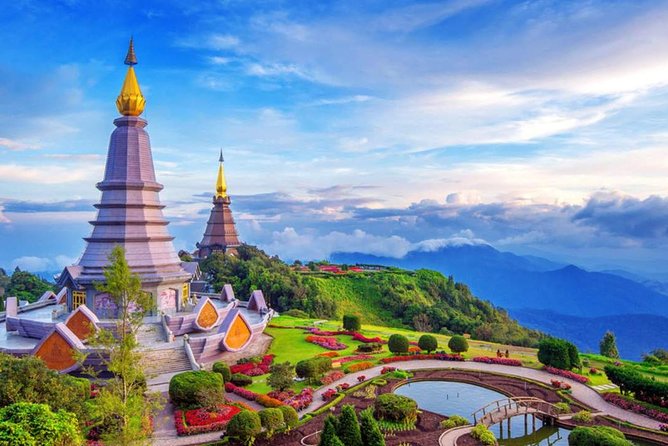
The Twin Royal Stupas, also called the Phra Maha Dhatu Nabha Metaneedol and Nabhapol Bhumisiri, are two adjacent chedis built on the main road near the summit. Their gardens, high position, and formal design make them one of Doi Inthanon’s most memorable stops.
This is where time matters most. Some groups receive close to an hour, while others get only about 20 minutes. Twenty minutes is enough to take photographs, but not enough to properly explore the grounds, gardens, and viewpoints. The schedule can also change if a royal visit or official event closes the site.
Admission to the Twin Royal Stupas costs THB 100 per person. That fee is separate from the THB 300 Doi Inthanon National Park entrance fee. Together, the extra charges total THB 400 per person, so include them when comparing the $50.10 tour price with cheaper alternatives.
For many people, this is the most beautiful stop of the day. The gardens are carefully maintained, and the elevated views can reach across the surrounding mountains when conditions are clear. If the pagodas are important to you, ask your guide early about the planned time there and stay aware of the meeting point.
Guide quality can make or break the day
This experience is sold as a guided small-group outing, but the human side is not identical every day. Guides including Mumu, Ice, Sherri, Puoy, and Ize have been praised for energy, humor, clear explanations, and careful attention to the group. Good guides explain the Lanna region, Karen culture, Royal Projects, and the meaning of the pagodas instead of simply pointing out the next stop.
Other departures have been less satisfying. English ability can be limited, and some guides provide only basic instructions. A few people have felt left on their own at the sights, with little explanation or unclear meeting details.
That is the tour’s biggest weakness. The waterfall, forest, and pagodas remain worth seeing, but you are paying partly for interpretation. If your guide is quiet, the outing can feel like transportation between attractions rather than a cultural day.
You can improve your chances by asking questions directly and confirming how long you have at each stop. A guide who responds well may turn a simple transfer into a useful conversation. If you need detailed history at every site, a private tour may offer better control.
Is $50.10 good value?
For a full day from Chiang Mai, the price is reasonable if you value convenience. You receive hotel pickup in the Old City area, round-trip transport, an English-speaking guide, bottled water, lunch, and travel accident insurance. You also avoid arranging a car for curving mountain roads and coordinating several distant stops.
The price becomes less attractive when you add the THB 400 in entrance fees. It also feels less worthwhile if the guide gives little information or if the schedule cuts the pagoda visit short. The tour’s strongest value comes from combining many sights in one day, not from giving you long, unhurried time at each one.
A private option is available if you want more control. A longer-hike option is also available, though you should confirm exactly what is included before booking. Group discounts may reduce the per-person cost for larger parties.
Who should book this experience?
I would choose this tour if you have limited time in Chiang Mai and want waterfalls, mountain forest, villages, food, and pagodas in one organized day. It suits people who prefer not to drive and families who want a manageable sightseeing plan, especially since children as young as seven have enjoyed the day.
It also works well for mixed groups. The standard route does not require a long hike, while the optional trek gives stronger walkers a more active version. Ask about the hike before departure so nobody assumes the standard trip includes a two-hour walk.
I would hesitate if you dislike long van rides, crowded viewpoints, or fixed schedules. You should also consider a private trip if you want to linger at the pagodas, skip the market, or spend more time on the trail.
Should you book it?
Yes, if Doi Inthanon is high on your Chiang Mai list and you want an efficient first visit. The waterfall, Karen village, Ang Ka forest, summit, and Twin Royal Stupas create a varied day, and the included lunch and transport remove much of the planning work.
Book with realistic expectations: this is a long mountain outing, not a slow retreat. Bring cash for entrance fees and village goods, wear shoes suited to damp paths, carry tissues, and confirm the longer-hike option if that is important to you. Most of all, understand that your guide will shape the experience. A strong guide such as Mumu, Ice, Sherri, or Puoy can add welcome context; a weak one may leave you simply following the clock.
The tour allows free cancellation up to 24 hours before departure. Poor weather or an insufficient group may also lead to a different date or a full refund.
FAQ
How long does the Doi Inthanon tour take?
The experience lasts approximately eight to nine hours, including hotel pickup, the drive from Chiang Mai, visits to the park and nearby attractions, and the return to your hotel.
Where is hotel pickup available?
Pickup is offered from hotels no more than two kilometers from Chiang Mai’s Old City. Pickup generally takes place between 8:00 and 8:45 a.m.
Are the national park and pagoda entrance fees included?
No. Doi Inthanon National Park costs THB 300 per person, and the Twin Royal Stupas cost THB 100 per person. These fees are paid separately.
Is lunch included?
Yes. A normal Thai lunch is included, with vegetarian and vegan options available. Bottled water is also provided.
How many people are in the group?
The tour has a maximum of nine people. A private tour option is also available.
Is there a long hike?
The standard program includes the short Ang Ka Nature Trail. A longer hike option is available, but you should confirm the exact hike included with your booking. The longer route may be slippery or difficult for people with bad knees or limited mobility.
Just added for the parks around Chiang Mai
- Private Doi Inthanon National Park Sightseeing Day Tour★ 4.5 · 4 reviews
- Pa Pong Piang Rice Terraces & Doi Inthanon National Park★ 4.8 · 32 reviews
- Inthanon national park, Trekking and Sightseeing in one day.★ 5.0 · 5 reviews
- Chiang Mai: Suthep National Park Hiking & DH Mountain Biking★ 4.8 · 151 reviews
- From Chiang Mai: Doi Inthanon National Park Day Trip★ 5.0 · 7 reviews
- Chiang Mai:Doi Inthanon National Park & Hike at Kew Mae Pan★ 4.4 · 53 reviews
- Chiang Mai: Doi Inthanon National Park+Trek Pha Dok Siew★ 4.7 · 17 reviews
- Chiang Mai: Doi Inthanon National Park Sightseeing Tour★ 3.5 · 3 reviews
Doi Inthanon National Park Tours, compared.
Doi Inthanon National Park and Pha Dok Siew Trek
Read our review →
Doi Inthanon National Park, Waterfall & Royal Project Day Tour From Chiang Mai
Read our review →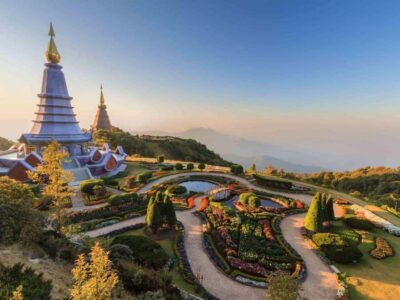
Doi inthanon National Park + 2Hour Fantastic Trekking with Lunch
Read our review →
Doi Inthanon National Park with Nature Trail Trekking 1-Day Tour
Read our review →
Browse the lists this tour appears in