Review · DARWIN
Darwin: Kakadu National Park & Wildlife Full Day Tour
Kakadu is too large for a quick look, but this 12-hour minibus tour gives you a strong first taste of its rock art, wetlands, wildlife, and immense open country. The best moment is usually Ubirr, where a guided walk leads you past ancient Aboriginal paintings and up toward broad views across the park.
I like the mix of cultural and natural sights, especially the chance to hear the stories behind the art instead of simply taking photographs. I also like the guides’ strong track record, with people such as Pascal, Leigh, Daryl, Becs, and Tom praised for clear explanations, humour, and careful driving. The trade-off is simple: you spend many hours on the road, and the minibus can feel tight for tall passengers.
Key points to know before booking
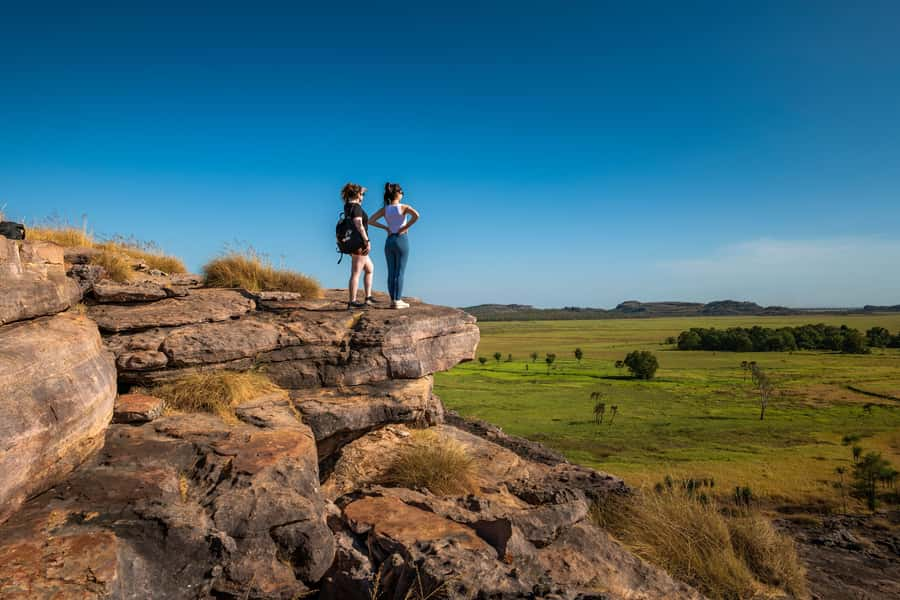
- Ubirr is the cultural centrepiece: Allow about two hours for rock art, a guided walk, and views from the escarpment.
- The day begins with wetlands and crocodiles: The Adelaide River cruise and Fogg Dam add wildlife before you reach Kakadu.
- The route changes with the seasons: Ubirr may be replaced by Nourlangie Rock, and Cahill Crossing may close after heavy rain.
- The guide makes a major difference: Expect commentary on Aboriginal culture, plants, animals, and the park’s ancient past throughout the day.
- This is a long-distance outing: The return journey to Darwin takes about three hours, so bring water, sun protection, and patience.
- Pack lightly: Large bags are not allowed, and storage is limited to one bag weighing about 5 to 7 kilograms per person.
Why this is a useful first day in Kakadu
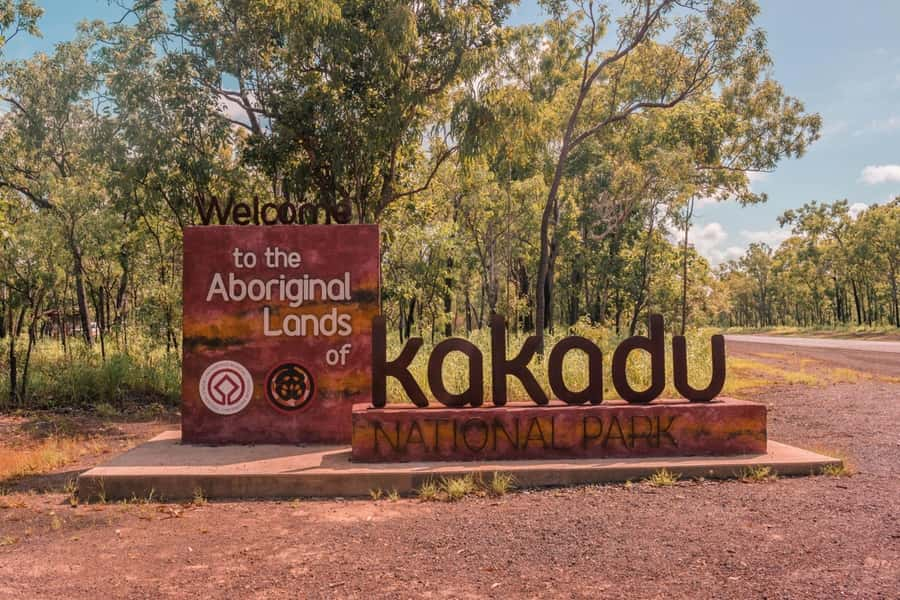
Kakadu National Park covers about 20,000 square kilometres, so a one-day visit can only show you a fraction of it. That is not a flaw in this tour. It simply means you should think of the day as a well-organised introduction, not a complete exploration of the park.
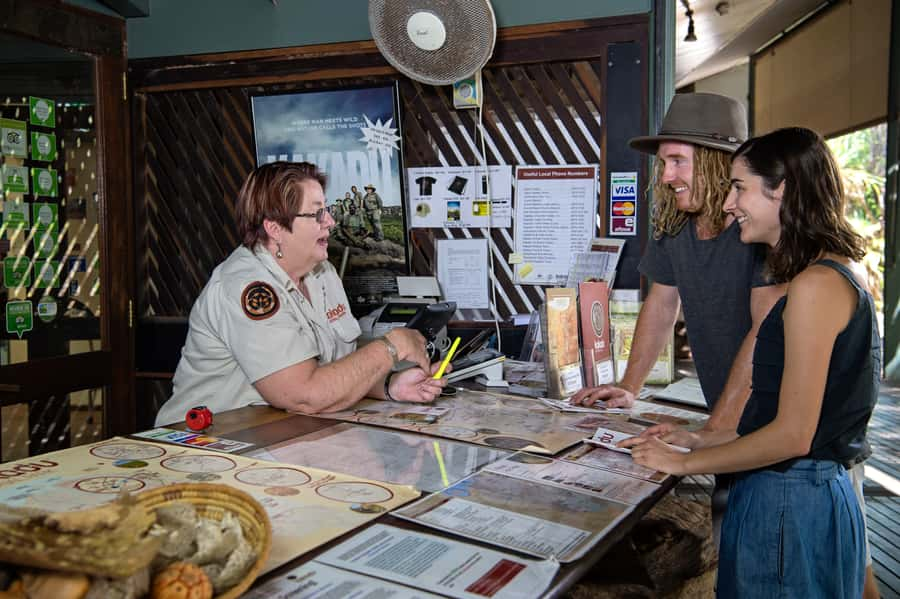
You leave Darwin from outside The Leea Darwin on Cavenagh Street. Hotel pickup is not included, so you need to reach the meeting point yourself and arrive 10 minutes before departure. From there, an air-conditioned minibus carries the group north and east toward the wetlands and Kakadu.
I like the fact that the guide begins the education before the first major stop. Past guides such as Leigh, Danni, Pascal, and Becs have been praised for explaining local wildlife, Aboriginal traditions, plant life, and the changing country along the road. That matters here because the distances are large. Commentary helps turn a long transfer into part of the experience.
The group format also keeps the day practical. A minibus can stop more easily than a large coach and usually means less time getting on and off. The drawback is limited legroom. One tall passenger who was 194 centimetres found the seats cramped, while another passenger found the seats and seatbelt too tight when the vehicle was full.
More National Park Day Trips in Australia
- Port Arthur Full-day Guided Tour with Harbour Cruise and Tasman National Park
★ 4.5 · 585 reviews - Wineglass Bay & Freycinet National Park Day Trip from Hobart
★ 4.7 · 249 reviews - Litchfield National Park: Full-Day & Lunch from Darwin
★ 4.6 · 205 reviews
Adelaide River: a close look at saltwater crocodiles
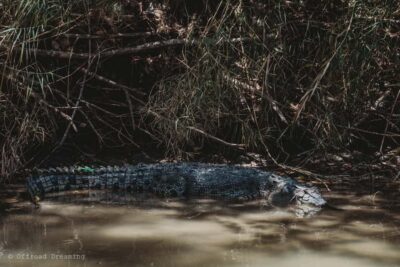
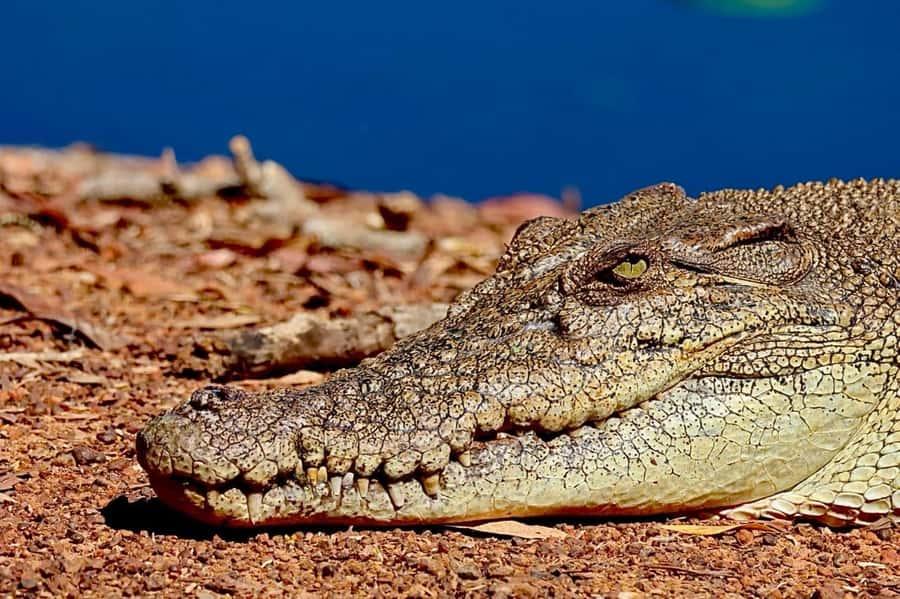
The first major stop is the Adelaide River, where the itinerary allows about an hour for a boat cruise. The river is known for large saltwater crocodiles, and the cruise gives you a safe way to see them at close range.
A jumping crocodile cruise may be offered as an optional add-on. It is an exciting choice if you want wildlife action and a closer look at these powerful animals. It can also make the day feel crowded, since you still have Fogg Dam, Kakadu, Cahill Crossing, Ubirr, and the long return drive ahead.
This is one point I would check carefully when booking. The itinerary includes a boat cruise, but the activity information also describes the jumping crocodile cruise as optional, and food and drinks are not included. Confirm the exact inclusion and extra cost for your departure.
The crocodile stop is thrilling, but it can take time away from Kakadu itself. One practical criticism of this sort of schedule is that some people would prefer to skip the cruise and spend longer at Ubirr or elsewhere in the park. If Aboriginal art and cultural sites are your priority, ask how much time the chosen departure normally gives to the cruise and the Kakadu stops.
Fogg Dam and the Top End wetlands
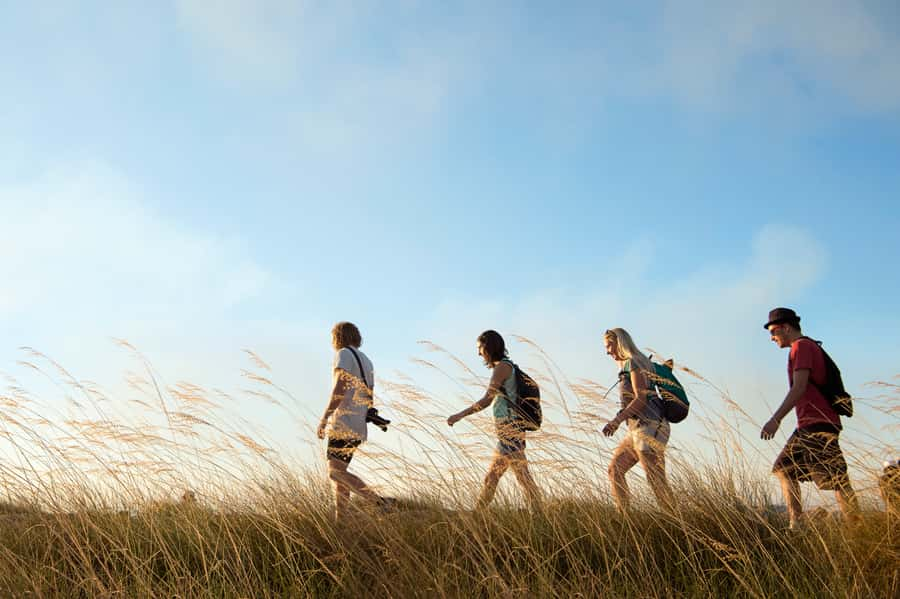
After the Adelaide River, you visit Fogg Dam Conservation Reserve for about 45 minutes. These wetlands are traditional lands of the Limilngan-Wulna people, who take part in managing the reserve.
Fogg Dam gives you a different view of the Top End from Kakadu’s escarpments. Keep watch for birds, turtles, water pythons, and saltwater crocodiles. Wildlife sightings are never guaranteed, but this is a strong place to begin looking closely at the connection between water, animals, and seasonal change.
You may also spot a crocodile sunning itself near the road. That possibility is part of the appeal, but you should stay with the guide and follow all safety directions. This is not a place for wandering close to the water.
The wetland stop also explains why the season matters so much. During the wet season, heavy rain can flood roads and alter access. During the dry months, water levels and wildlife activity can differ. The route may be adjusted to suit conditions, and the operator chooses the safest available plan.
A park pass may be required for Fogg Dam under the relevant NT Park pass fare type. The main Kakadu park entry fee is included, but you should check the current pass requirement when booking.
Marrakai: a useful break on a long road
The itinerary allows roughly 20 minutes at Marrakai for a break. This is not a major sightseeing stop, but it is welcome. The day involves long stretches in the minibus, and a short chance to stretch, use facilities, or buy something can make the later Kakadu section easier.
Food and drinks are not included, so bring your own water and snacks. Some departures have stopped for coffee or snacks along the way, but you should not depend on that. A reusable water bottle is listed among the recommended items, and in the Top End heat, it is essential rather than optional.
The schedule includes several breaks, though one passenger felt the morning stops delayed arrival at Kakadu. That is the basic balance of this tour: regular comfort stops help you manage the day, but every stop reduces time at the major sites.
More Wildlife and Elephant Encounters in Australia
- Kakadu Wildlife Escape Fogg Dam or Crocodile Cruise from Darwin
★ 4.5 · 295 reviews - Kakadu National Park Wildlife & Ubirr Rock Art Tour from Darwin
★ 4.5 · 101 reviews - Tasmania: Wilderness and Wildlife Guided 6-Day Tour
★ 4.6 · 60 reviews - Darwin: Litchfield National Park Waterfalls & Wildlife Tour
★ 4.6 · 43 reviews
Into Kakadu: scenery, stories, and changing conditions
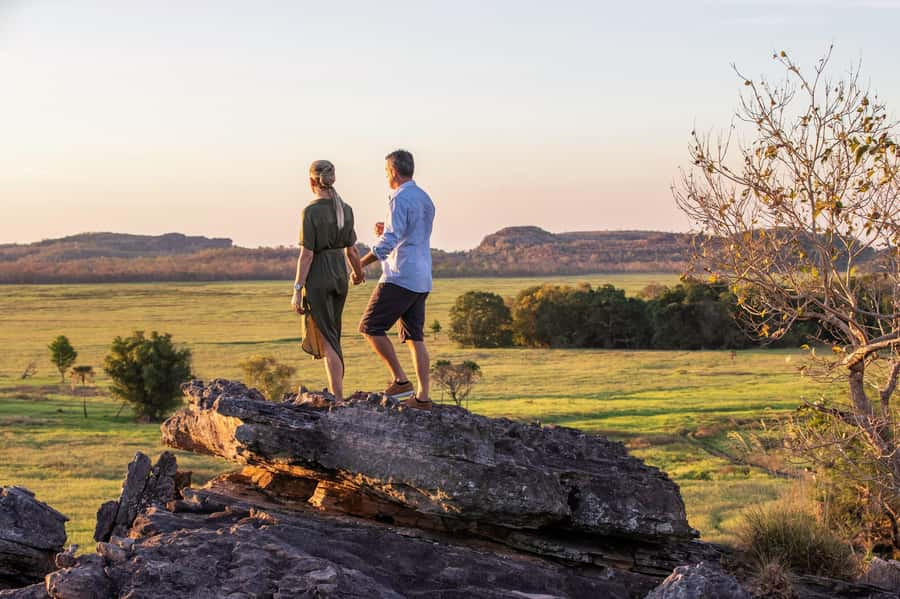
After Marrakai, the minibus continues toward Kakadu, with about 80 minutes of driving before a photo and sightseeing stop. The exact viewpoint can vary. Your guide may use the stop to point out the escarpments, open country, vegetation, or wildlife.
Kakadu is not only a park with attractive views. It is also a living cultural place with deep meaning for Traditional Owners. The guide’s role is important here. The strongest guides explain the paintings, animals, ceremonies, land management, and difficult parts of Aboriginal and colonial history without reducing the park to a collection of photo stops.
This is where guides such as Danni, who has local connections to Kakadu, and others praised for their respect toward Indigenous culture can add real value. You are not simply being driven from one attraction to the next. You are given a framework for understanding why the places matter.
The route can change for cultural reasons as well as weather. Ubirr and Nourlangie Rock, also called Burrungkuy, are active ceremonial sites. Traditional Owners may close them for ceremonies, sometimes at short notice. If that happens, the guide may use the other site or another suitable stop.
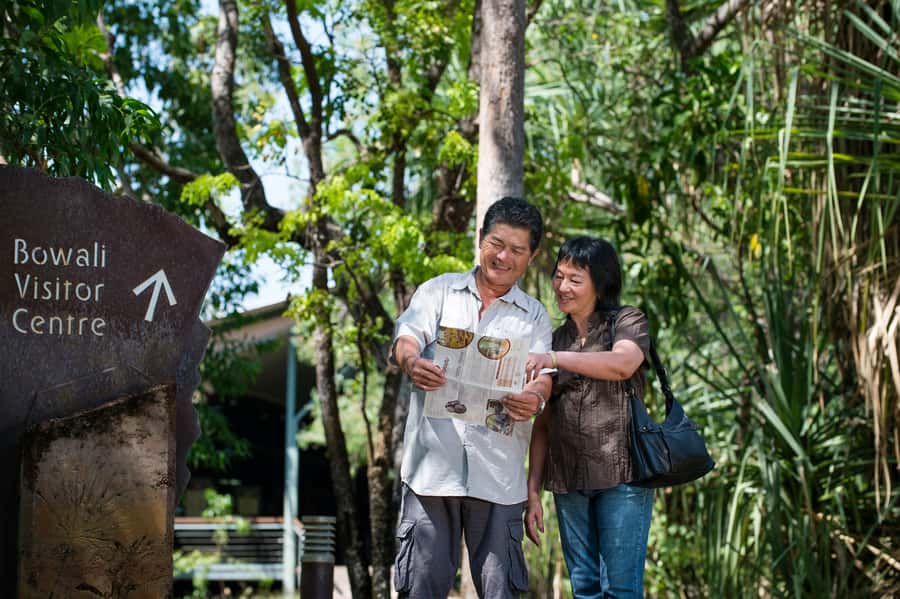
Bowali Visitor Centre: a short orientation stop
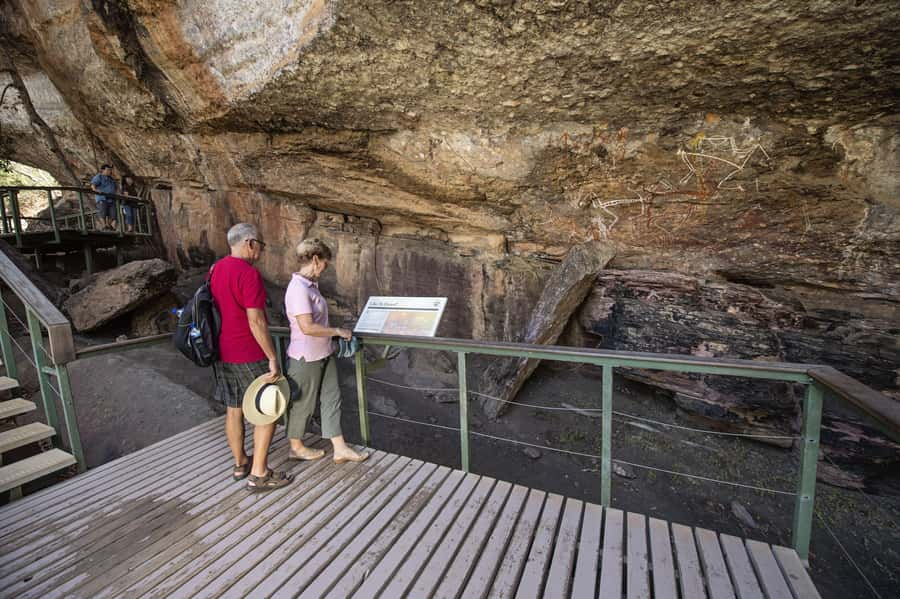
The schedule allows about 20 minutes at the Bowali Visitor Centre. That is a short visit, but it can help you make sense of Kakadu before the main rock art walk.
Do not expect a long museum visit within this timetable. The stop is best treated as an orientation and comfort break. If you enjoy displays and want more time with them, a private or longer Kakadu visit would suit you better.
Still, the centre adds context to what comes next. The park’s art, wildlife, rivers, and escarpments make more sense when you understand that this is Aboriginal country managed through continuing cultural knowledge, not an empty wilderness created only for sightseeing.
Cahill Crossing and the search for crocodiles
Cahill Crossing is scheduled for about 30 minutes, including a guided visit and photo stop. It is a well-known place to look for saltwater crocodiles from a safe position.
The emphasis here is on looking, not approaching. Your guide decides where the group can stand and how long it is safe to remain. Crocodiles may be visible, but sightings depend on water levels, weather, and animal behaviour.
Cahill Crossing is seasonal. After heavy rainfall or large wet season flows, it may be inaccessible. In that case, the guide may substitute another wildlife or scenic stop. One useful point to remember is that access does not guarantee a long viewing period. The timetable may allow only a brief stop, especially if the group is running late.
If Cahill Crossing is your main reason for booking, ask about the expected conditions for your travel month. The tour can still be worthwhile without it, but you should not treat this stop as guaranteed.
Ubirr: the main reason to choose this tour
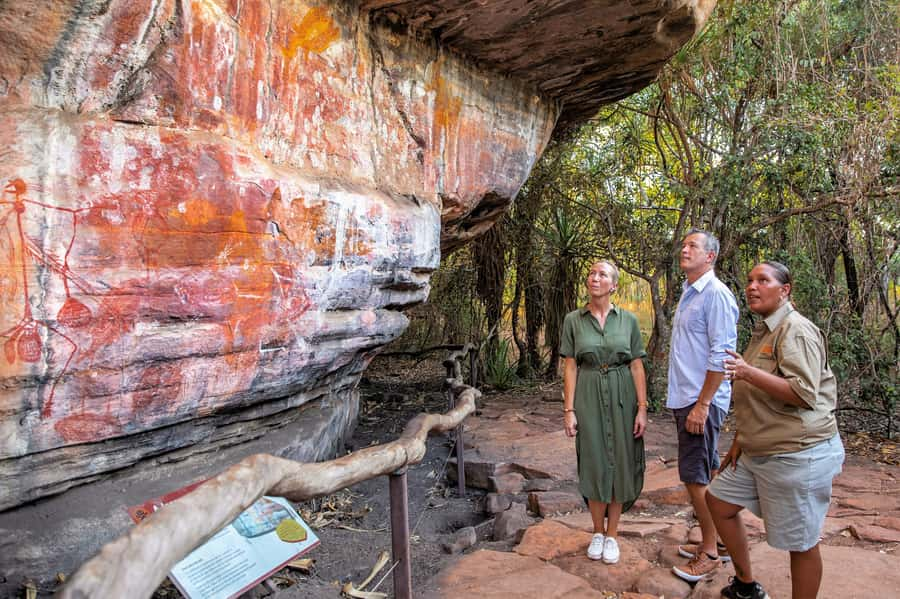
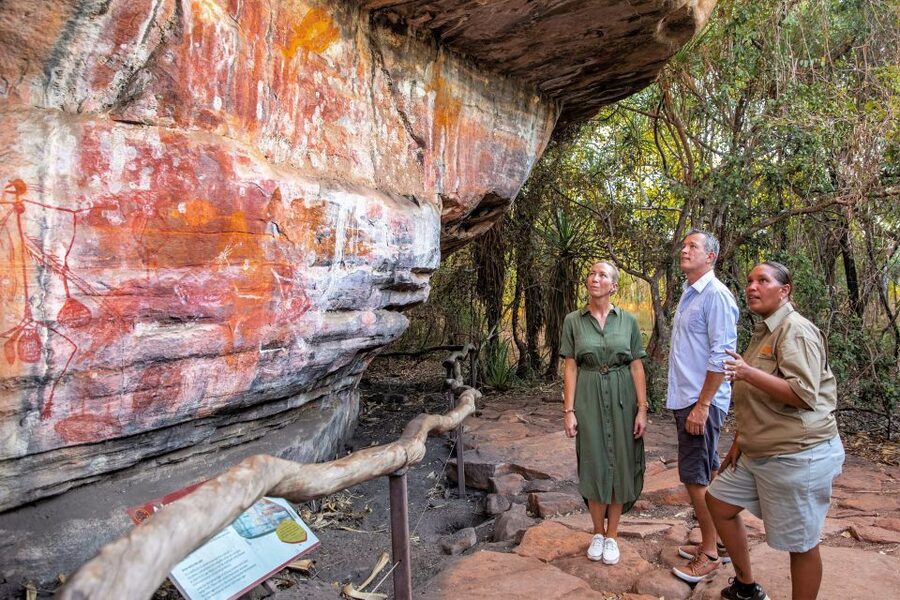
Ubirr receives about two hours, making it the most substantial stop of the day. Here, a guide leads you along paths past Aboriginal rock art and explains the animals, people, beliefs, and events shown in the paintings.
The art is not decoration added to a scenic walk. It records an ancient relationship between people, animals, water, and country. A good explanation changes the way you look at each image. Instead of rushing past a painted figure, you begin to ask what it tells you about daily life, teaching, ceremony, and survival.
The walk also includes a climb through the rocky escarpment area. The effort is manageable for many active visitors, but this is not a suitable outing for someone with a low level of fitness. The heat can make the walk much harder, especially in the warmer months. Wear closed-toe hiking shoes, breathable clothes, a hat, sunscreen, and insect repellent.
The views from Ubirr are a major reward. From higher ground, you can see across the broad floodplain and distant country. The sight is impressive because of its scale and quiet openness, but the cultural meaning of the site is the more important part of the visit.
Some people may stop before reaching every section of the walk because of the heat. You can still see beautiful scenery from lower points, but if Ubirr is your priority, pace yourself, carry water, and listen to the guide’s instructions.
The long return to Darwin
After Ubirr, the drive back to Darwin takes about three hours. This is the part of the day that tests your stamina. You may be tired, hot, and full of information, and the minibus is still your only way home.
The upside is that the guide often continues the commentary, answers questions, and points out details along the route. Guides praised for humour and storytelling can make the return easier, but no commentary can remove the distance. If you dislike long road journeys, this tour may feel too compressed.
The air conditioning is important, and the smaller vehicle offers a more personal setting than a large coach. Still, space depends on group size. A full minibus may feel snug, especially for tall people or anyone carrying more than a small personal bag.
Is $166 good value?
At $166 per person, the tour offers a practical way to reach several remote places without hiring a car or planning your own route. The price includes Kakadu park entry, transport from Darwin City to the meeting point area, the driver-guide, and commentary.
That is fair value if you want a single introduction to Kakadu and do not have time to stay overnight. A self-drive visit would require a vehicle, fuel, route planning, park information, and careful attention to seasonal road access. This tour also gives you a guide who can explain the art and help keep the group safe around crocodile country.
The value is weaker if you want long, unhurried time at each site. You cover a large area in one day, and the crocodile cruise may cost extra. Food, drinks, travel insurance, and pickup from your hotel are also outside the price.
I would compare the cost with your priorities. For a first look at Kakadu, the mix is strong. For serious photography, extended walks, or a slow study of Aboriginal art, spend more than one day in the park.
What to bring and who should book
Bring sunglasses, a sun hat, sunscreen, insect repellent, breathable clothing, closed-toe shoes, hiking shoes, a reusable water bottle, and a small day bag. Large luggage is not allowed, and storage is limited to one bag weighing about 5 to 7 kilograms per person. The instructions also advise against backpacks, so pack as lightly as possible and check the operator’s current bag rules before departure.
This tour suits families with children aged six and over, couples, solo visitors, and groups who want an organised day. Solo visitors can benefit from the guide’s attention and the easy social setting of a small group.
It is not suitable for children under six, wheelchair users, people with mobility impairments, or anyone with a low level of fitness. You need to manage a rocky walk, heat, repeated vehicle stops, and a very long day.
Free cancellation is available up to 24 hours before departure, and you can reserve now and pay later. Those policies help if your Top End schedule is still changing, but they do not change the physical demands of the day.
Should you book the Kakadu day tour?
Book it if you want to see Ubirr, learn about Aboriginal rock art, look for crocodiles, and cover a wide area without driving yourself. The strongest part is the guide-led interpretation, especially when you get someone like Leigh, Danni, Pascal, Becs, Daryl, or Tom, who can turn the long road sections into useful context.
Skip it if you want a relaxed pace, extended hikes, guaranteed access to Cahill Crossing, or a full day devoted only to Kakadu. The schedule is ambitious, the minibus may be tight, and wet season conditions can change the route.
For most first-time visitors with one free day from Darwin, I would choose it with realistic expectations. You will not see all of Kakadu, but you can come away with the essential first impressions: ancient art, wetland wildlife, crocodile country, dramatic escarpments, and a better understanding of the living Aboriginal culture that gives the park its meaning.
FAQ
Where does the tour start?
The meeting point is outside The Leea Darwin at 64 Cavenagh Street, Darwin City, Northern Territory. You should arrive 10 minutes before departure.
How long does the tour last?
The tour lasts about 12 hours, including the drive between Darwin and Kakadu and the return journey.
Is hotel pickup included?
No. Hotel pickup and drop-off are not included. You need to make your own way to the meeting point.
Is the jumping crocodile cruise included?
The Adelaide River boat cruise appears in the itinerary, while the jumping crocodile cruise is described as an optional add-on. Check the exact inclusion and extra cost for your departure.
Will the tour always visit Ubirr and Cahill Crossing?
No. Seasonal weather, flooding, park closures, and Traditional Owner ceremonies can change the route. Ubirr may be replaced by Nourlangie Rock, and Cahill Crossing may be inaccessible after heavy rain or high wet season flows.
What should I bring?
Bring sunglasses, a sun hat, sunscreen, insect repellent, breathable clothing, hiking or closed-toe shoes, a daypack, and a reusable water bottle.
Is the tour suitable for children and people with mobility needs?
Children under six cannot join. The tour is not suitable for wheelchair users, people with mobility impairments, or people with a low level of fitness.
More Full-Day Trips in Australia
- Hobart: Maria Island National Park Active Full-Day Tour
★ 4.8 · 166 reviews - Tenerife: Teide National Park Full-Day Tour with Pickup
★ 4.5 · 1,613 reviews - Montenegro: Full-Day Tour to Lovcen National Park & More
★ 4.9 · 992 reviews - Yosemite National Park: Full Day Tour from San Francisco
★ 4.0 · 937 reviews
Just added for the parks around Australia
- Spring Brook National Park Driving Tour with an APP★ 4.4 · 2 reviews
- Port Douglas: Daintree National Park Tour, Cruise, & Zipline★ 4.9 · 31 reviews
- Port Stephens: Worimi National Park Sandboarding Adventure★ 4.8 · 18 reviews
- Port Lincoln: Lincoln National Park Sunset Sand Dunes Tour★ 4.9 · 17 reviews
- Port Arthur: Cape Raoul Wilderness Cruise★ 4.8 · 80 reviews
- Noosa: Epic Ocean Kayak with Dolphins & 4WD Beach Adventure★ 4.6 · 247 reviews
- Noosa: National Park and Dolphin Watching Safari★ 5.0 · 5 reviews
- Melbourne: Wilsons Promontory Morning Wilderness Cruise★ 5.0 · 71 reviews
Darwin National Park Tours, compared.
Litchfield National Park and Jumping Crocodile Cruise
Read our review →
Kakadu Wildlife Escape Fogg Dam or Crocodile Cruise from Darwin
Read our review →
Litchfield National Park: Full-Day & Lunch from Darwin
Read our review →