
Review · LIVINGSTONE
Half-Day Nature Walk in Mosi-oa-Tunya National Park from Livingstone
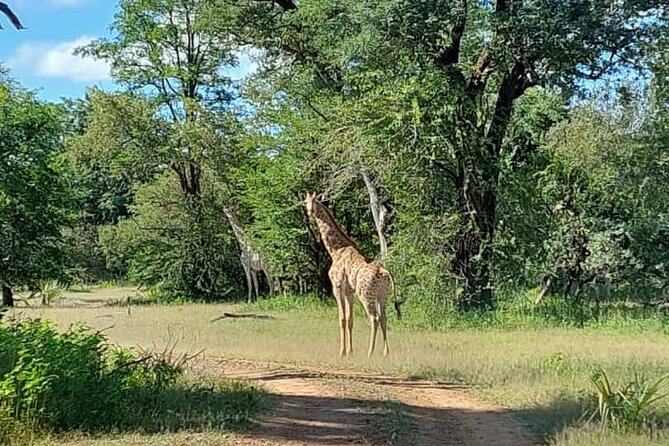
Mosi-oa-Tunya National Park is a rare place to see African wildlife on foot, with a guide helping you read tracks, notice animal behavior, and move safely through the bush. The walk focuses on the park’s white rhinos, but you may also see buffalo, giraffes, zebras, wildebeest, warthogs, antelopes, primates, and many birds.
I like the small maximum group of 15 and the chance to shape the walk around what interests you. I also like that the $90 price includes pickup, park fees, bottled water, snacks, and a guide or ranger. The main consideration is physical effort: you need moderate fitness, proper walking shoes, and patience because wildlife sightings cannot be promised.
Key points at a glance
- Walk beside white rhino habitat: Mosi-oa-Tunya contains a major share of Zambia’s white rhino population, making tracking one of the tour’s biggest draws.
- Learn to read the bush: Your guide can explain animal tracks, plants, and signs that are easy to miss from a safari vehicle.
- Expect about two hours on foot: The full outing lasts roughly three hours, including transport from Livingstone and the park visit.
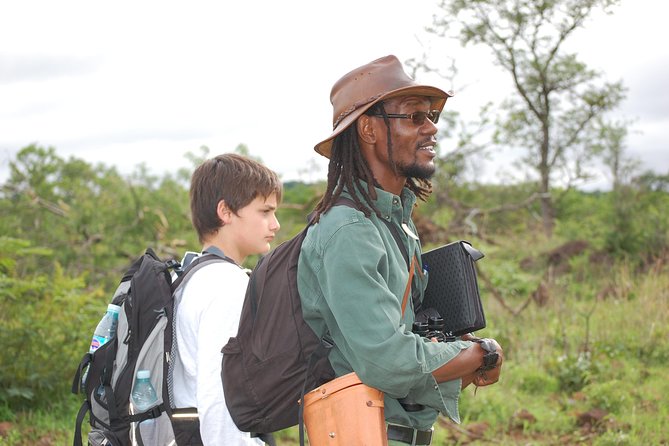
- Watch what you wear: One guide, Chinga, reportedly sent two people back to change bright orange shirts before departure. Neutral clothing is the sensible choice.
- See more than large animals: Teak, mahogany, mopane, and marula trees are part of the lesson, along with birds and smaller wildlife.
- Good value for an active morning: Park entry, refreshments, transport, and guiding are included in the $90 price.
Why this park works so well for a walking safari
Mosi-oa-Tunya National Park gives you a different view of African wildlife. From a vehicle, you scan the distance. On foot, you slow down and notice tracks, droppings, damaged leaves, tree shapes, and the sounds around you.
That change of pace is the real point of this outing. You are not simply being driven from one animal to the next. You are learning how the park works, with your guide choosing a route and explaining what you see along the way.
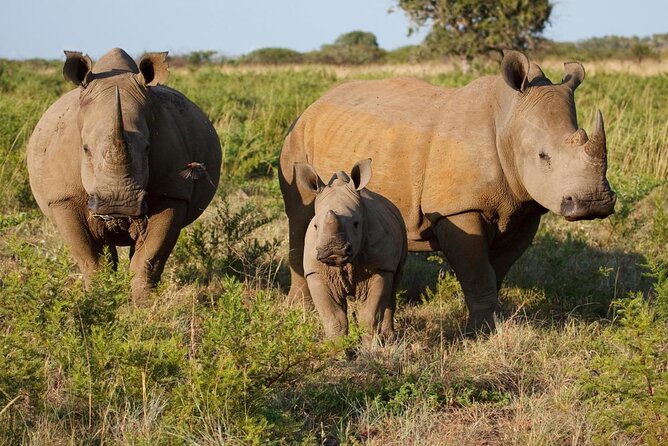
The park is UNESCO World Heritage-listed and contains three of Africa’s Big Five animals: elephant, buffalo, and rhino. The white rhino is the main prize on this walk, and the experience includes a chance to learn how guides track these endangered animals.
You should keep your expectations sensible. This is a wildlife walk, not a guaranteed animal parade. The supplied details mention rhinos, buffalo, giraffes, zebras, wildebeest, warthogs, primates, antelopes, and birds, but sightings depend on the day, the route, and the animals’ movements.
More Half-Day Trips in the world:
- East Coast National Park: Half-Day Caves Jeep Safari
★ 4.6 · 1,090 reviews - Canyonlands National Park Half-Day Tour from Moab
★ 5.0 · 1,074 reviews - Nairobi National Park Half-Day Tour; Free Wi-Fi connection
★ 5.0 · 878 reviews
Leaving Livingstone for Mosi-oa-Tunya
The tour begins with pickup at selected hotels and lodges in Livingstone. You then travel to the national park in an air-conditioned vehicle with your driver, guide, or ranger.
This transfer is useful for two reasons. First, you do not need to arrange your own transport to the park. Second, it keeps the outing simple if you are fitting it between other Livingstone plans. Two departure times are offered, so you have some choice in arranging your day.
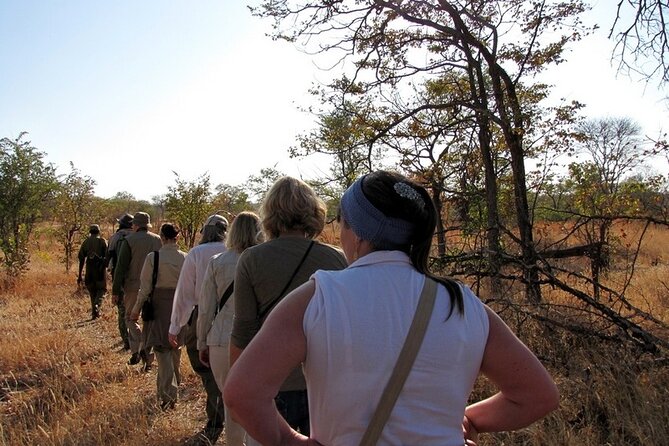
The full experience lasts about three hours, while the nature walk itself is listed at roughly two hours. That distinction matters. You will spend part of the time traveling, receiving instructions, and taking a break, not walking continuously for three hours.
Pickup is offered only at selected hotels and lodges, so check that point before booking. The experience requires at least two people, and confirmation is subject to availability. The maximum group size is 15, which is not a private walk but is still small enough for a guide to keep the group together and respond to questions.
The first lesson starts before the trail
A good walking safari begins with sensible clothing. One account of this experience describes guide Chinga stopping two people before departure because their orange shirts were too bright for the bush.
That is practical advice, not a fashion rule. Loud colors can be distracting in a wildlife setting, and neutral clothing is more suitable for a walk among animals. You should also wear comfortable walking shoes. The operator recommends them, and the moderate fitness requirement tells you this is more than a stroll from a parking area.
Your guide will set the pace and explain how to behave in the park. Since the activity takes place on foot, listen closely to instructions and stay with the group. The value of a trained guide is not only finding animals. It is knowing how to approach the bush with care and how to keep a safe distance.
Tracking rhinos on foot
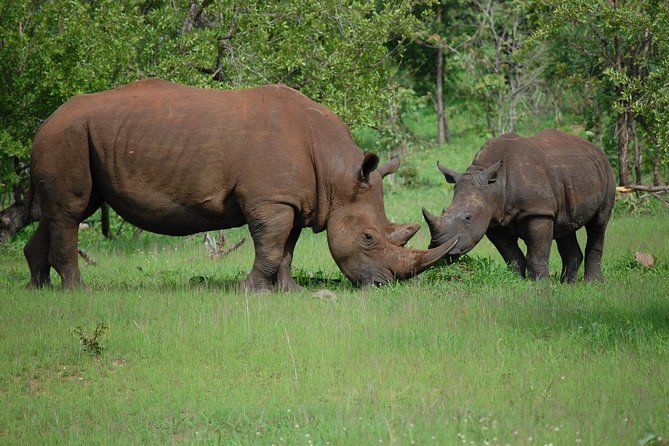
White rhino tracking is the strongest reason to choose this tour. Mosi-oa-Tunya contains a significant part of Zambia’s white rhino population, so the park offers a meaningful setting for learning about these animals and the work done to protect them.
The walk can show you how guides look for clues rather than simply scanning for a visible animal. One guide was praised for explaining tracking methods and then helping the group find rhinos. That is the kind of practical instruction that makes this experience worth choosing over a basic vehicle ride.
The same account describes a group seeing rhinos and wildebeest. Another praises an early morning walk in which the guide explained how to find rhino before the group located one. These details suggest that patience and close attention matter here.
You should not expect to walk right up to a rhino or receive a guaranteed sighting. The attraction is the process: reading signs, moving carefully, and seeing how rangers protect an endangered species. If rhinos are high on your wish list, ask about the current conditions and departure timing when you book, but understand that wildlife remains unpredictable.
More national park tours around the world:
- Miami: Everglades National Park Airboat Tour & Wildlife Show
★ 4.5 · 7,296 reviews - Chiang Mai: Doi Inthanon National Park Eco-Friendly Tour
★ 4.6 · 6,667 reviews - Clear Kayak Tour of Shell Key Preserve and Tampa Bay Area
★ 5.0 · 5,800 reviews - Tenerife: Teide National Park Sunset & Stargazing Tour
★ 4.2 · 3,812 reviews
More animals than the headline species
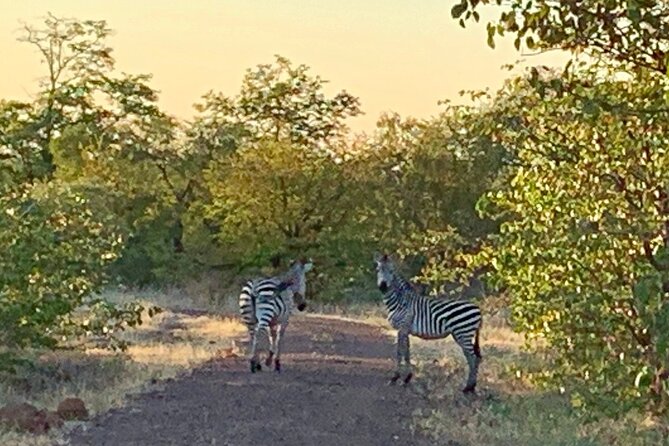
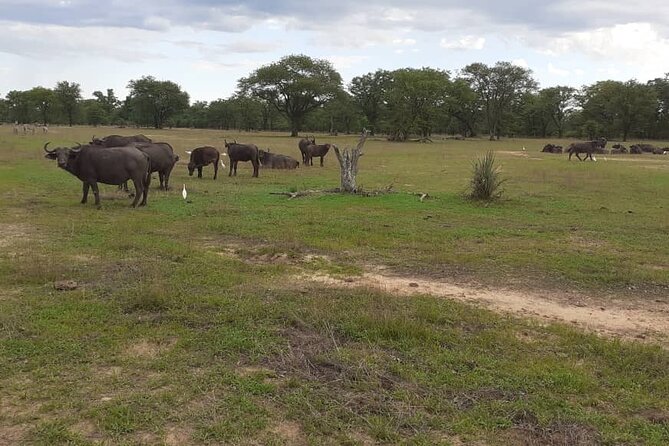
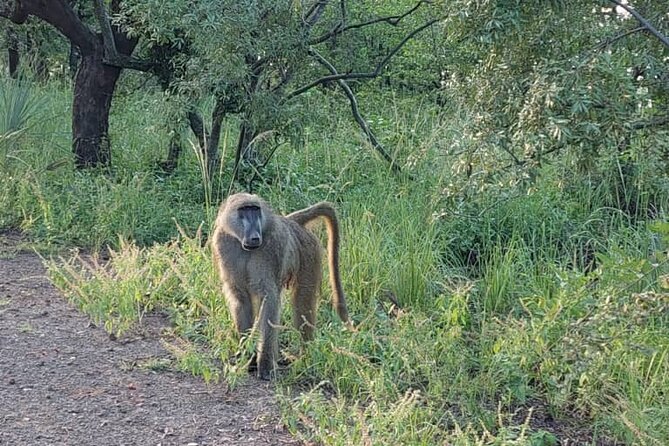
Rhinos get the attention, but they are not the only reason to bring binoculars and a curious eye. The park is also home to buffalo, elephants, giraffes, zebras, wildebeest, warthogs, primates, and antelopes.
A walking route gives you a chance to notice animals at a more human scale. Warthogs and antelopes may be easier to appreciate when you are moving slowly. Giraffes and zebras offer more familiar safari moments, while buffalo and elephants remind you that this is a wild setting where guide instructions matter.
The park’s three Big Five species give the outing real weight, but the tour does not promise all three in a single morning. If you see only smaller animals, birds, or signs of wildlife, the walk can still be worthwhile because the guide is teaching you how to observe the park rather than just collecting sightings.
The itinerary also includes a mid-walk break with light refreshments and snacks. That gives you time to rest, take in your surroundings, and ask questions. Bottled water is included, though bringing extra water is sensible for anyone who finds warm walking tiring.
Trees, plants, and the quieter side of the park
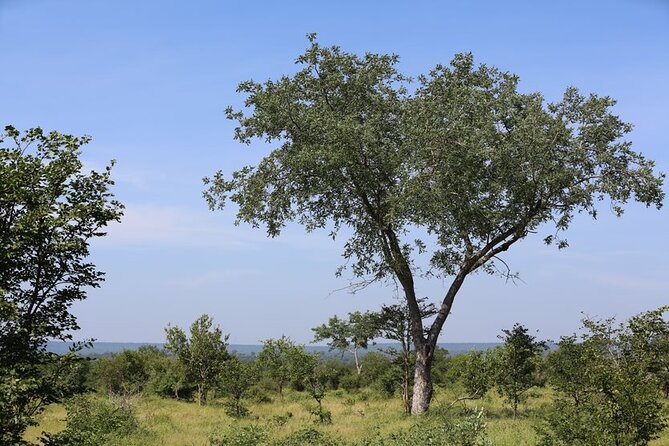
A strong nature walk should not treat plants as background decoration. Your guide can point out local tree varieties, including teak, mahogany, mopane, and marula.
Mopane and marula are especially interesting because elephants favor them. Learning which trees support animals gives you a better sense of why wildlife uses particular parts of the park. You may also begin to see how a guide builds a picture from small details: the tree species, a broken branch, a track, or a patch of disturbed ground.
This plant focus helps balance the excitement of rhino tracking. If animals are distant or hidden, you still have something meaningful to notice. It also makes the walk suitable for someone who wants a basic introduction to African plants, not only a checklist of large mammals.
The experience is flexible enough for the guide to focus on your interests. That could mean more attention to animal tracking, plant life, birds, or general park ecology. The exact balance depends on the guide and the conditions on the day.
Why the guide matters so much
A walking safari depends heavily on the person leading it. You need someone who can identify signs, explain what is happening, and manage the group sensibly.
The strongest praise for this experience focuses on guiding. Chinga is specifically credited with giving firm clothing advice before the walk and keeping the group safe and well organized. Another guide is praised for explaining rhino tracking clearly and locating the animals afterward.
You should look for a guide who does more than point at wildlife. The best moments come when you understand why an animal is there, what signs led the guide to it, and how rangers protect the park. The guide or ranger is also your link between safety and curiosity.
The maximum of 15 people means the walk may include a mixture of interests and fitness levels. A smaller private group would offer more control, but this group limit keeps the experience from becoming a large crowd. If you want a quiet, highly personal walk, ask about the group size available for your date.
Early morning or another departure time
Two departure times make this outing easier to fit into a Livingstone visit. An early morning start may be appealing if you want cooler walking conditions or prefer to seek wildlife earlier in the day. The supplied information specifically describes an early morning nature walk, but it does not promise that every departure will be early.
The later option can suit you if your hotel schedule or other plans make an early start difficult. The tradeoff is that wildlife activity and walking comfort may vary by time of day, and the tour does not state exact departure hours or guarantee particular sightings.
You should choose the time that lets you arrive rested and ready to walk. A rushed start is not ideal for a tour that depends on patience and close observation.
Is $90 a fair price?
At $90 per person, this is not the cheapest possible way to spend a morning in Livingstone. But the price includes several costs that can add up when arranged separately: national park entry, hotel pickup and drop-off at selected properties, an air-conditioned vehicle, a guide or ranger, bottled water, snacks, and the walk itself.
The value is strongest if you want a guided experience rather than simply reaching the park on your own. You are paying for transport, access, local interpretation, and help with tracking. The chance to see white rhino habitat on foot is also more specialized than a general sightseeing transfer.
The price is less compelling if you mainly want a long game drive or a private safari. This is a short, active experience with about two hours of walking and a maximum group of 15. You are paying for the walking format and the guide’s skill, not for a full-day safari with guaranteed animal sightings.
The tour has a 4.9 rating from 26 reviews and a 100 percent recommendation rate in the supplied figures. Those numbers point to strong satisfaction, especially with the guide, safety, wildlife tracking, and educational value. They should not be read as a promise that every group will see rhinos.
Who should book this walk?
I would choose this experience if you want to get out of a vehicle and learn how African wildlife is found. It suits active adults, older children aged 12 and above, couples, and small groups who are happy to walk at a steady pace and accept some uncertainty.
It is also a good fit if you have only part of a day available in Livingstone. The short duration, hotel pickup, and two departure times make it easier to combine with other plans.
You may want a different activity if you dislike walking, need a fully accessible route, or want a guaranteed close-up wildlife encounter. The provided information calls for moderate physical fitness and recommends comfortable walking shoes. It does not give accessibility details, so ask before booking if that is important for you.
Families should note the minimum age of 12. The minimum booking size is two people, so a solo visitor cannot book this as a single-person departure under the stated conditions.
Small details that improve the day
Wear neutral-colored clothing and sturdy, comfortable shoes. Bright orange tops are best left in your suitcase, and loose or uncomfortable footwear will make a two-hour walk less pleasant.
Take the guide’s instructions seriously, especially around rhinos, buffalo, and elephants. The walk is designed to bring you closer to nature in a careful way, not to create a staged encounter.
Bring a camera if you want one, but do not let photography distract you from tracks and sounds. On foot, the most interesting clue may be below your feet or hidden in a tree.
The operator provides water and light snacks, but the experience is still outdoors and active. Eat something suitable beforehand if you know you need more than a small refreshment during a morning walk.
Free cancellation is available if you cancel at least 24 hours before the start time. Changes or cancellations inside that window are not refunded, and the tour may be canceled with a full refund if the minimum number of participants is not met.
Should you book it?
Book this walk if the idea of tracking a white rhino with a guide sounds more appealing than sitting in a vehicle for another short safari. The strongest reasons are the walking format, the local interpretation, the included park fees and transport, and the chance to see how rangers protect endangered rhinos.
Skip it if you need guaranteed sightings, dislike moderate exercise, or want a private and longer safari. For the right person, $90 is a fair price for a focused half-day introduction to Mosi-oa-Tunya National Park, especially when you value understanding the bush as much as spotting its animals.
FAQ
How long does the experience last?
The complete experience lasts about three hours, including transport from Livingstone. The nature walk itself lasts roughly two hours.
Where does the nature walk take place?
The walk takes place in Mosi-oa-Tunya National Park near Livingstone, Zambia.
Is hotel pickup included?
Hotel or lodge pickup and drop-off are included at selected properties in Livingstone.
What animals might I see?
Possible sightings include white rhinos, elephants, buffalo, giraffes, zebras, wildebeest, warthogs, primates, and antelopes. Wildlife sightings are not guaranteed.
Are park fees included?
Yes. National park fees are included in the tour price.
Is food or water provided?
Bottled water, light refreshments, and snacks are included.
How many people can join the tour?
The tour has a maximum group size of 15 people.
Is there a minimum age?
Yes. The minimum age is 12 years.
Do I need to be fit for the walk?
You should have a moderate level of physical fitness and wear comfortable walking shoes.
Can I cancel for a full refund?
You can cancel at least 24 hours before the experience start time for a full refund. Cancellations or changes made less than 24 hours before the start time are not refunded.
Just added for the parks around the world
- Stone Town: Jozani Chwaka Bay National Park Half-Day Tour★ 4.7 · 5 reviews
- Stockholm: Dog Walk in Nature Reserve with Swedish Fika★ 5.0 · 3 reviews
- Stockholm: Sunset Hike in Tyresta National Park with Meal★ 4.8 · 126 reviews
- Stockholm: Self Guided Kayak Adventure in Nature Reserve★ 5.0 · 69 reviews
- Stewart Island: Guided Wilderness Walk★ 5.0 · 10 reviews
- Stewart Island: Ulva Island Guided Wilderness Walk & Cruise★ 4.5 · 165 reviews
- Wasgamuwa: Wasgamuwa National Park Private 3-Hour Safari★ 4.9 · 10 reviews
- Sri Lanka: Yala National Park Private Safari★ 3.2 · 5 reviews
Livingstone National Park Tours, compared.
Game drive in the Mosi Oa Tunya National Park – Livingstone
Read our review →
Full Day Tour to Chobe National Park and Botswana
Read our review →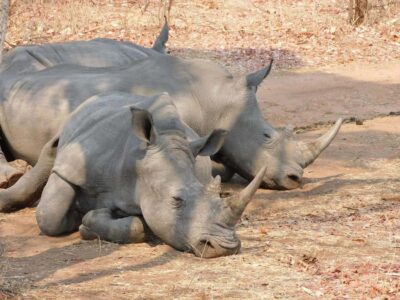
Rhino Walking Safari -Mosi -oa- Tunya National Park
Read our review →Browse the lists this tour appears in