
Review · TEIDE NATIONAL PARK
Tenerife: Sunset and Stargazing at Teide National Park
Teide’s best show begins after the sun goes down. This small-group evening takes you above the clouds for sunset, then uses the dark skies around Mount Teide to reveal planets, constellations, galaxies, and star clusters through a 12-inch Dobsonian telescope. I especially like the mix of scenery and science, plus the free portrait under the stars. The one catch is simple: it gets seriously cold, and there are no toilets near the viewing sites.
I like the choice between a self-drive option and VIP pickup from the south coast. I also like the guides’ easy, lively teaching style. Peter, Phil, Roland, Dani, and other team members turn Polaris, Andromeda, Saturn, and Jupiter into things you can actually find and understand. Just remember that clouds, wind, temperature, and the moon can change the night.
Key points to know before booking
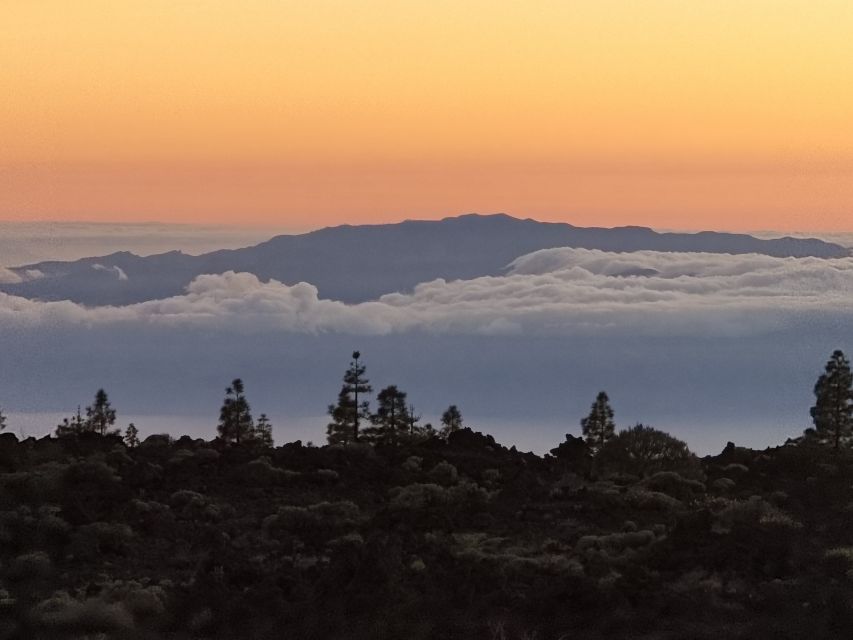
- Sunset at 1,400 meters: Watch the sun sink toward La Gomera, La Palma, and El Hierro from a viewpoint beside an old lava flow.
- Small groups: Groups of about eight allow more telescope time and make it easier to ask questions.
- Real astronomy equipment: A 12-inch Dobsonian telescope brings planets, nebulae, galaxies, and star clusters close.
- Cold-weather planning matters: Winter temperatures can approach freezing, with wind making it feel colder.
- Free night-sky portrait: Astrophotography techniques produce an individual photo beneath the stars.
- No mountain hike required: You visit public viewpoints by van or your own rental car, not the cable car or Teide summit.
Why this sunset and stargazing trip works
This is a strong choice if you want two very different Tenerife experiences in one evening. First comes the broad volcanic scenery and sunset. Then the focus shifts upward, from the islands on the horizon to objects millions of light-years away.
The setting does much of the work. At around 1,400 meters, you are above much of the coastal haze and city glare. The volcanic terrain around Teide gives the sunset a stark frame, while the high elevation helps create the dark conditions needed for astronomy.
The tour costs about $47 per person, although the final price depends on the option you select. That is good value if you want transport, a guide, a telescope session, a drink, and an astrophotography portrait without arranging each part yourself. The price is less attractive if you only want a quick sunset photo, since the evening lasts three to four hours and the main event is the night-sky lesson.
The experience is conducted in English. Guides such as Peter, Phil, Roland, Dani, Jamie, Andrew, and others are praised for making technical subjects clear and fun. That matters here. Looking at a bright point through a telescope is pleasant, but learning how to locate it again with your own eyes makes the evening far more useful.
More Teide National Park Tours in Tenerife:
- Tenerife: Teide National Park Sunset & Stargazing Tour
★ 4.2 · 3,812 reviews - Teide National Park Sunset & Stargazing with Dinner (Star Safari)
★ 5.0 · 2,601 reviews - Teide National Park: Sunset & Stargazing Safari with Dinner
★ 4.6 · 2,115 reviews
The drive up from Tenerife’s south coast
With the VIP option, pickup is available from accommodation or a nearby pickup point in the south, roughly between El Médano and Los Gigantes, with some exceptions. Drop-off returns you to the same address. The exact time arrives by WhatsApp on the day of the tour, and it may differ substantially from the generic time on your confirmation.
That communication point is important. Give the operator the correct phone number and check WhatsApp on the day. If you are arriving by plane that afternoon, this is a poor tour to book for the same evening, since a delay could make you miss the pickup.
The self-drive version requires your own rental car. You cannot join by public bus or taxi. You meet the guides, normally at Mirador de los Poleos, then follow them in your car to the second viewpoint after sunset.
Allow extra time for the first meeting point. Parking can be limited, and the mountain road requires care, especially in the dark or if you are not used to Tenerife’s winding roads. The self-drive format gives you control and may cost less, but it places the responsibility for navigation, timing, and driving on you.
The first transfer takes about 45 minutes. That is not wasted time. The route climbs through Tenerife’s changing volcanic scenery, and the contrast with the resort coast is part of the evening. Still, this is a road trip rather than a walk through the national park, so anyone hoping for a hike or a visit to the summit should choose a different Teide excursion.
Sunset beside the 1492 lava flow
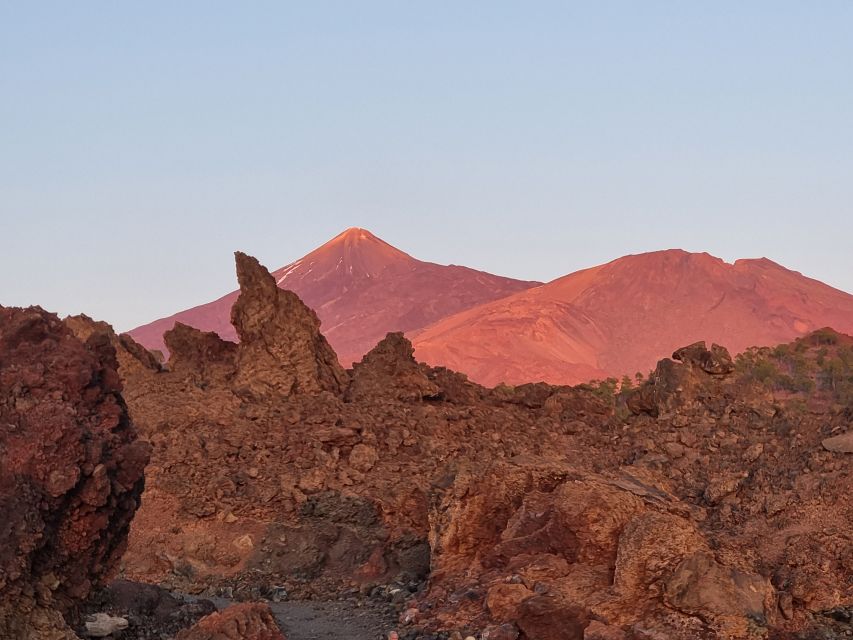
The sunset stop lasts roughly 45 minutes. You gather at a public viewpoint near a lava flow from a volcanic eruption recorded in Christopher Columbus’s 1492 ship log. That detail gives the stop a little historical weight, but the main attraction is the view.
From this height, you can see the sun drop toward the neighboring islands of La Gomera, La Palma, and El Hierro when visibility allows. Teide and the surrounding lava fields add dark, rough shapes below the sky. The colors change quickly, so have your camera ready before the official sunset time.
A glass of Cava is provided, with a nonalcoholic drink available. Holding the sparkling wine up against the sunset is a fun photo opportunity, and it gives the group a clear moment to pause before the astronomy session begins.
The timing can feel slightly loose at this stop. If you arrive early, there may be a wait before the sunset presentation gets going. Use that time for photos and to find a good viewing position. You will also appreciate having warm layers already on, since the temperature starts dropping as soon as the sun disappears.
Every sunset is different, and the view is not guaranteed to look the same as the promotional photographs. Clouds can hide the horizon, but they can also catch the last light and create the sea-of-clouds effect that makes Teide evenings special.
A short move to the dark-sky viewpoint
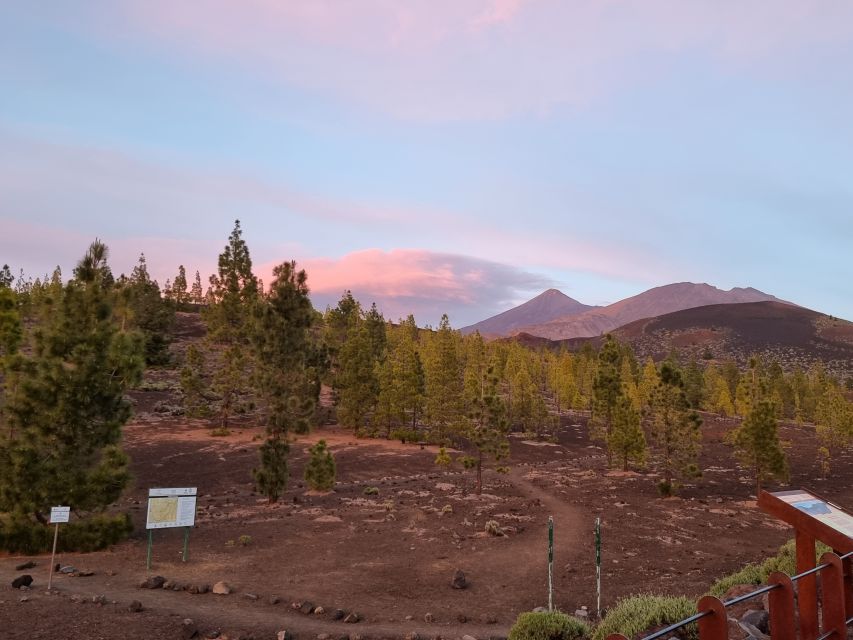
After sunset, the vehicle transfer to the astronomy site takes around five minutes. The second viewpoint is selected according to conditions and local rules. The guides may stay at the lower site if wind, cloud, or low temperatures make the higher location unpleasant or unsafe.
That flexibility is sensible. You do not lose the main purpose of the tour if the group remains lower down. The skies can still be very good, and avoiding a cold, windy viewpoint is better than forcing a move simply to follow a fixed plan.
The activity takes place at public viewpoints where local authorities permit it. It is not held at the Teide Observatory, and it does not include the cable car, a summit visit, or a hike to Mount Teide. That distinction is worth noting when comparing this tour with daytime Teide trips.
More national park tours around Tenerife:
- Tenerife: Teide National Park Full-Day Tour with Pickup
★ 4.5 · 1,613 reviews - Tenerife: Quad Adventure Tour in Teide National Park
★ 4.7 · 1,492 reviews - Tenerife: Snorkeling Tour in a Marine Protected Area
★ 4.9 · 636 reviews - Tenerife: Teide National Park Guided Buggy Tour
★ 4.7 · 609 reviews
Learning the sky with lasers and stories
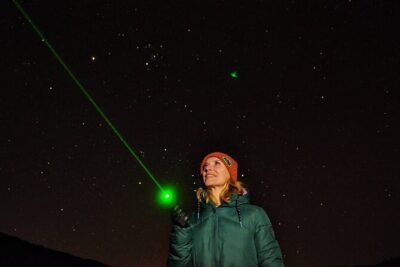
The guided astronomy session lasts about two hours and 15 minutes. Your guide uses a laser pointer to trace constellations and explain how the stars relate to one another. You learn to locate Polaris, the North Star, using the stars of Ursa Major, and to find the Andromeda galaxy from the Great Square of Pegasus.
Greek mythology is part of the storytelling, but the teaching stays practical. You are not simply given a list of star names. The guide shows you how to use familiar patterns as signposts, which gives you a better chance of recognizing the sky later.
The guides’ style is one of the strongest parts of the evening. Peter is known for his wide astronomy knowledge and quick humor. Phil is both a driver and a warm, engaging guide. Roland, Dani, Jamie, Andrew, and other team members bring their own style, but the common thread is clear explanations without a stiff classroom feel.
The group size helps. Departures often organize people into groups of about eight, giving each person time to ask questions and look through the equipment. That is a better setup than a large crowd gathered around one telescope, especially when the target is visible for only a short time.
What you can see through the telescope
The 12-inch Dobsonian telescope is the technical centerpiece. It is large enough to show much more than you can see with your eyes alone, including planets, nebulae, galaxies, and star clusters.
When the planets are in the right part of the sky, you may see Saturn’s rings and Jupiter with its Galilean moons. These are the objects most likely to make the experience click for first-time observers. The difference between a tiny bright dot and a planet with visible features is striking.
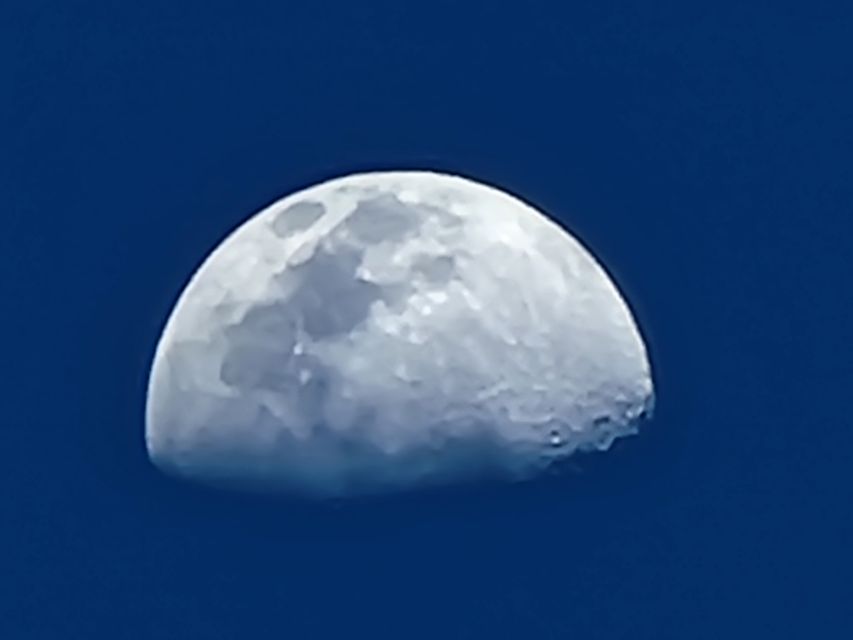
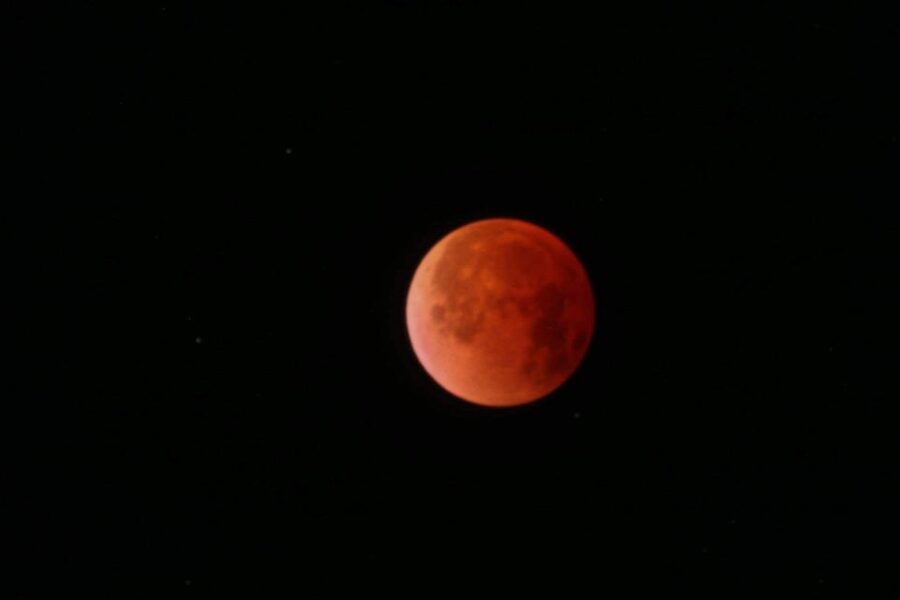
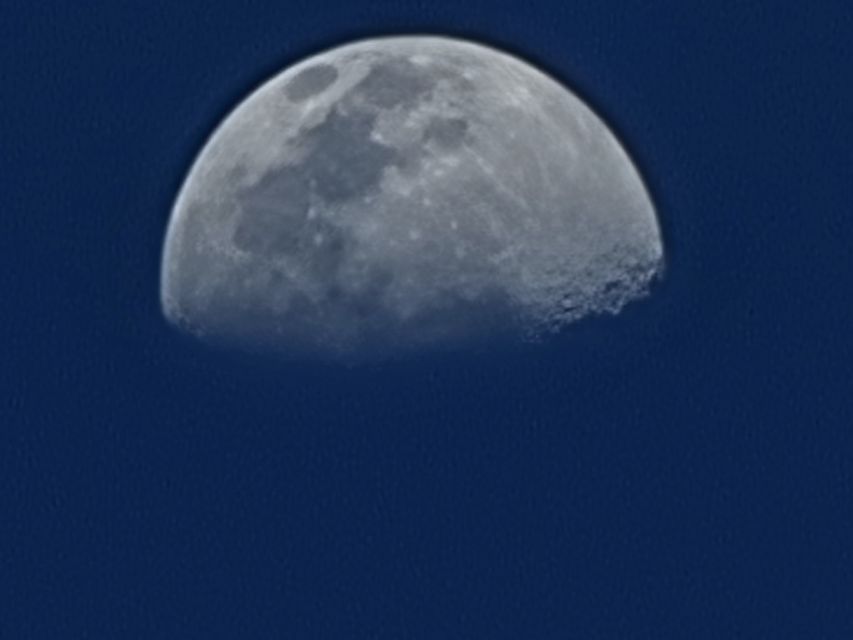
The moon can become the main attraction near full moon. Its surface details show clearly, but a bright moon also washes out some faint stars and galaxies. If your priority is seeing the Milky Way and dim deep-sky objects, a night near the new moon, or before moonrise, is generally the better choice.
Season changes the program. Winter can bring the Pleiades, also called the Seven Sisters, along with different nebulae and star clusters. Summer and autumn may offer Saturn and Jupiter when their positions are favorable. You should not book expecting one exact list of objects, since the guide works with what is above the horizon on that date.
Clouds can interrupt the session. The guides can explain the sky while waiting, and a cloudy start may clear later, but there is no way to guarantee ideal conditions. This is outdoor astronomy, not a planetarium show.
The cold is not a minor detail
Bring more clothing than you think you need. The coast may feel mild, yet the mountain can be close to freezing, especially after dark. Long trousers, a long-sleeved shirt, a proper jacket, warm shoes, and several layers are sensible. One winter departure needed five layers, and another visitor compared the cold to skiing conditions.
The VIP option includes warm jackets for cold nights. Other small extras, including hot chocolate and blankets, have been provided on some departures, but I would not treat them as guaranteed parts of the basic package. Pack as if you will be standing outdoors for several hours without those comforts.
There are no toilet facilities at or near the stargazing sites. Plan ahead before leaving the coast. This is one of the few practical drawbacks that can affect the evening more than expected.
The tour is not suitable for people with altitude sickness. Tell the operator in advance if you use a wheelchair, so they can discuss the arrangements. Pets, bicycles, and baby carriages are not allowed.
The free astrophotography portrait
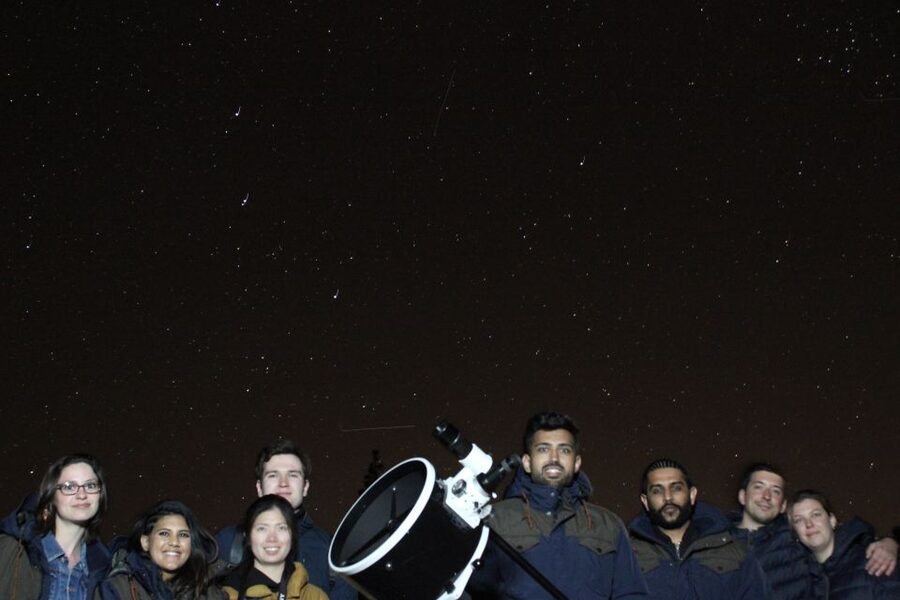
The guides take an individual photo of each participant using astrophotography methods. The aim is to show you beneath a blanket of stars, rather than simply handing you a dark snapshot with a few pinpoints in the background.
It is a thoughtful extra because night photography is difficult without a tripod, long exposure, and careful timing. You can enjoy the telescope session without worrying that your phone camera will fail to capture the setting.
Take your own photos too, but keep realistic expectations. A phone can record the sunset and the surrounding scenery more easily than the stars. The provided portrait is the better souvenir for showing the scale of the night sky and placing you in it.
Who will enjoy this most
I would choose this tour for couples, families with older children, and anyone who likes a guide-led experience with real explanation. A 14-year-old can stay engaged because the session mixes stories, jokes, lasers, and telescope time rather than relying on a long lecture.
It also suits people who want a compact evening instead of a full-day Teide excursion with dinner and several lengthy stops. The three to four-hour length is long enough for the sky to become properly dark, but short enough to fit into a holiday schedule.
You should think twice if you dislike cold weather, standing outdoors, winding mountain roads, or plans that depend on cloud cover. It is also not the right choice if your main aim is reaching the summit, riding the cable car, hiking, or touring the official observatory.
Is $47 good value?
At the advertised $47 starting price, I consider this a solid buy for the combination of transport options, sunset viewing, live astronomy, telescope access, a drink, and a free portrait. The value improves if you would otherwise need to arrange a rental car, find a dark viewpoint, and learn enough about the sky to make the outing meaningful.
The VIP option costs more, but pickup and drop-off can be worth it if you are staying in the south and do not want to drive mountain roads after dark. For a group of friends or family, self-drive may be more economical, provided the driver is confident and the car is available.
The price does not include food, and this is not a dinner excursion. Eat before departure or bring something suitable if permitted, since the supplied drink is a welcome refreshment rather than a meal.
Should you book it?
Book this if you want a carefully guided night outdoors, not just a sunset photo stop. The best reasons are the small groups, the strong astronomy teaching, the telescope views of planets and deep-sky objects, and the unusual chance to see Tenerife’s neighboring islands before darkness takes over.
Choose a clear night with little moonlight if the stars are your main goal, and bring serious winter clothing at any time of year. If you can accept the cold, the lack of toilets, and the limits of weather, this is one of the most useful and memorable evening activities on Tenerife’s south coast.
FAQ
How long does the Tenerife sunset and stargazing tour last?
The activity lasts about three to four hours, including the drive, sunset stop, short transfer, and guided stargazing session.
Where does the tour start?
The starting point depends on the option selected. VIP participants receive pickup from an address or nearby pickup point in the south of Tenerife. Self-drive participants normally meet at Mirador de los Poleos.
Can I join without a rental car?
Only if you choose the VIP pickup option and are within the operator’s south Tenerife pickup area. The self-drive option requires your own rental car. Public transportation and taxis cannot be used for that option.
Is pickup available from northern Tenerife?
No. Pickup is offered only in the south of Tenerife, generally between El Médano and Los Gigantes, with some exceptions.
Is the tour held at the Teide Observatory?
No. The activity takes place at public viewpoints permitted by local authorities. The Teide Observatory and cable car are not included.
Do I need to hike?
No. The tour uses vehicle transfers and viewpoints. Hiking to Mount Teide is not part of the experience.
What should I wear?
Bring warm layers, a jacket, long trousers, long sleeves, and warm or sports shoes. Mountain temperatures can be close to freezing after sunset, and wind can make it feel colder.
Are toilets available?
No. There are no toilet facilities at or near the sunset and stargazing locations. Use facilities before leaving the coast.
What can I see through the telescope?
Depending on the season and conditions, you may see the moon, Saturn and its rings, Jupiter and its Galilean moons, galaxies, nebulae, and star clusters such as the Pleiades.
What happens if the weather is poor?
If wind, cloud, or low temperatures make the higher viewpoint unsuitable, the guides may remain at the lower viewpoint. The activity can still include stargazing there, but exact visibility cannot be guaranteed.
Is a photo included?
Yes. The guides take an individual astrophotography photo of you beneath the stars at no extra charge.
What language is the tour conducted in?
The tour is conducted in English.
Can young children join?
Children under five are not allowed on the VIP tour. They may join with the self-driving option.
Is cancellation allowed?
You can cancel up to 24 hours before the activity for a full refund, according to the stated cancellation terms.
Just added for the parks around Tenerife
- Puerto de la Cruz: Quad Teide National Park★ 4.8 · 69 reviews
- Puerto de la Cruz: Buggy Teide Sunset National Park★ 4.9 · 15 reviews
- Puerto de la Cruz: Teide National Park Buggy Tour★ 4.8 · 46 reviews
- Private tour Tenerife: Teide National Park + Restaurant★ 5.0 · 23 reviews
- Tenerife: Teide National Park Sunset Picnic and Stargazing★ 4.6 · 117 reviews
- Tenerife: Mount Teide Quad Tour in Tenerife National Park★ 4.8 · 107 reviews
- Tenerife: Sunset Teide National Park & Photos★ 4.1 · 14 reviews
- Quad Tour Volcano Teide By Day in Teide National Park★ 4.0 · 80 reviews
Teide National Park Tours, compared.
Teide National Park Sunset & Stargazing with Dinner (Star Safari)
Read our review →Teide National Park Full-Day Tour with Pickup
Read our review →
Small Group Teide National Park Volcanic and Forest Wonders
Read our review →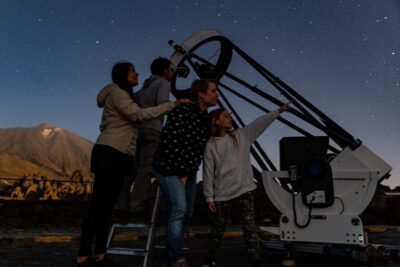
Teide National Park: Guided Large Telescope Stargazing Tour
Read our review →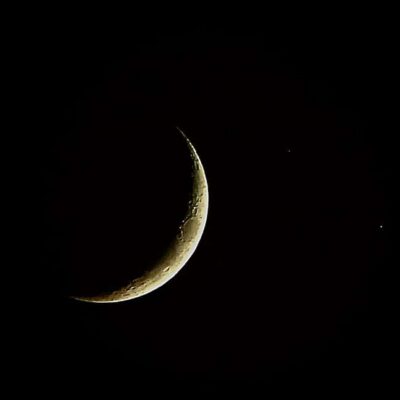
Browse the lists this tour appears in