
Review · DARWIN
From Darwin: Kakadu Wilderness Escape & Rock Art Day Tour
Kakadu’s best moments are wonderfully wild: ancient rock art at Ubirr, crocodiles waiting below Cahills Crossing, and the huge Nadab floodplain opening out from the escarpment. This tour gives you that powerful mix in one very long day from Darwin.
I like the choice between the Jumping Croc Cruise and Fogg Dam, and I like the guides’ strong local storytelling. Guides including Becs, Dani, Tim, Leigh and Boggy have been praised for explaining Aboriginal culture, wildlife, plants and Top End life with warmth and humour. The catch is simple: 620 kilometres and 12 hours make this a serious road day, not a relaxed outing.
Key points to know before booking
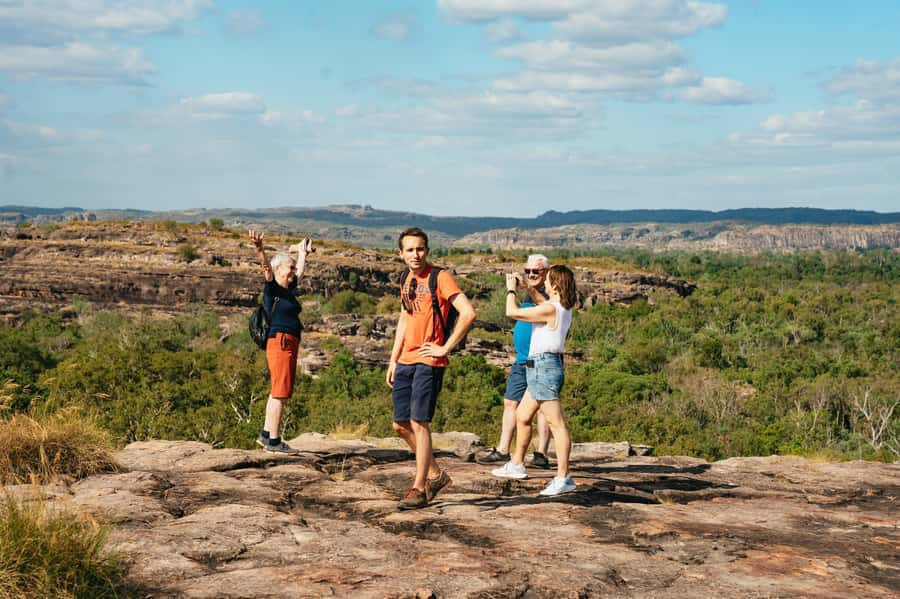
- Ubirr is the big prize: Ancient rock paintings and a short climb lead to broad views over the Nadab floodplain.
- Cahills Crossing is a safe crocodile-watching stop: You view the tidal crossing from a platform, not from the water’s edge.
- Choose your morning wildlife stop: Pay extra for the jumping crocodile cruise, or visit Fogg Dam for birds, wetlands and possible wild crocodiles.
- The day is hot and active: Bring 1.5 litres of water, sun protection, insect repellent and proper closed-toe shoes.
- The guide makes a real difference: The strongest part of the outing is the commentary on Country, rock art, wildlife and local life.
- This suits short Darwin stays: You see several major Kakadu sights without hiring a car, but you will sacrifice time and comfort to do it in one day.
Why this Kakadu day trip is worth considering
Kakadu is too large to understand from a quick roadside stop. Covering more than 20,000 square kilometres, the park combines wetlands, sandstone country, wildlife and Aboriginal cultural sites. A day tour cannot show you everything, but this one gives you a useful first look at its range.
At $180 per person, the price is reasonable for a 12-hour outing that includes the Kakadu National Park pass, air-conditioned transport, an accredited driver-guide and local commentary. You still pay for food and the optional crocodile cruise, so the final cost can rise. Even so, avoiding a rental car, fuel, park planning and the challenge of driving unfamiliar roads gives the tour solid value.
I would not choose this trip because it is easy. You leave Darwin at 7:30 AM and return in the evening, with around 620 kilometres on the road. The day works because the stops break up the drive, but the bus remains your base for many hours.
The air conditioning matters. In the Top End, especially from October to April, heat, humidity and rain can change the feel of the day quickly. Some people have found the smaller bus tight on legroom, particularly taller passengers. A small day bag of 5 to 7 kilograms is the sensible limit.
More national park tours around Australia:
- Litchfield National Park and Jumping Crocodile Cruise
★ 5.0 · 2,119 reviews - Grampians National Park Small-Group Eco Tour from Melbourne
★ 5.0 · 761 reviews - From Port Arthur: Tasman Island Wilderness Cruise
★ 4.9 · 704 reviews
The Darwin start and the long road north
Meet outside The Leea, at 64 Cavenagh Street, at least 10 minutes before the 7:30 AM departure. Hotel pickup and drop-off are not included, so allow time to reach the meeting point on your own.
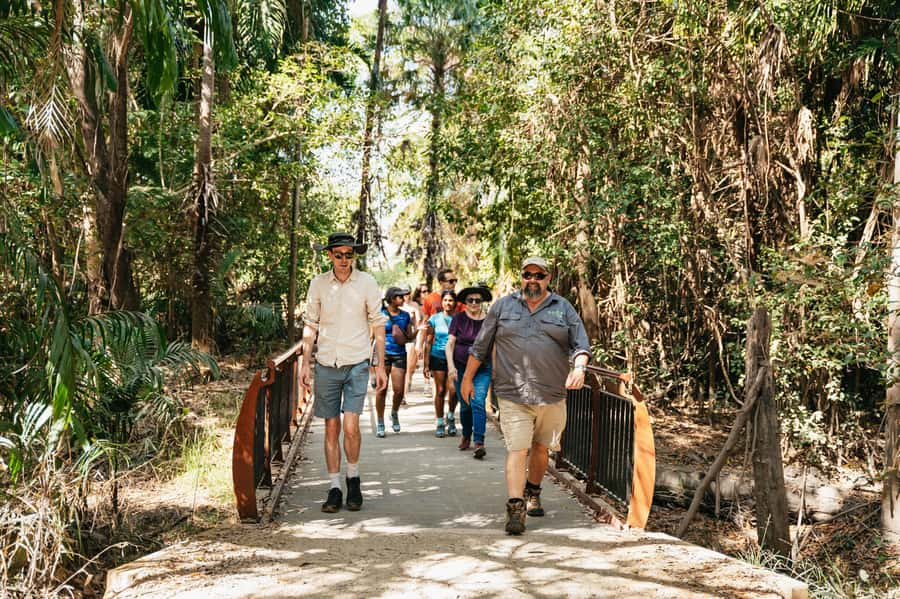
The first part of the day gives your guide room to explain the Top End as you leave Darwin behind. This is where a good guide earns the fare. Becs, Dani, Tim, Leigh, Boggy and others have been praised for mixing facts with personal stories, jokes and clear advice about heat, walking and wildlife safety.
You will travel in an air-conditioned midi-coach or bus. Bring a refillable bottle because a water refill station is available, and cold water is provided on the bus. Pack snacks and lunch unless you plan to buy food during the day. An onboard eski can keep items cool.
Adelaide River: choose crocodiles or wetlands
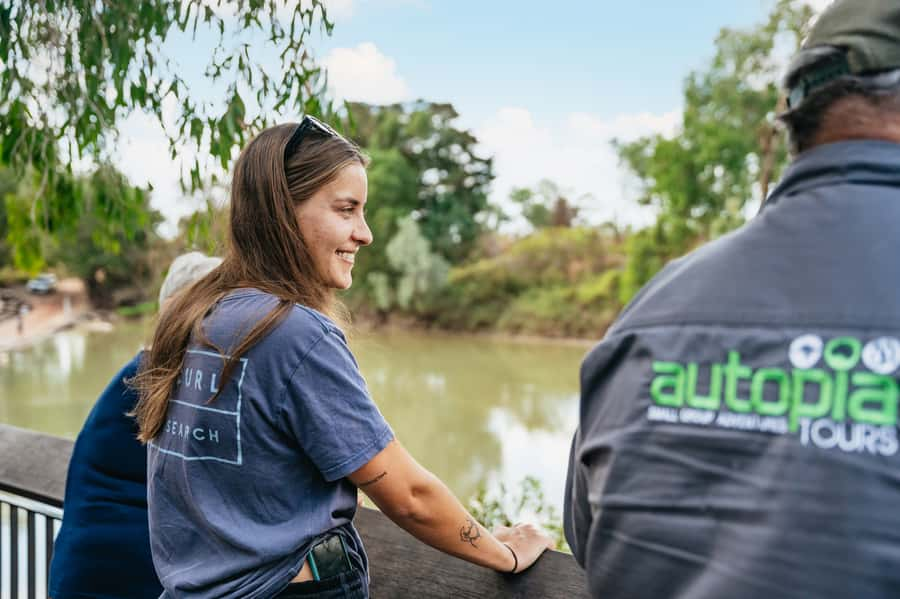
The first major choice is at the Adelaide River. The optional Jumping Croc Cruise lasts about 70 minutes and gives you a close view of saltwater crocodiles as they rise from the water for food. It is a dramatic way to see the size and force of these animals, and it is one of the most popular add-ons to the day.
The cruise is not included in the base price, so check the current supplement before you book. If crocodiles are high on your list, I think the extra cost is worthwhile. The boat provides a controlled viewing point, while the crew explains crocodile behaviour and the river environment.
The alternative is Fogg Dam Conservation Reserve. This is a quieter choice and a better fit if you prefer wetlands and birdlife to a staged wildlife encounter. Fogg Dam is significant to the Limilngan-Wulna people, and its boardwalks and viewing areas can bring you close to Top End wildlife in a natural setting.
You might see magpie geese, white-bellied sea eagles, water pythons, wallabies, buffalo, dingoes or a crocodile. Wildlife is never guaranteed. Dry conditions can reduce sightings, while wet-season water and access conditions may alter the route.
The Fogg Dam option includes a guided visit of about 45 minutes. Check the park fee details when booking, since an NT park pass is required for the Fogg Dam wetlands under the KD fare type. This is one point worth clarifying in advance.
Corroboree country and a practical food stop
The route continues through wetlands and floodplain country toward the Corroboree area. There is time for a break of about 20 minutes, and the Corroboree Park Tavern is the practical place to buy food and support a local business.
Meals are not included. You can buy lunch at local stops or bring your own. I would bring something you know you will eat, along with fruit and snacks, since the day is long and the timing can shift with road conditions.
The tavern area also has resident crocodiles, Fred and Brutus, plus a water buffalo out back. These are not the same as seeing wild animals in the reserve, but they add an easy, memorable stop to a packed day.
Same parks, a different way to see them:
- Sydney: Blue Mountains National Park Tour with River Cruise
★ 4.6 · 701 reviews - From Hobart/Adventure Bay: Bruny Island Wilderness Cruise
★ 4.8 · 601 reviews - Port Arthur Full-day Guided Tour with Harbour Cruise and Tasman National Park
★ 4.5 · 585 reviews - Grampians National Park Small-Group Eco Day Tour
★ 4.8 · 577 reviews
Bowali Visitor Centre puts Kakadu in context
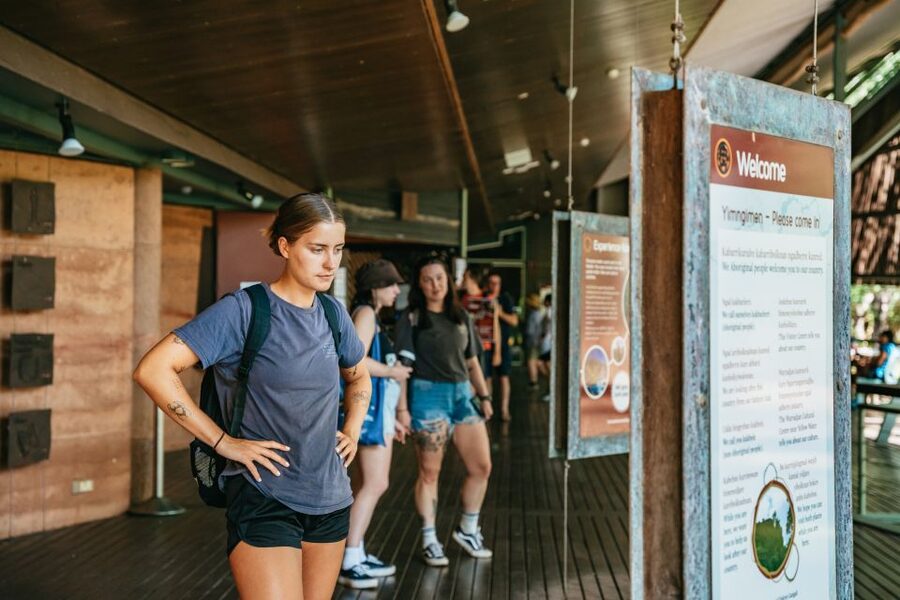
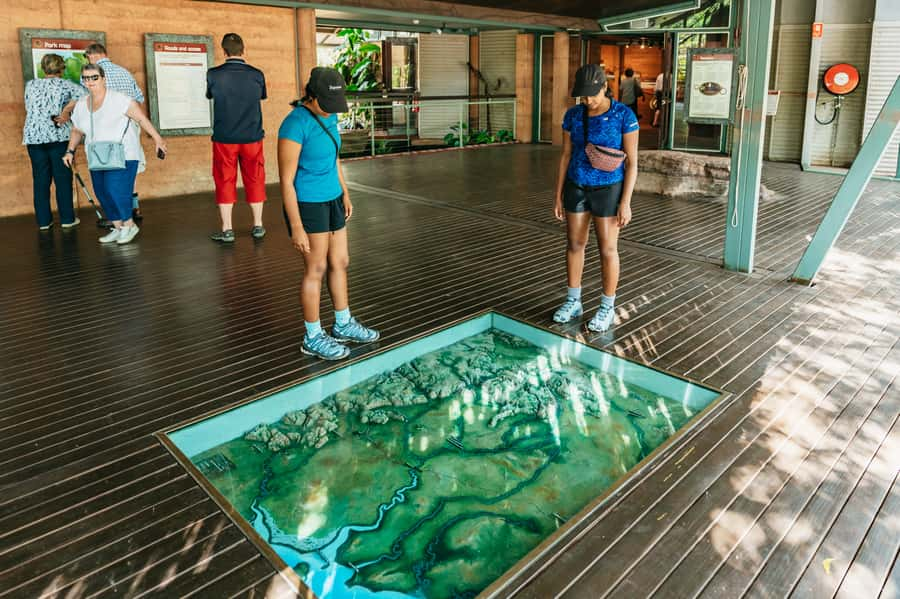
Bowali Visitor Centre is more than a place to stretch your legs. Its displays explain Kakadu’s ecology, Aboriginal culture and connection to Country. You will have around 30 minutes of free time, enough to look through the exhibits and browse local art without turning the stop into a long museum visit.
This stop matters because Ubirr and Cahills Crossing can otherwise become a sequence of impressive sights with little context. The centre helps you understand the Bininj and Mungguy connection to Kakadu and the role of Traditional Custodians in caring for the area.
The quality of the day depends heavily on how the guide handles this subject. The most praised guides have explained rock art, plants, wildlife and Aboriginal culture with respect and personal insight. Ask questions. This is one of the best chances to connect the scenery with the people and stories of the park.
Cahills Crossing and the crocodiles below
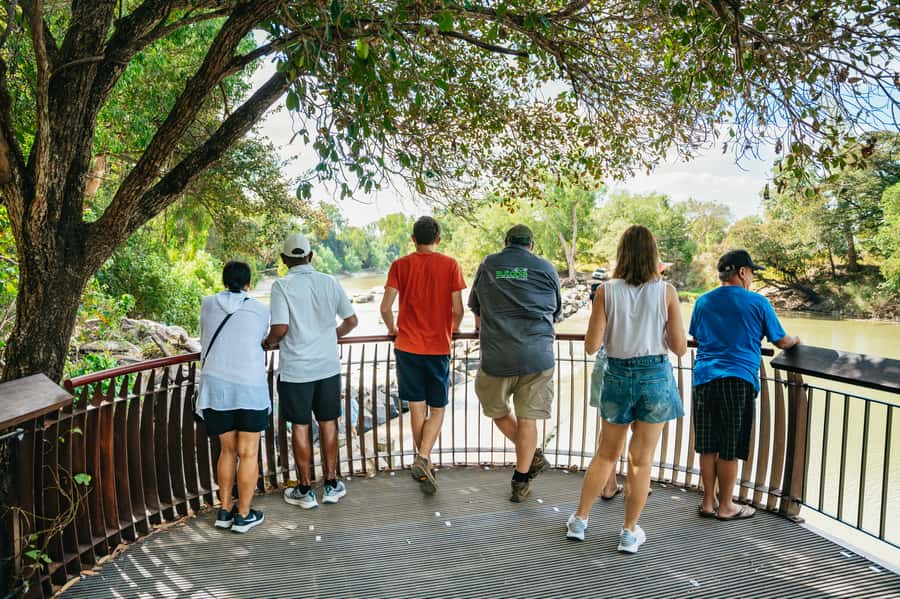
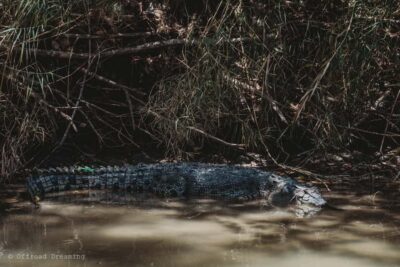
Cahills Crossing links Kakadu with Arnhem Land across the East Alligator River. It is known for tidal water and saltwater crocodiles, and the crossing can feel tense even when you are safely on the viewing platform.
You will have roughly 1.5 hours here and at nearby viewing areas, depending on the day’s timing. The guide provides a bus tour, a photo stop and wildlife viewing. You may see crocodiles waiting in the water, and you might see vehicles attempt the crossing when conditions permit.
Do not treat the crossing as a place for a closer look. Stay with the guide and follow all safety instructions. Seasonal conditions can close access, and water levels can change the scene completely. This is one of the clearest examples of why Kakadu cannot be planned by a fixed checklist alone.
Ubirr Rock and the view you came to see
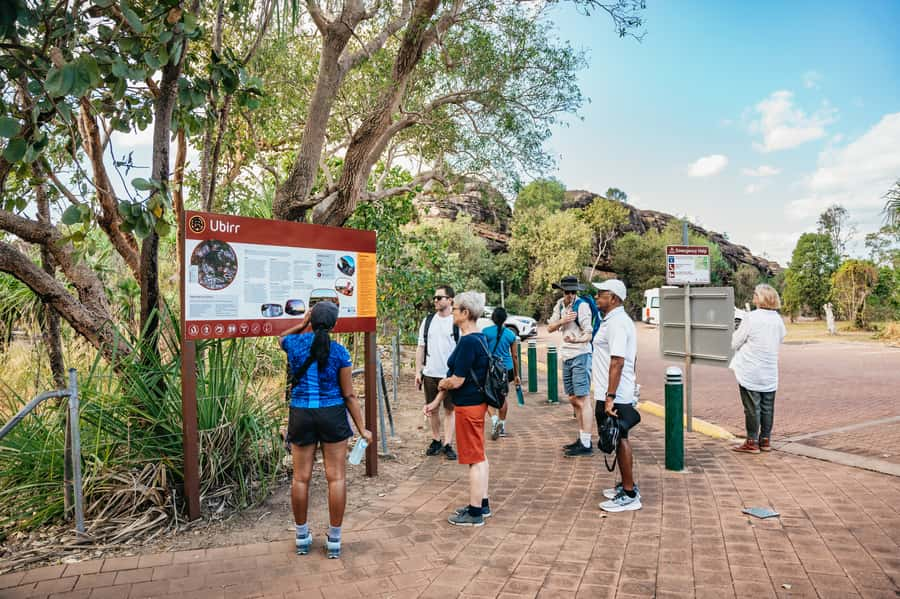
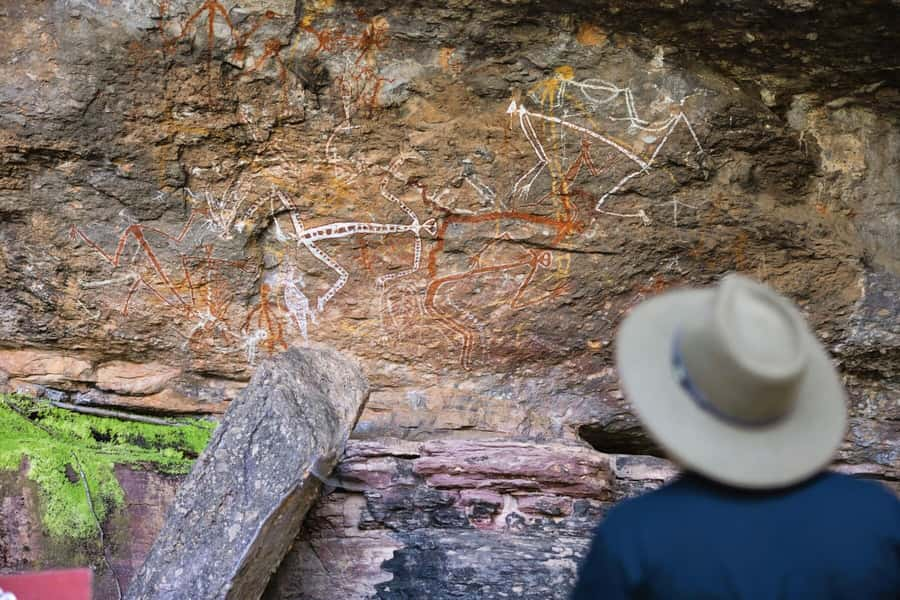
Ubirr is the emotional centre of the trip. The site contains rock-art galleries with paintings of ancestral beings, Dreamtime stories and native animals. Some images are thousands of years old, and their meaning is best understood through the guide’s explanation rather than a quick photograph.
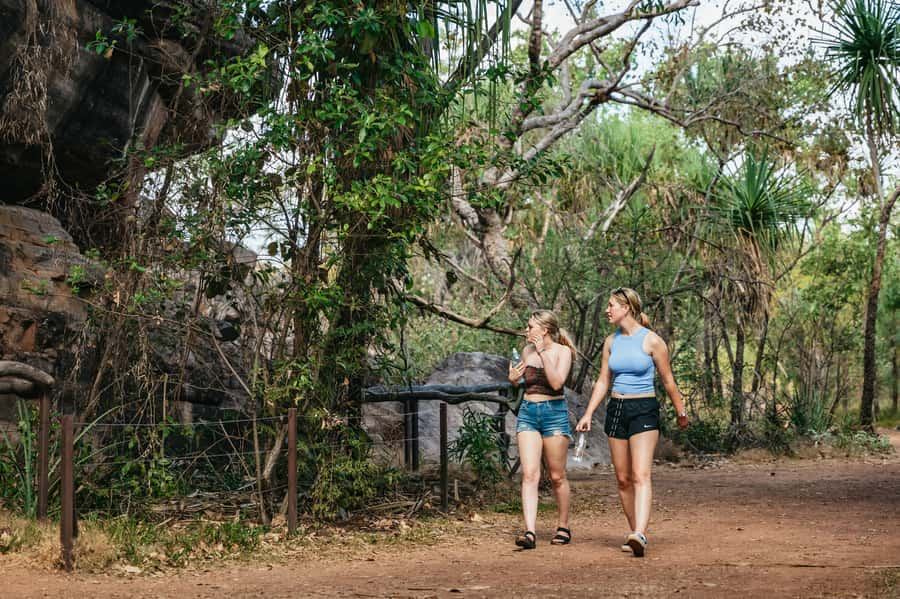
The walk is about 1.5 hours and includes a short climb. You need proper walking shoes, not flimsy sandals or sliders. The path is manageable for many people, but heat, uneven ground and the climb make this the most physically demanding section of the day.
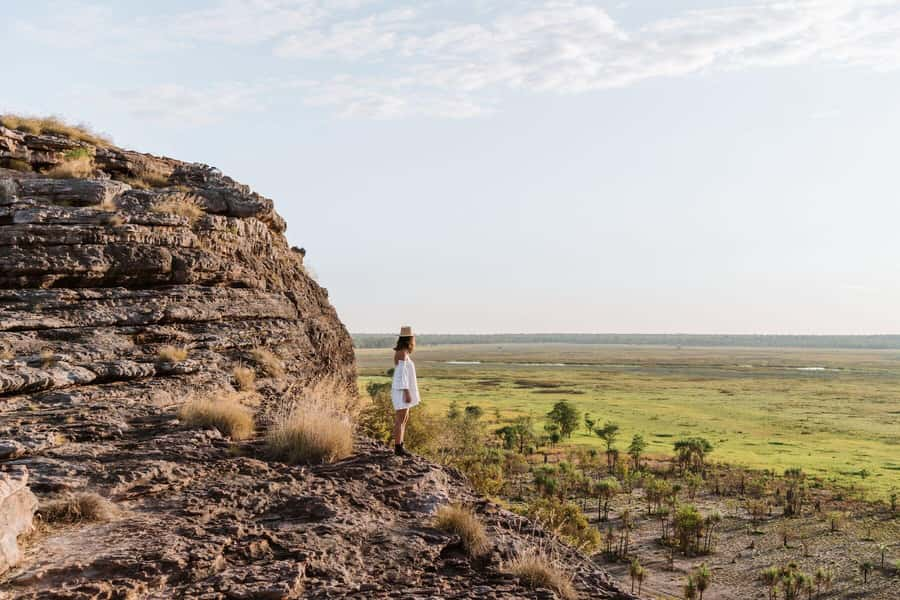
At the top, the Nadab floodplain spreads below you, with the East Alligator River and Arnhem Land escarpment in the distance. This is the view that makes the long bus ride make sense. It is broad, open and unmistakably Kakadu.
Bring a hat, sunscreen, sunglasses and plenty of water. The heat can build quickly, especially from late spring into the wet season. Some guides pace the walk carefully, adding breaks and checking that everyone can keep going. Tell the operator about medical conditions or mobility limits at least 48 hours before departure.
Nourlangie is the seasonal alternative
Ubirr access can be restricted by weather, road closures or cultural events. When that happens, the tour visits Nourlangie Rock, also called Burrungkuy.
Nourlangie offers another important set of shelters, cliffs and Aboriginal paintings. The setting feels different from Ubirr, but the cultural value remains high. The area is also good for birdwatching, with species associated with the Top End.
Do not book this tour on the assumption that Ubirr is guaranteed on every departure. The operator can change the plan for sound safety and cultural reasons. If seeing Ubirr is your single purpose, check conditions shortly before you go. If your aim is to understand Kakadu, Nourlangie is a worthwhile substitute rather than a poor second choice.
How the guides shape the day
The tour’s strongest feature is the human one. Names change from departure to departure, but the repeated praise for guides such as Leigh, Boggy, Becs, Dani, Tim, Rick, Daryl, Naomi and Carlos points to a clear pattern: the guide is not just driving the bus.
Good commentary makes the long road useful. You get explanations of animals, plants, floodplains, rock art and local life while the scenery passes outside. Guides have also been praised for watching out for older people, giving breaks in the heat and helping when someone became unwell.
That personal care matters on a day this demanding. Ask about the route, drink often and tell the guide early if you need a pause. The best guides can adjust the pace to the group, but they cannot remove the distance or the weather.
Heat, comfort and what to pack
The Top End is not a place to travel light on water. Bring a 1.5-litre bottle, even though water is available on the bus. Add sunscreen, a broad hat, sunglasses, insect repellent and breathable clothing.
Wear closed-toe walking shoes with a firm sole. Pack required medication, a camera, cash and weather-appropriate layers. A small daypack is fine, but large bags, oversize luggage, backpacks, mobility scooters and electric wheelchairs are not accepted.
The wet season runs from October to April and can bring heavy humidity, monsoonal rain, flooding and last-minute route changes. The dry season is generally easier for walking, though the day can still be hot. Swimmers and a towel are listed among the suggested items, but there may be nowhere to swim on this particular route, so do not pack them at the expense of essentials.
Children under six and wheelchair users are not suited to this activity. Mobility concerns should be discussed with the operator before departure.
Who should book this day tour?
I would choose it if you have only a few days in Darwin and want a broad first taste of Kakadu without driving yourself. It suits people who value Aboriginal rock art, wildlife, open floodplains and guide-led learning more than leisurely stops.
It also works for solo visitors and couples who want the logistics handled. The pass, transport and commentary are included, and the itinerary covers several major sites in one day.
I would hesitate if you dislike long bus rides, hot walks or changing plans. You will not see all of Kakadu, and the time at each stop is limited. A longer Kakadu trip would give you more breathing room, but this day makes a strong introduction.
Should you book it?
Book this tour if Ubirr, crocodiles and First Nations culture are priorities and your Darwin schedule is tight. The $180 base price offers good value for a full day, especially with the park pass and transport included.
Before paying, decide between the crocodile cruise and Fogg Dam, check Ubirr access, confirm the Fogg Dam fee details and plan your lunch. If you can handle the distance and heat, this is one of the most efficient ways to meet Kakadu on its own terms: ancient, spacious, unpredictable and far too large for a quick visit.
FAQ
How long is the Kakadu day tour from Darwin?
The tour lasts about 12 hours. Departure is at 7:30 AM, with an evening return to The Leea in Darwin.
Where does the tour depart?
Meet outside the front of The Leea, at 64 Cavenagh Street, Darwin City. You should arrive 10 minutes before departure.
Is hotel pickup included?
No. Hotel pickup and drop-off are not included, so you must make your own way to the meeting point.
Is the Kakadu National Park pass included?
Yes, the Kakadu National Park pass is included. Fogg Dam has an additional NT park pass requirement under the KD fare type, so check this before departure.
Is the crocodile cruise included in the price?
The Jumping Croc Cruise is optional and not included in the base tour price. You can choose Fogg Dam instead.
Are meals and drinks included?
No. You can buy food at local stops or bring your own lunch and snacks. An eski is available onboard, and a water refill station is provided.
How much walking is involved?
The estimated walking distance is about 2 kilometres. The Ubirr visit includes a short climb, so comfortable closed-toe walking shoes are important.
What happens if Ubirr is closed?
The itinerary may change to Nourlangie Rock, also known as Burrungkuy. Access can change because of weather, road closures or cultural events.
Can children join the tour?
Children under six are not suitable for this activity.
Is the tour wheelchair accessible?
No. The tour is not suitable for wheelchair users, mobility scooters or electric wheelchairs. You should report medical conditions or mobility issues at least 48 hours before departure.
Just added for the parks around Australia
- Spring Brook National Park Driving Tour with an APP★ 4.4 · 2 reviews
- Port Douglas: Daintree National Park Tour, Cruise, & Zipline★ 4.9 · 31 reviews
- Port Stephens: Worimi National Park Sandboarding Adventure★ 4.8 · 18 reviews
- Port Lincoln: Lincoln National Park Sunset Sand Dunes Tour★ 4.9 · 17 reviews
- Port Arthur: Cape Raoul Wilderness Cruise★ 4.8 · 80 reviews
- Noosa: Epic Ocean Kayak with Dolphins & 4WD Beach Adventure★ 4.6 · 247 reviews
- Noosa: National Park and Dolphin Watching Safari★ 5.0 · 5 reviews
- Melbourne: Wilsons Promontory Morning Wilderness Cruise★ 5.0 · 71 reviews
Darwin National Park Tours, compared.
Litchfield National Park and Jumping Crocodile Cruise
Read our review →
Kakadu Wildlife Escape Fogg Dam or Crocodile Cruise from Darwin
Read our review →
Litchfield National Park: Full-Day & Lunch from Darwin
Read our review →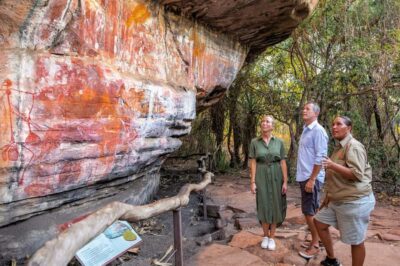
Litchfield National Park Waterfalls & Wildlife Tour
Read our review →Browse the lists this tour appears in