
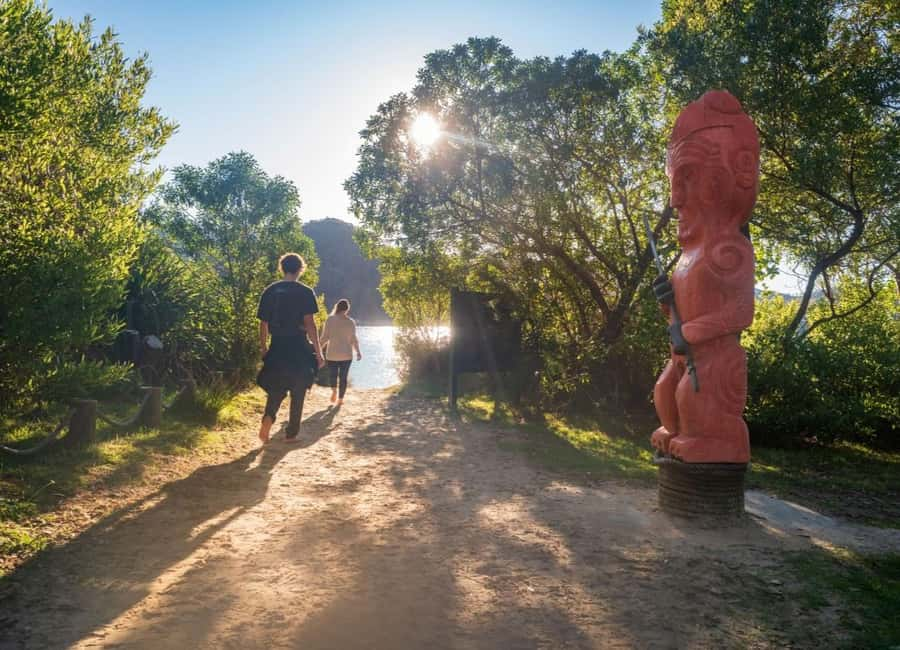
Review · NEW ZEALAND
Abel Tasman National Park: Waka & Walk Tour
A traditional waka gives this Abel Tasman day out its heart. You paddle as a team, learn how to introduce yourself in Te Reo Māori, and begin and end the canoe experience with a karakia, or blessing. Then you switch from paddle power to boat and walking shoes, visiting four beaches in one long, active day.
I like the way the tour joins Māori culture with the outdoors, rather than treating them as separate activities. I also like the useful extras: lunch, snacks, water, sunscreen, insect repellent, and pickup from Nelson. The main drawback is the pace. Ten hours, three hours in a shared waka, a hike, swimming, and several transfers make this a full day, not a gentle sightseeing trip.
Key points to know before booking
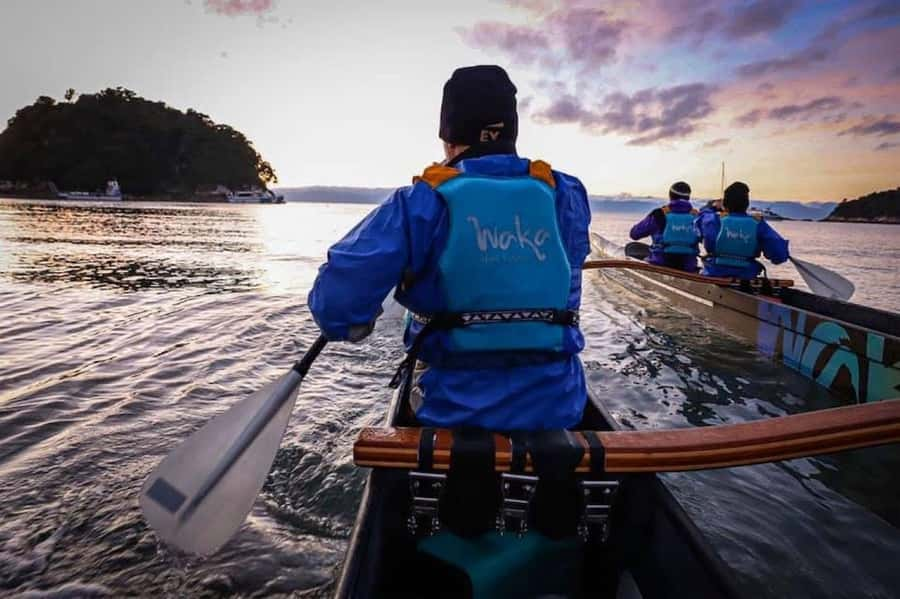
- Paddle four beaches by traditional waka: You work with your group and learn how a waka functions as a team.
- Learn Te Reo Māori and local customs: The day includes mihi or pepehā, Tikanga Māori, and karakia.
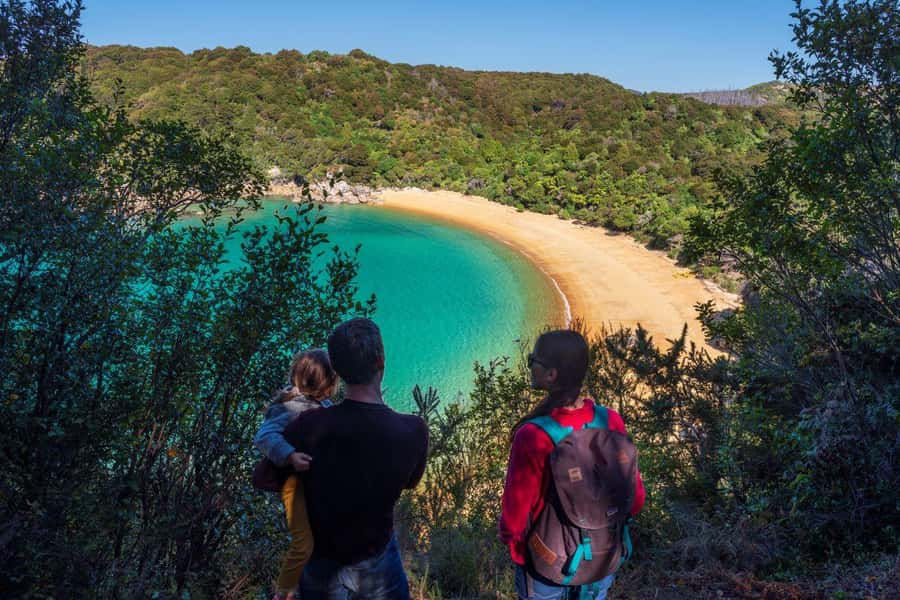
- Combine three ways of seeing the park: Expect waka, boat, and a 3 to 6 kilometre guided walk.
- Hear about native plants: The guide introduces Rongoā Māori, including the medicinal uses of local plants.
- Allow a full ten hours: About two hours are spent in the van between Nelson and the park.
- Pay for an all-day package: The $417 price includes transport, food, drinks, guiding, and equipment for the shared waka, but not a private canoe.
Why the waka is more than a canoe ride
Many Abel Tasman trips focus on beaches and boat views. This one adds a clear cultural purpose to the time on the water. Before paddling, you learn a mihi or pepehā, a personal introduction in Te Reo Māori. You also hear about Tikanga Māori, the customs and protocols that shape the experience.
The karakia at the beginning and end gives the waka outing a thoughtful structure. It is not simply a matter of climbing into a canoe, taking photos, and moving on. You are asked to take part respectfully, listen to the guide, and understand why the group begins and finishes in this way.
The shared waka also changes the rhythm of the day. Everyone has a role, and the canoe moves best when the group works together. That makes this a good choice if you enjoy a social activity with a clear team element. It may be less appealing if you want complete independence or a quiet solo paddle.
The canoe is shared as standard. A private waka is not included, though private or small-group arrangements are available according to the booking options. If privacy matters to you, check the available format and price before paying.
More national park tours around New Zealand:
- From Manapouri: Doubtful Sound Wilderness Day Trip
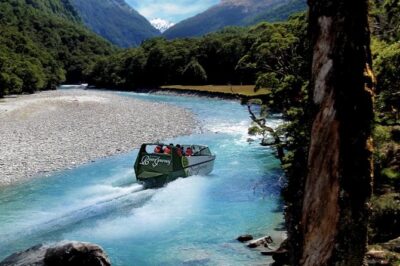
★ 4.8 · 1,621 reviews - Jet Boat Journey through Fiordland National Park – Pure Wilderness
★ 5.0 · 678 reviews - Dart River Jet Boat and Wilderness Experience
★ 5.0 · 531 reviews
From Nelson to the park edge
Your day begins with pickup in front of your Nelson accommodation. The van ride to Abel Tasman National Park takes about an hour, followed by a safety briefing of roughly 15 minutes.
That transfer is useful because you do not need to arrange your own transport to the park. It also makes the activity easy to fit into a Nelson stay. The tradeoff is simple: two hours of the day are spent on the road, so the ten-hour duration is not ten hours of paddling and walking.
Use the drive to get ready for an outdoor day. Wear comfortable shoes, bring sunglasses and a sun hat, and pack weather-appropriate clothing. A change of clothes is especially sensible because swimming is part of the schedule and water conditions can leave you damp even if you do not intend to swim.
Sunscreen, insect repellent, and bottled water are included. Still, I would not rely on included supplies alone for personal comfort. Bring the clothes and sun protection you know work for you.
Three hours in a traditional waka
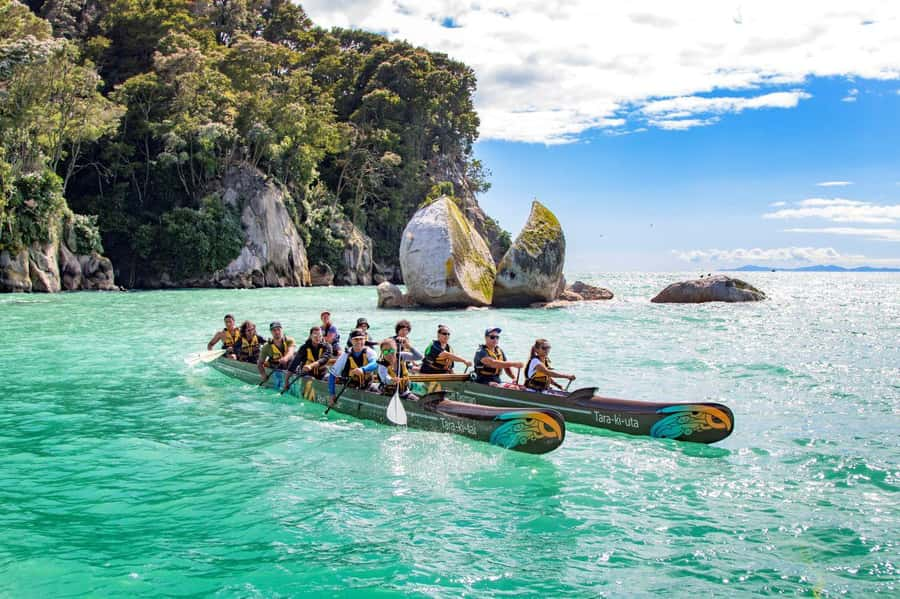
After the briefing, you spend about three hours on the guided waka experience. This is the longest single activity of the day, so it is the part to consider most carefully before booking.
You paddle toward four beaches, working as a group while the guide explains the area. The route gives you changing views from the water and the chance to see the park at a slower speed than you would from a fast boat. Each beach provides a natural pause in the journey, although the exact stops may depend on the day’s conditions and operating plan.
The canoe section is active, but it is also a lesson in cooperation. You are not simply being carried around the coast. Your group helps power the waka, follows the guide’s instructions, and shares responsibility for keeping the boat moving well.
The cultural teaching gives the paddling a stronger sense of place. You learn about Māori and colonial history in the area, then hear about native plants and Rongoā Māori, the traditional medicinal uses associated with them. That connection matters because it turns the surrounding bush from pretty scenery into something you can read and understand.
Your guide is central to the quality of this part of the day. Jeremy is noted for explaining both the flora on the walk and wider information about the area. Allan is associated with attentive care throughout the day, while Angelika may be a useful option for German-speaking visitors because she guides in both German and English. Guide assignments can vary, so do not assume a particular person will lead your departure.
Lunch beside the water
The schedule allows about 40 minutes for lunch and a picnic. Lunch, snacks, and refreshments are included, which saves you from organizing a full day of food.
This is a practical benefit, not just a booking extra. You will be active for hours, and a proper break helps divide the demanding canoe section from the afternoon activities. The exact menu is not specified, so anyone with dietary needs should confirm arrangements before booking.
A picnic stop also lets you enjoy the park without rushing straight from one activity to the next. Keep your expectations sensible, though. With four beaches, a boat ride, a hike, and swimming still ahead, this is a scheduled outdoor day rather than an extended beach picnic.
Same parks, a different way to see them:
- Doubtful Sound Wilderness Day Cruise from Manapouri
★ 4.5 · 490 reviews - Waitakere Ranges Wilderness Experience Tour from Auckland
★ 4.8 · 340 reviews - From Queenstown: Doubtful Sound Wilderness Day Trip
★ 4.7 · 314 reviews - Doubtful Sound Wilderness Cruise from Te Anau
★ 4.5 · 286 reviews
Boat views and a 3 to 6 kilometre walk
After lunch, the tour continues by boat for about 45 minutes. This gives your arms a break after the waka and lets you see the coastline from a different position. The boat section is also useful for covering distance without asking you to paddle the entire route.
The guided walk lasts about two hours and covers 3 to 6 kilometres. That range matters. Three kilometres is a manageable outing for many people, while six kilometres, after a morning in a waka, can feel like a proper hike.
Your guide uses the walk to explain local plants, Rongoā Māori, and the Māori and colonial past of the area. The natural details are one of the strongest reasons to choose this trip over a simple beach transfer. You gain information you would likely miss if you walked without a guide.
The walking distance and conditions are not described in detail, so bring shoes that you can use comfortably on uneven outdoor paths. This is not suitable for wheelchair users. It is also worth thinking honestly about your energy level. You do not need to be an expert hiker, but you should be comfortable with a multi-hour day that includes paddling and walking.
Swimming and the second boat ride
The schedule includes about 30 minutes for swimming. This is a welcome chance to cool off after the canoe and hike, but swimming is not compulsory. Pack a change of clothes, as requested, and use the time in the way that suits you.
After swimming, you take another boat ride of about 45 minutes. This final water section begins the return toward the park edge and helps bring the day back into a practical rhythm. You are not expected to paddle all the way back in the waka, which is a relief after the morning’s team effort.
The boat rides also give you a chance to sit back and watch the coastline. The day moves between active and restful sections, but the schedule remains full. If you prefer long, unplanned stops at one beach, this will feel too structured.
Is $417 a fair price?
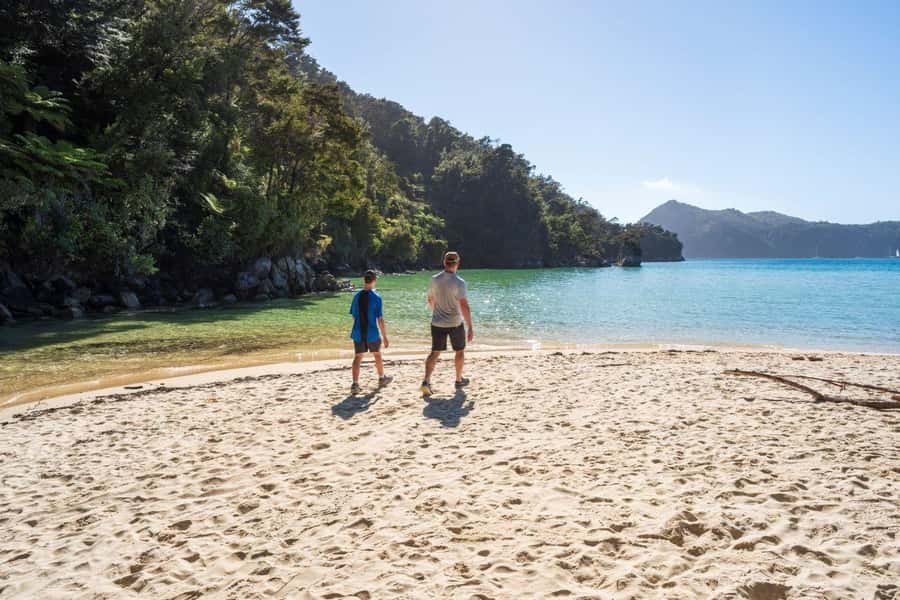
At $417 per person, this is not a budget activity. The value comes from the number of elements packed into one day: Nelson accommodation transfers, a live English-speaking guide, a shared waka experience, two boat segments, a guided walk, lunch, snacks, refreshments, bottled water, sunscreen, and insect repellent.
You are also paying for cultural interpretation, not just transport and scenery. The teaching around Te Reo Māori, Tikanga Māori, karakia, Rongoā Māori, and local Māori and colonial history gives the day more substance than a standard sightseeing cruise.
The price makes the most sense if you want a single organized day that covers several sides of Abel Tasman National Park. It is less compelling if your main goal is simply to sit on one beach, or if you already have separate plans for kayaking, hiking, and boat travel.
Small-group or private options may suit you if you value personal attention. A private waka is not included in the standard price, so check the cost before assuming the booking is private. The shared format is part of the social experience and supports the team-based nature of the paddling.
Who will enjoy this day most?
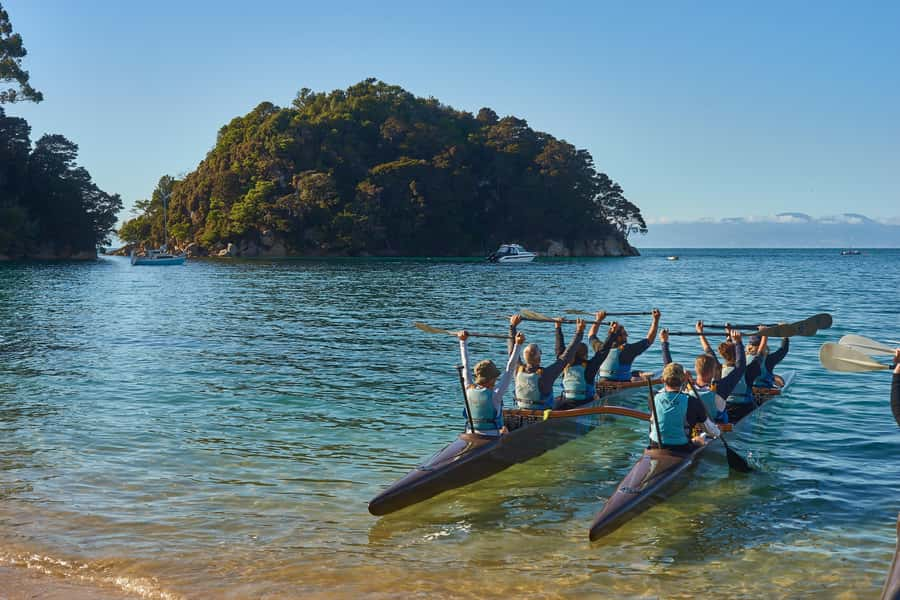
I would recommend this tour to you if you want active sightseeing with a cultural focus. It suits people who like learning place names, local customs, plant uses, and regional history while doing something physical.
It is also a strong fit for couples, families with suitable older children, and small groups who enjoy cooperating rather than splitting up. The waka makes the day social, while the boat and walking sections keep the experience from becoming repetitive.
You may want a different outing if you use a wheelchair, dislike shared activities, or find ten-hour outdoor days tiring. The combination of paddling, a 3 to 6 kilometre walk, swimming, and transfers asks for stamina.
The language of the tour is English. Angelika may guide in German and English on some departures, but German service should not be assumed for every booking.
Practical planning for the day
Wear comfortable shoes and clothing suited to changing weather. Add sunglasses, a sun hat, and a change of clothes for the swimming stop. Alcohol and drugs are not allowed.
Pickup is available from Nelson-based accommodation, with the guide meeting you in front of the property. The experience includes free cancellation up to 24 hours before departure for a full refund, and you can reserve now and pay later.
The activity lasts ten hours, but starting times can vary. Check availability before arranging other Nelson plans, especially if you are catching a bus, flight, or evening dinner reservation.
The overall rating is 5 from three recorded bookings, with particular praise for the meaningful waka experience, the care provided by Allan, Angelika’s bilingual guiding, and Jeremy’s plant knowledge. Those details point to the human side of the trip: the guide is not just steering the day but shaping how you understand the place.
Should you book the Abel Tasman Waka and Walk Tour?
Book it if you want an active, well-organized introduction to Abel Tasman that combines Māori culture, water travel, beaches, and walking in one day. The waka and karakia give the experience a clear identity, while the guide-led hike adds useful context about plants and local history.
Skip it if you want a slow beach day, private paddling as standard, or a short outing with little physical effort. At $417, the tour earns its price through variety, food, transport, and cultural guidance, but only if you plan to use all of those parts.
FAQ
How long does the tour last?
The experience lasts 10 hours, including pickup and return transport between Nelson and Abel Tasman National Park.
Is pickup from Nelson accommodation included?
Yes. Transfers from Nelson-based accommodation are included, and the guide can pick you up in front of your accommodation.
What activities are included?
The day includes a shared waka experience, boat travel, a guided 3 to 6 kilometre walk, swimming, lunch, snacks, and refreshments.
Is the waka private?
No. The standard experience uses a shared waka. A private waka is not included, though private or small-group options may be available.
What cultural topics are covered?
You learn how to introduce yourself through mihi or pepehā in Te Reo Māori, hear about Tikanga Māori, take part in karakia, and learn about Rongoā Māori and local Māori and colonial history.
Is the tour wheelchair accessible?
No. The experience is not suitable for wheelchair users.
What should I bring?
Bring comfortable shoes, sunglasses, a sun hat, a change of clothes, and clothing suited to the weather.
Can I cancel for a refund?
Yes. You can cancel up to 24 hours in advance for a full refund. You can also reserve your place and pay later.
Just added for the parks around New Zealand
- Stewart Island: Guided Wilderness Walk★ 5.0 · 10 reviews
- Stewart Island: Ulva Island Guided Wilderness Walk & Cruise★ 4.5 · 165 reviews
- Lake Tekapo Scenic 4WD Cass Valley Wilderness Tour★ 4.9 · 13 reviews
- From Queenstown: Dart River Wilderness Jet Boat Experience★ 4.9 · 123 reviews
- Auckland Private Tour: West Coast Wilderness & Piha Beach★ 4.9 · 17 reviews
- Mount Cook: Tasman Glacier & National Park Scenic Flight★ 4.8 · 20 reviews
- Abel Tasman National Park: Sailing and Self-Guided Walk★ 4.8 · 238 reviews
- Abel Tasman National Park: Self-Guided Walk & Sailing★ 4.7 · 30 reviews
New Zealand National Park Tours, compared.
Jet Boat Journey through Fiordland National Park – Pure Wilderness
Read our review →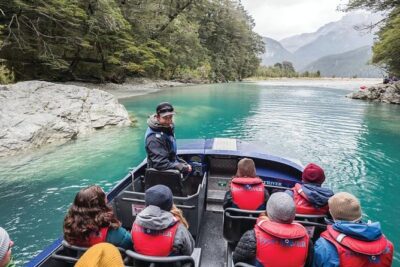
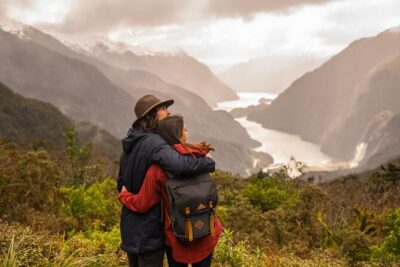
Doubtful Sound Wilderness Day Cruise from Manapouri
Read our review →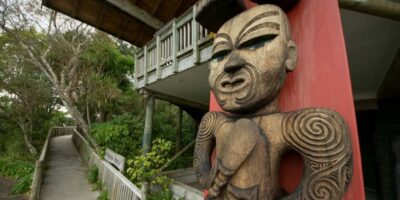
Waitakere Ranges Wilderness Experience Tour from Auckland
Read our review →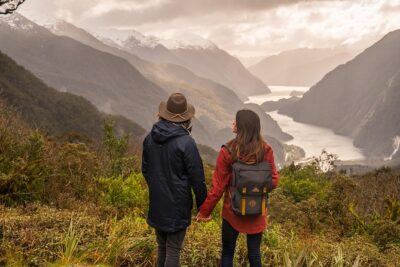
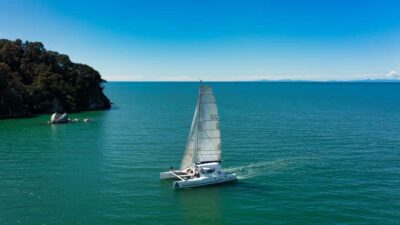
Abel Tasman National Park: Sailing and Self-Guided Walk
Read our review →Browse the lists this tour appears in