
Review · NATIONAL PARKS
Etosha National Park: Himba Village Cultural Tour
The most memorable part of this outing is the chance to see how Himba family life, cattle, craftwork, and spiritual customs fit together in one village. You will walk among traditional mud huts, open courtyards, and cattle kraals while a local guide explains what you are seeing. The setting is close to Etosha, yet the focus shifts from wildlife to people.
I like the small group limit of six, which should make it easier to ask questions and move through the village without a crowd. I also like the direct link to local income through handmade jewelry, pottery, weaving, and other goods. The main caution is the unclear timing and entrance-fee information. The advertised duration is 150 minutes, while the detailed schedule lists a 1.5-hour vehicle section and a two-hour village visit. One booking also reported an extra 300 NAD village fee, so confirm the full cost before paying.
Key points to know before you go
- A Himba village sits about 40 km from Anderson Gate, making this a practical add-on for a southern Etosha stay.
- The group is limited to six people, a useful size for questions and photographs.
- The guide speaks English and explains Himba family structure, beliefs, marriage customs, beauty practices, cattle, and village life.
- The visit can include dance, music, and craft demonstrations, though these depend on the season.
- The $64 price includes transport, a local guide, and village admission according to the activity details, but one booking reported an additional 300 NAD fee, so verify this point.
- You need to arrange your own water, drinks, food, sunscreen, and hat, as none are included.
A cultural stop near Etosha’s southern gate
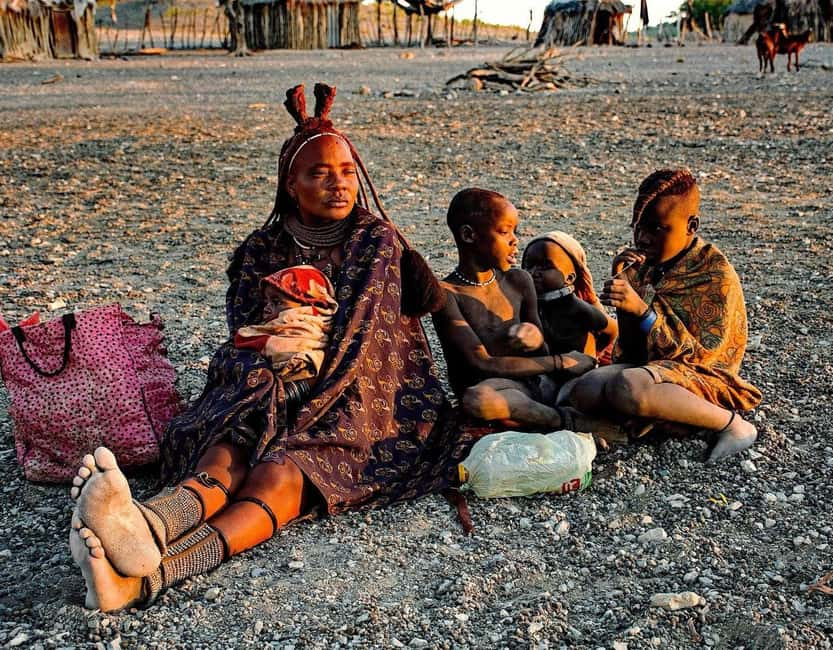
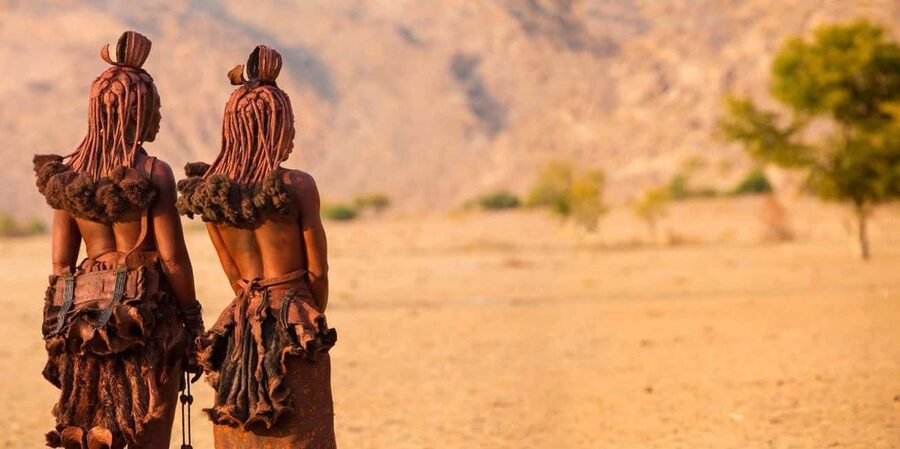
Etosha is famous for wildlife, but a visit to northern Namibia can feel incomplete if you only look at animals through a vehicle window. This outing gives you a closer look at the people and customs of the Kunene Region. The Himba are known for their distinctive clothing, red ochre-covered skin and hair, cattle-based way of life, and close family ties.
The village is about 40 km from Anderson Gate, the southern entrance to Etosha National Park. That location matters. You do not need to add a long cross-country journey to your safari plan, and the activity can fit before or after time in the park if your schedule is flexible.
You meet at Anderson Gate or at a lodge within 30 km of the gate, outside the national park. This is not a pickup service for northern or eastern Etosha. The activity operates only from the southern entrance, so check your accommodation carefully before booking.
The advertised price is $64 per person. That is reasonable if your fee includes the vehicle, guide, village entry, and a small-group visit. It becomes less attractive if the village admission fee is charged again. Since one booking reported paying 300 NAD per person at the village, I would ask for a written breakdown of the total price before departure. This is the single most important value check.
More Heritage Trips in the world:
- 2-Hour Gettysburg Battlefield Guided History Bus Tour with a National Park Guide
★ 4.5 · 2,201 reviews - Branson: Top of the Rock Ozarks Heritage Preserve
★ 4.7 · 690 reviews
The drive from Anderson Gate to the village
Transport is provided in a jeep or SUV. The schedule identifies a 1.5-hour vehicle portion, while one booking described the transfer as about 30 minutes each way. Those details do not line up perfectly with the stated 150-minute total, so you should ask the operator how much time is planned for driving and how much for the village.
The drive itself is part of the change in mood. You leave the formal park entrance and head toward a community where daily life is centered on people, livestock, family, and handmade work. The supplied information does not promise wildlife sightings or a safari route, so treat the transfer as transport rather than an extra game drive.
Bring water even if the drive is short. The area is sunny and dry, and the recommended packing list includes a hat, sunscreen, comfortable shoes, food, drinks, and a camera. You will be walking outdoors, so light clothing and shoes with a secure sole make more sense than anything dressy.
If your Etosha plans are tightly timed, allow extra room around the stated duration. A short road delay, a late pickup, or a longer village discussion could affect your next activity. This is a small cultural visit, but the timing information deserves careful checking.
Walking through huts, courtyards, and cattle kraals
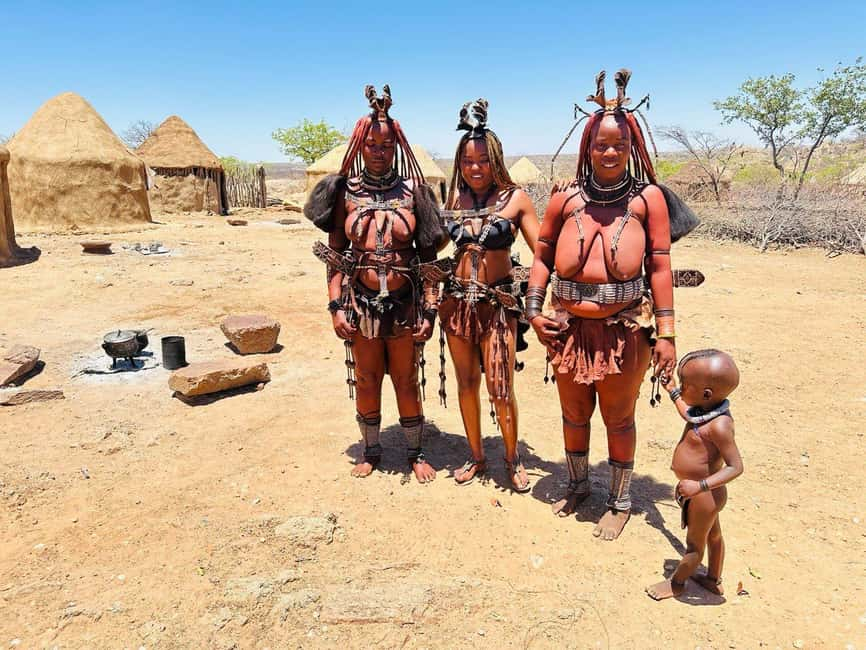
At the village, you walk through traditional mud huts known as ovahimba, open courtyards, central meeting areas, and cattle kraals. These are not decorative displays separated from daily life. They help explain how the community organizes space around family, livestock, work, and shared activity.
The local English-speaking guide is the key to making sense of the visit. You are not simply looking at buildings or clothing. The guide explains Himba social structure, spiritual practices, marriage customs, and the importance of cattle. You can ask questions as you go, and the small group should make that exchange easier.
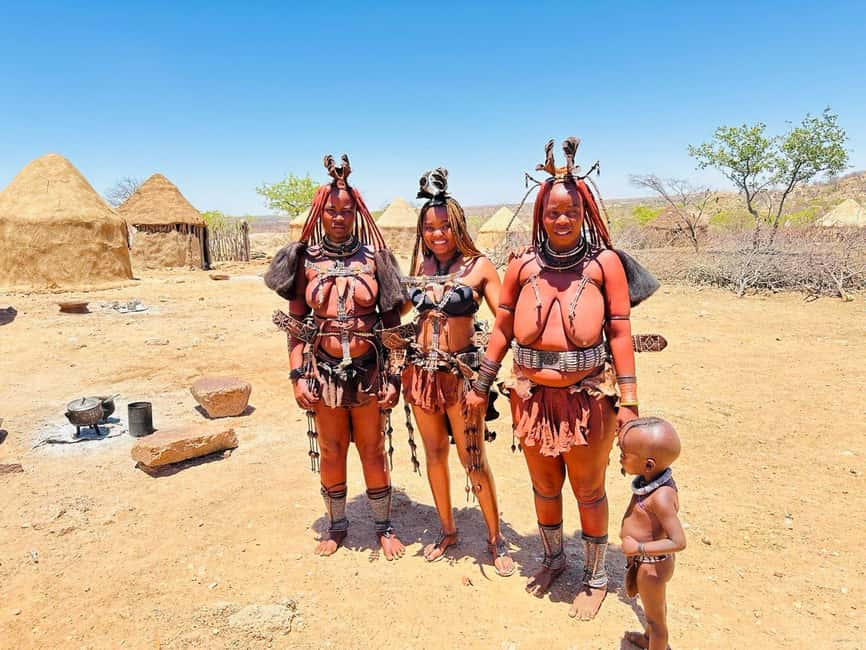
The guide also explains the Himba beauty routine involving red ochre and butter. The red color on women’s skin and hair is one of the most recognizable features of Himba appearance, but it is more meaningful when presented as part of custom rather than treated as a costume. Listen carefully to the explanation and avoid reducing the visit to photographs.
The supplied details describe customs that have remained largely unchanged for centuries, but you should still remember that this is a living community, not a museum. People may have a planned way of receiving visitors, and that does not automatically make the encounter false. At the same time, you are right to expect respectful interpretation rather than a staged performance with no explanation.
One booking judged the village activity to feel like a show for tourists, while other feedback described the visit as a direct look at everyday Himba life and praised the guides for answering questions. That contrast is useful. Go with an open mind, but keep your expectations realistic. A scheduled cultural visit will always have some presentation built into it.
Learning about Himba family life and beliefs
The most useful part of the tour is the explanation of how people, animals, land, and tradition connect. The Himba way of life includes animal husbandry, agriculture, and craftwork. Cattle are central to the village, and the kraals offer a practical starting point for understanding that importance.
You also learn about family relationships, marriage customs, and communal bonds. The activity information emphasizes the role of central meeting areas and shared courtyards, so look for how the village is arranged rather than rushing from one photo opportunity to the next.
Spiritual practices are another subject covered by the guide. The exact content can depend on the guide and the questions asked, but the stated focus includes Himba beliefs and the connection to the land. If you want a more useful visit, prepare a few respectful questions before you arrive.
For example, you could ask how cattle shape family life, how craft skills are taught, or how visitors should understand the red ochre and butter practice. You should not assume every question will have a simple answer, and you should follow the guide’s lead on personal subjects.
More national park tours around the world:
- Miami: Everglades National Park Airboat Tour & Wildlife Show
★ 4.5 · 7,296 reviews - Chiang Mai: Doi Inthanon National Park Eco-Friendly Tour
★ 4.6 · 6,667 reviews - Clear Kayak Tour of Shell Key Preserve and Tampa Bay Area
★ 5.0 · 5,800 reviews - Tenerife: Teide National Park Sunset & Stargazing Tour
★ 4.2 · 3,812 reviews
Dance, music, and handmade crafts
Depending on the season, the village visit may include traditional dance and music. This is an important qualification. Dance is listed in the schedule, but the fuller description says these performances depend on the season, so they should not be treated as guaranteed.
The same applies to craft demonstrations. You might see jewelry-making, pottery, or weaving, with the guide explaining how these skills pass between generations. Even when there is no formal demonstration, the arts and crafts market gives you a chance to support the community by buying handmade goods.
Purchasing something is optional, but it can make your visit more directly useful to the village. Ask about the items and their materials, and take time to choose rather than treating the market as a quick souvenir stop. The activity specifically presents shopping as a way to help local residents benefit from your visit.
Photography is also encouraged, but it calls for manners. The women’s red ochre, traditional clothing, huts, and Namibian surroundings make striking subjects. Still, ask permission before photographing people, especially close portraits. Put the camera away when the guide is explaining a ceremony, family custom, or belief.
The best photographs will come from paying attention first. You may find that the courtyards, cattle, craftwork, and patterns of daily activity tell you more about village life than a posed portrait.
What the $64 price really buys
At $64 per person, this is not a bargain-basement transfer. You are paying for a vehicle, a local English-speaking guide, access to the village, and a small group capped at six people. If all of those elements are delivered within the stated price, the cost can be fair, particularly for visitors who want a cultural stop without arranging separate transport.
The value depends heavily on the actual time spent at the village. A 150-minute activity leaves limited room if the drive takes a large share of the schedule. One account described roughly 30 minutes of transfer each way, while the schedule includes a 1.5-hour vehicle section and a two-hour village visit. Ask which timing applies to your departure.
There is also a direct conflict about the entrance fee. The activity details say village entry is included, but one booking reported an extra 300 NAD per person and felt this had not been explained clearly. I would not ignore that difference. Confirm whether 300 NAD is already covered, payable locally, or related to a separate village charge.
The price includes no meals or drinks. Bring your own water and snacks, especially if you are combining this with a long Etosha day. A camera, hat, sunscreen, and comfortable walking shoes are also on the practical list.
Who will get the most from this visit
I would recommend this outing to you if you want more than wildlife during a Namibia trip. It suits people who enjoy meeting local communities, asking questions, looking at handmade work, and learning how a village is organized.
It is also a sensible choice for a small family group or a couple who prefer a short cultural activity near Etosha rather than a full-day excursion. The six-person limit should keep the visit more personal than a large coach tour.
You should think twice if you want an entirely spontaneous encounter. The village visit has a guide, a planned route, a craft market, and possible dance or music. Some structure is necessary, but it can feel formal. You should also reconsider if your mobility is limited. The activity is not suitable for wheelchair users or people with mobility impairments, and the village walk takes place outdoors on foot.
The experience is not suitable for anyone looking for a meal or a complete day of entertainment. Food and drinks are not included, and the total duration is short.
Practical manners for a respectful visit
Wear comfortable shoes and protect yourself from the sun. Carry water, sunscreen, and a hat. Food and drinks are not supplied, so pack them before leaving your lodge or meeting point.
Use your camera thoughtfully. The activity invites you to capture the people and their traditional way of life, but photography should never come before courtesy. Ask before taking close pictures, listen during explanations, and avoid touching personal items or entering areas without permission.
The supplied restrictions list electric wheelchairs, fireworks, and explosive substances as not allowed. More important in daily practice is respect for the Himba people and their culture. You are entering a community, not simply visiting a photo stop.
The tour is conducted in English. If you need interpretation in another language, no other language is specified, so ask before booking.
Should you book the Himba village tour?
Book it if you are staying near Anderson Gate, want a small-group cultural activity, and value direct explanations of Himba customs, cattle, family life, crafts, and beliefs. The local guide, six-person group, and chance to buy handmade goods are the strongest reasons to go.
Before booking, confirm three things: the exact driving time, the actual time inside the village, and whether the 300 NAD entrance charge is included. If the answers are clear and the schedule fits your Etosha plans, $64 can be a fair price for a focused cultural visit.
I would skip it if you are rushing to catch a flight, dislike structured village visits, or cannot comfortably walk outdoors. For everyone else, it offers a useful change of pace from game drives, with enough substance to make the stop worthwhile when handled respectfully.
FAQ
Where does the Himba village tour start?
It starts at Anderson Gate, the southern entrance to Etosha National Park, or at a lodge within 30 km of Anderson Gate outside the park.
Does the tour operate from every Etosha entrance?
No. This activity operates only from Etosha’s southern entrance, Anderson Gate.
How far is the village from Anderson Gate?
The village is described as being about 40 km from Anderson Gate.
How long does the activity last?
The advertised duration is 150 minutes. The detailed timing also refers to a vehicle section and a village visit, so confirm the exact schedule before departure.
How many people can join the tour?
The group is limited to six participants.
Is transportation included?
Yes. Transportation by jeep or SUV is included.
Is a guide included?
Yes. A local English-speaking guide leads the visit.
Is the village entrance fee included?
The activity details state that village entrance is included. However, one booking reported an additional 300 NAD per person, so confirm the fee arrangement before you go.
Are food and drinks provided?
No. Meals and drinks are not included. You should bring your own food, drinks, and water.
Is the tour suitable for wheelchair users?
No. The activity is not suitable for wheelchair users or people with mobility impairments.
Just added for the parks around the world
- Stone Town: Jozani Chwaka Bay National Park Half-Day Tour★ 4.7 · 5 reviews
- Stockholm: Dog Walk in Nature Reserve with Swedish Fika★ 5.0 · 3 reviews
- Stockholm: Sunset Hike in Tyresta National Park with Meal★ 4.8 · 126 reviews
- Stockholm: Self Guided Kayak Adventure in Nature Reserve★ 5.0 · 69 reviews
- Stewart Island: Guided Wilderness Walk★ 5.0 · 10 reviews
- Stewart Island: Ulva Island Guided Wilderness Walk & Cruise★ 4.5 · 165 reviews
- Wasgamuwa: Wasgamuwa National Park Private 3-Hour Safari★ 4.9 · 10 reviews
- Sri Lanka: Yala National Park Private Safari★ 3.2 · 5 reviews