
Review · BAR HARBOR
Guided Ebike Tour of Acadia National Park Carriage Roads
Acadia’s carriage roads are one of the best places in Maine to ride a bicycle, and an e-bike lets you cover a surprising amount of ground without turning the day into a test of endurance. You’ll climb Paradise Hill, pass beaver ponds, follow Eagle Lake and Jordan Pond, and roll over handsome stone bridges.
I like the small-group format, which keeps the ride personal and makes it easier to ask questions or stop for a photo. I also like the patient bike instruction. First-time e-bikers, including older riders who have not cycled in years, can get comfortable quickly. The main caution is distance: this is roughly a 20 to 22 mile ride, and the four-hour estimate can stretch closer to five hours when the group stops often.
Key points to know before you book
- Roughly 20 to 22 miles of carriage roads: You cover a large section of Acadia, not just a short scenic loop.
- A real pedal-assist bike: The motor helps as you pedal, but you still need to ride and manage the bike.
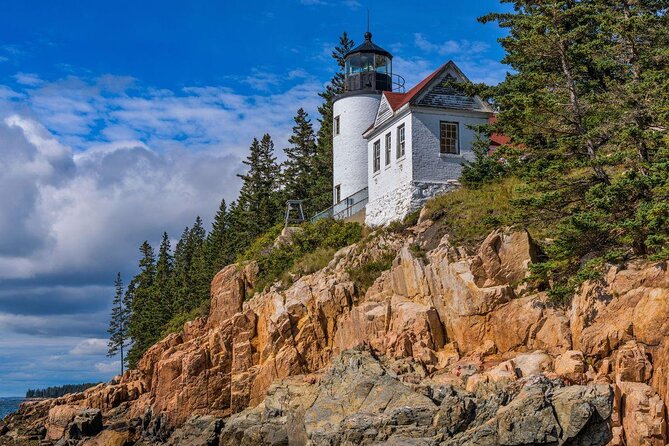
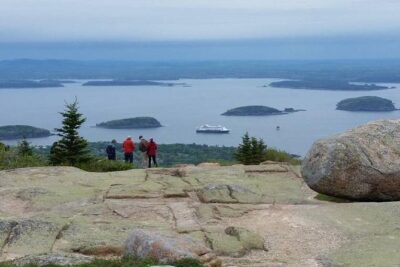
- Paradise Hill starts the day: Your first climb earns you a fine view over Bar Harbor, Porcupine Island, and Frenchman Bay.
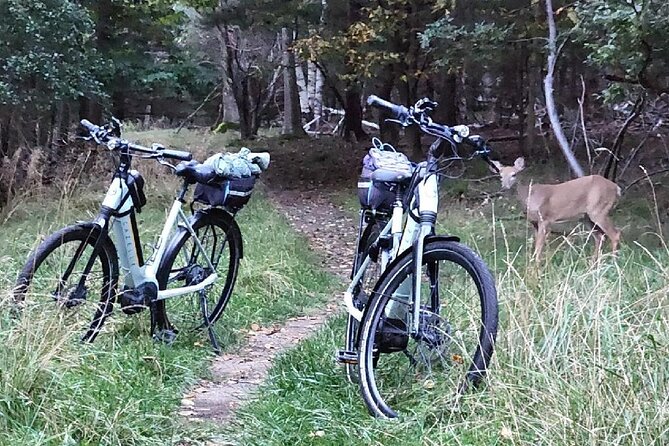
- Wildlife may be part of the ride: The stop at a beaver pond is a memorable chance to watch active beavers at work.
- Jordan Pond is the main refreshment stop: You get about 15 to 20 minutes for restrooms, a quick purchase, or a short side ride.
- Guides make the difference: Wilton, Thomas, Merrill, Dave, Paul, and others have been praised for safety instruction, park knowledge, and calm group management.
Why an e-bike is the right tool for Acadia
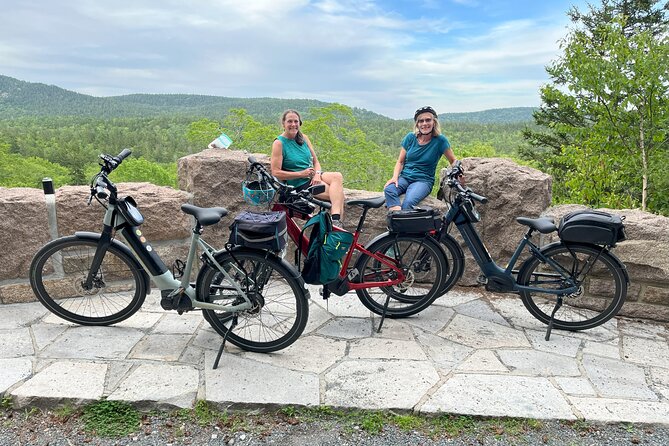
Acadia’s carriage roads were built for slow, scenic travel, but they are not flat park paths. You will encounter steady climbs, rolling sections, gravel, shade, sun, and enough mileage to make a conventional bicycle feel like work by the end of the day.
The e-bike helps you keep moving at a comfortable pace. It does not ride for you. You still pedal, steer, shift, and pay attention to the road surface. One important detail is that the bikes are pedal assist, not scooters with an automatic ride mode. You get help on hills, but you remain an active part of the ride.
That balance is useful. Fit cyclists can use less assistance and get a stronger workout. Newer riders can use more help on climbs and conserve energy for the scenery. Several guides have been praised for adjusting their pace to a mixed group, so you should not feel pressured to race ahead or apologize for being new to e-bikes.
You will receive an overview of the bike before setting out. Take the seat adjustment seriously. One rider with no previous cycling experience found the correct seat height and gear made the difference between panic and confidence. Ask for help before the group leaves, not halfway up the first hill.
More Guided Trips in the USA:
- 2-Hour Gettysburg Battlefield Guided History Bus Tour with a National Park Guide
★ 4.5 · 2,201 reviews - Bryce: Guided Sightseeing Tour of Bryce Canyon National Park
★ 4.9 · 805 reviews - Joshua Tree National Park Self-Guided Driving Audio Tour
★ 4.5 · 762 reviews
Starting at Hulls Cove and climbing Paradise Hill
The tour begins at Hulls Cove Visitor Center at 10 a.m. This is a practical meeting point for reaching the park’s carriage roads, though you should plan your transportation carefully. A taxi service was used successfully by one person who discovered that rideshare services such as Uber and Lyft are not available in the area.
The first section climbs Paradise Hill. That opening effort pays off quickly with a view toward Bar Harbor, Porcupine Island, and Frenchman Bay. It is a good first look at how the tour works: pedal steadily, pause for the view, listen to the guide, and let the group settle into a rhythm.
From there, you head toward the eastern end of Witch Hole Pond. The route continues for about 2.5 miles to Duck Brook Bridge, where a restroom is available. This early part gives you a useful test of the bike and your own comfort level. If you need to change the seat, adjust the assistance, or ask about gears, do it here.
The carriage roads are not paved like a city bike path. Their firm surface is manageable, but you should stay alert, especially on curves and downhill sections. The guide’s position and pace matter, and the best guides keep the group together without making the ride feel tightly controlled.
Eagle Lake and the beaver pond stop
After Duck Brook Bridge, the group often pauses at a beaver pond. This is more than a quick roadside photo. The area can offer a chance to watch beavers working on their dam and lodge, with the guide explaining what you are seeing.
Wildlife sightings are never guaranteed, but the stop adds a natural-history element that you would miss if you simply pedaled from one viewpoint to the next. Thomas has been especially praised for his interest in animals and plants, while other guides have added practical information about surviving in the woods and reading the local environment.
The ride then continues toward Eagle Lake. The section from Duck Brook Bridge to the southern end of the lake covers about four miles. At Eagle Lake, you ride down the west side, with water, forest, and mountain views opening up around the road.
This is one of the places where the e-bike earns its keep. You have already climbed and covered several miles, yet the tour is still early in the day. The assistance lets you look around and enjoy the setting instead of saving every bit of energy for the next hill.
Jordan Pond, stone bridges, and a useful break
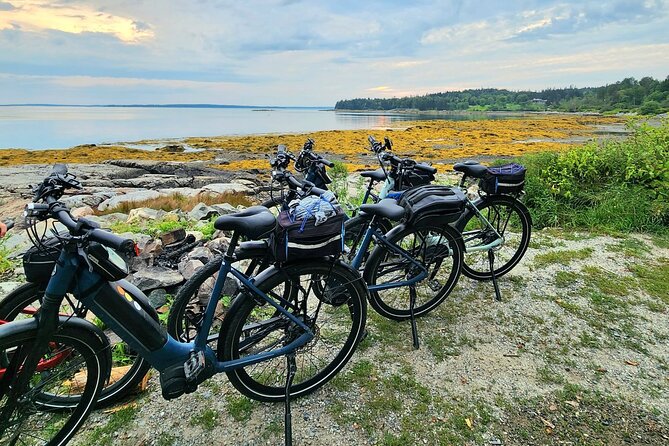
After Eagle Lake, you soon reach the west side of Jordan Pond. Here, the views turn especially dramatic, with Penobscot and Pemetic mountains rising beyond the water. The ride through this section covers about six miles and includes several notable bridges.
You stop at the West Branch Jordan Stream Bridge, Cliffside Bridge, and Amphitheater Bridge. These structures are part of what makes Acadia’s carriage roads special. They are practical works of stone and engineering, but they also fit the setting so well that they become part of the scenery.
The guide can add context about the roads, the bridges, the park, and the people who shaped Acadia. Wilton has been praised for explaining local history while also inviting questions and learning from people in the group. Merrill has been described as both informative and funny, while Paul has been praised for clear instruction and safe leadership.
At the southern end of Jordan Pond, you get a short break of about 15 to 20 minutes. Jordan Pond House has restrooms, a gift shop, and quick grab-and-go food service. There is not enough time for a leisurely meal, so bring a snack or plan to buy something simple rather than expecting a full restaurant stop.
You can also use part of the break for a short loop toward Cobblestone Bridge. That option is attractive if you want to keep riding, but it means less time to rest. The ride is long enough that you should not feel guilty about sitting down, using the restroom, and eating something.
More national park tours around the USA:
- Miami: Everglades National Park Airboat Tour & Wildlife Show
★ 4.5 · 7,296 reviews - Clear Kayak Tour of Shell Key Preserve and Tampa Bay Area
★ 5.0 · 5,800 reviews - Discover Rocky Mountain National Park
★ 5.0 · 3,419 reviews - Mt. Rainier National Park Highlights Tour
★ 5.0 · 3,156 reviews
Bubble Pond and the quietest stretch
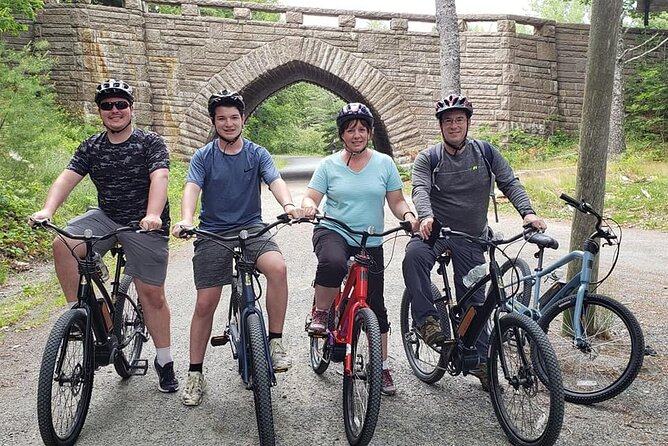
From Jordan Pond House, you ride about five miles along the carriage roads to Bubble Pond. This is one of the quieter sections of the tour, with dense woods, streams, and small ponds along the way.
I like this part because it gives the day a change of pace. Jordan Pond brings the big mountain view, bridges provide the human story, and the route to Bubble Pond brings you back into the woods. The combination keeps the tour from feeling like a string of scenic overlooks.
A restroom is available at Bubble Pond, and the scheduled stop is about 15 minutes. Use it. You are still not finished, and the final section has another five miles before returning to the start.
The forest can alternate between deep shade and open sun. That makes clothing more important than the forecast alone suggests. Bring layers. Even on a pleasant day, shaded sections can feel cooler, while exposed stretches may feel warm after several hours of pedaling.
The final ride beside Eagle, Breakneck, and Witch Hole ponds
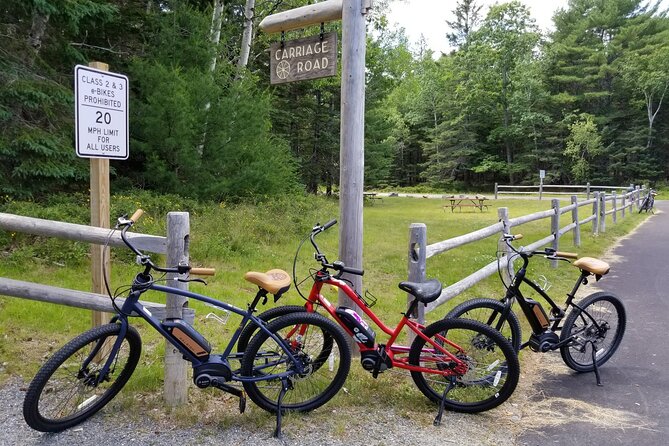
Leaving Bubble Pond, the group heads toward the east side of Eagle Lake. Depending on the time of day, this section may offer more sun on the water. You then continue along Breakneck Pond and the west side of Witch Hole Pond before descending from the carriage roads and returning to Hulls Cove.
The final five miles can feel easy on a good day, but fatigue is real. The full route adds up to roughly 20 to 22 miles, and some departures take closer to five hours because of questions, wildlife viewing, photo stops, or a relaxed pace.
That extra time is not automatically a problem. One of the pleasures of a guided ride is having someone point out details you might miss and give you permission to pause. Still, you should not schedule a tight afternoon commitment immediately afterward. A four-hour tour is the estimate, not a firm promise.
If you want a quick workout with minimal stopping, this may feel too slow. If you want to see a broad part of Acadia without driving between viewpoints, the pace makes sense.
What the guides add to the day
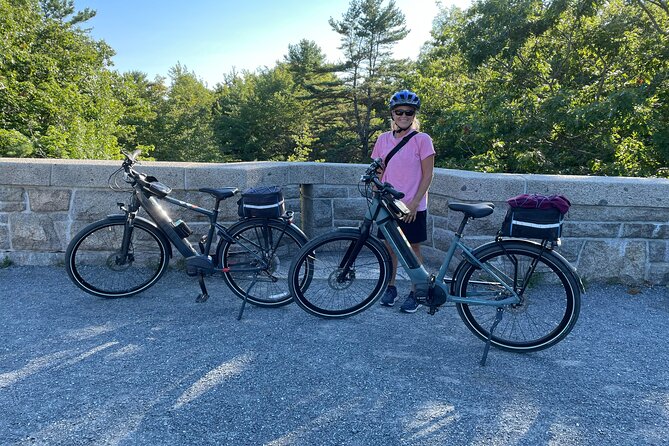
The bike is useful, but the guide is the reason to choose a guided tour instead of simply renting an e-bike. A good guide handles the practical details, watches the group, sets a safe pace, and turns the ride into more than a scenic exercise session.
Wilton has been praised for his passion for Acadia, his history stories, and his ability to manage riders with different skill levels. Thomas has been singled out for safety, wildlife knowledge, patience, and enthusiasm. Merrill has been appreciated for a lively style and strong park knowledge, while Dave has helped complete beginners feel secure on their first bicycle ride.
There has been at least one sharply negative account involving a late start and unfocused commentary. The company responded by saying guides are trained and monitored, but guide style can vary. Most of the available feedback is strongly positive, yet you should understand that a small-group tour depends heavily on the individual leading your ride.
The best approach is to speak up early. Tell the guide if you need a slower pace, a seat adjustment, a clearer explanation, or a photo stop. The group size is capped at nine, which is small enough for the guide to keep track of everyone and respond to individual needs.
The $190 price and what you receive
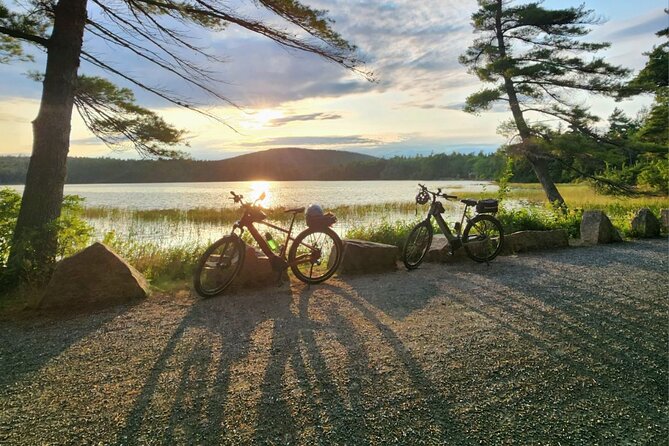
At $190 per person, this is not a cheap bike rental. The value comes from the amount of ground covered, the e-bike itself, the instruction, the route planning, and the guide’s role throughout the day.
A self-guided ride may cost less, but you would need to choose your route, manage navigation, judge the hills, and decide which bridges, ponds, and viewpoints are worth reaching. You would also lose the chance to hear about beavers, park history, road construction, local plants, and the area’s geology as you ride.
The price makes the most sense if you have limited time in Acadia or want to see more than the easiest nearby roads. It also works well for a family group or pair with mixed fitness levels. Strong cyclists may find the guided pace less flexible than riding alone, but most people will appreciate not having to plan a 20-plus-mile route in an unfamiliar park.
Bring snacks even though Jordan Pond House offers quick food. Several hours on an e-bike can leave you hungry, and the scheduled stop is short. Water, sun protection, comfortable clothing, and layers are sensible choices. The roads are not paved, so wear clothing suited to a gravel ride rather than a casual stroll.
Who should book this ride?
I would recommend it to you if you want a broad look at Acadia’s carriage roads and are comfortable being on a bicycle for several hours. It is especially useful for first-time e-bikers, older riders who are unsure about their fitness, and families with members who ride at different speeds.
You must be at least 16, and most people can participate, but this is still an active outing. You should be able to steer, pedal, brake, and stay alert on an unpaved route. The e-bike reduces the strain, but it does not remove the physical work.
I would hesitate if you dislike gravel riding, need a guaranteed four-hour finish, or want long meals at Jordan Pond House. I would also think twice if you want complete freedom to stop whenever you like. The guide does allow time for photos and questions, but you remain part of a group.
Free cancellation is available up to 24 hours before the 10 a.m. start. If poor weather cancels the ride, you can choose another date or receive a full refund. Changes made within 24 hours are not accepted, so check the forecast before the final cancellation window closes.
Should you book the Acadia carriage-road e-bike tour?
Book it if you want to see a lot of Acadia by bicycle without needing the strength of a serious cyclist. The route combines major sights, quiet woods, bridges, ponds, wildlife possibilities, and mountain views in one well-planned outing.
The best reason to choose it is not speed. It is access. An e-bike lets you reach Eagle Lake, Jordan Pond, Bubble Pond, Breakneck Pond, and Witch Hole Pond in one day, while a guide adds safety and local detail.
Pack snacks, bring layers, allow five hours instead of four, and expect to pedal. If that sounds like your kind of day, $190 is a fair price for a memorable and efficient way to see Acadia.
FAQ
Where does the tour begin and end?
The tour begins at Hulls Cove Visitor Center, 25 Visitor Center Road, Bar Harbor, Maine. It ends back at the same meeting point.
What time does the tour start?
The scheduled start time is 10 a.m.
How long is the tour?
The tour is listed as approximately four hours. Because of photo stops, questions, wildlife viewing, and group pace, you should allow closer to five hours.
How far will I ride?
The route covers roughly 20 to 22 miles of Acadia’s carriage roads. The listed sections include Paradise Hill, Eagle Lake, Jordan Pond, Bubble Pond, Breakneck Pond, and Witch Hole Pond.
Is the tour suitable for a first-time e-biker?
Yes. First-time e-bikers are welcome, and instruction is provided before the ride. The bicycles use pedal assist, so you still need to pedal, steer, and manage the bike.
What is the cancellation policy?
You can cancel at least 24 hours before the start time for a full refund. Cancellations or changes made less than 24 hours before the tour are not refunded or accepted. If bad weather cancels the ride, you can select another date or receive a full refund.
Just added for the parks around the USA
- St. George: Sunset ATV Adventure near Zion National Park★ 5.0 · 12 reviews
- Springdale: Guided eBike Tour in Zion National Park★ 4.9 · 61 reviews
- Small Group: Olympic National Park Day Tour From Seattle★ 4.7 · 133 reviews
- Seattle:Small Group Mount Rainier National Park 1-Day Tour★ 4.6 · 46 reviews
- Sitka: Guided Alaskan Wilderness Trail Adventure Hike★ 5.0 · 3 reviews
- Seward: Kenai Fjords National Park Extended Cruise★ 5.0 · 47 reviews
- Seward: Captain’s Choice Kenai Fjords National Park Tour★ 5.0 · 16 reviews
- Seward: Kenai Fjords National Park Glacier & Wildlife Cruise★ 4.9 · 76 reviews
Bar Harbor National Park Tours, compared.
Narrated Bus Tour of Bar Harbor and Acadia National Park
Read our review →
Ultimate Acadia National Park Self-Guided Driving Audio Tour
Read our review →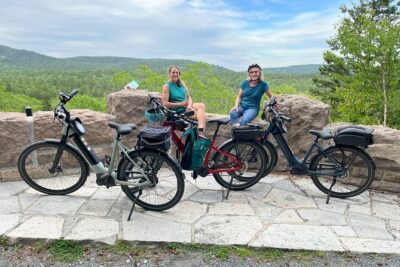
Self-Guided Ebike Tours of Acadia National Park Carriage Roads
Read our review →
6 Hour: Premiere & Private Acadia National Park with Lobster Pier
Read our review →
Bar Harbor: Acadia National Park Tour with Lobster Roll
Read our review →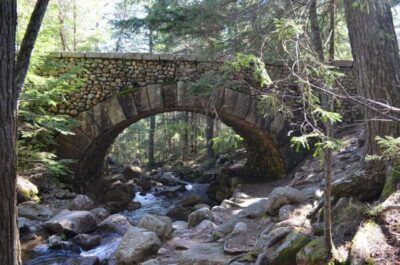
Bar Harbor: Acadia National Park Small-Group Guided Tour
Read our review →Browse the lists this tour appears in