
Review · USA
Hilo: Hawaii Volcanoes National Park Flight
The most striking part of this flight is the quick shift from Hilo’s green coast to Kilauea’s broad caldera, black lava fields, and the volcanic cone of Puʻu ʻŌʻō. In one hour, you see parts of Hawaii Volcanoes National Park that would take much longer to reach on foot or by car.
I like the small six-person cabin, which gives the pilot a chance to explain the island’s geology, and I like the route’s variety: volcanoes, black sand beaches, jungle waterfalls, and distant views of Mauna Kea and Mauna Loa. The drawback is simple but important: weather decides what you see, and the waterfall portion is not guaranteed.
Key points at a glance
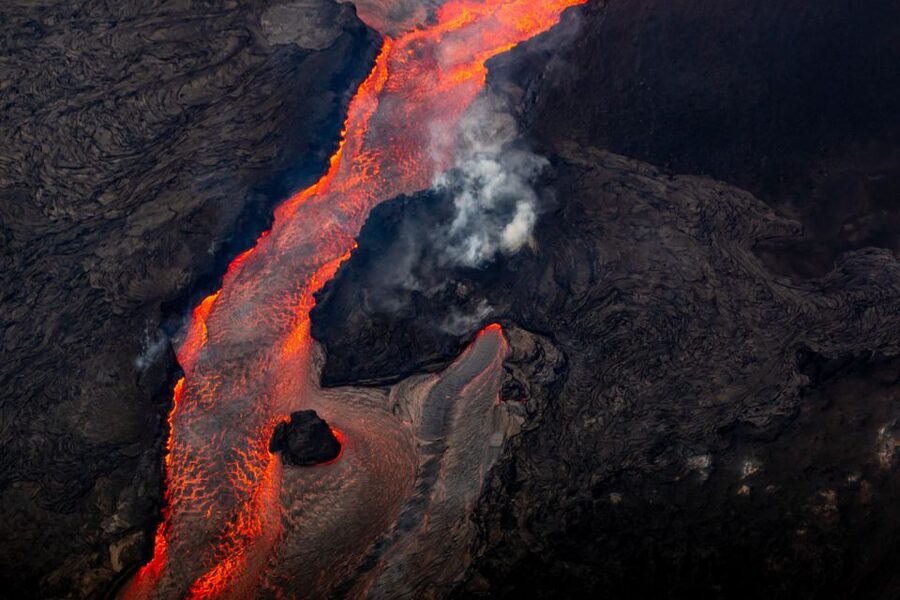
- Kilauea from above: Look into the caldera and see how volcanic forces have reshaped the island.
- Puʻu ʻŌʻō cone: This distinctive volcanic feature gives you a clear view of an area that is difficult to appreciate from ground level.
- Six-person flight: The small group keeps the ride more personal than a large sightseeing aircraft.
- Waterfalls and black sand: The route may include jungle waterfalls, blue pools, and beaches formed by old lava flows.
- Strong pilot commentary: Pilots including Andrew, Sam, Matt, and Drew have been praised for clear explanations and careful flying.
- Weather-sensitive route: The exact sights can change, so book this for the overall aerial view rather than one guaranteed feature.
Flying from Hilo toward Hawaii Volcanoes National Park
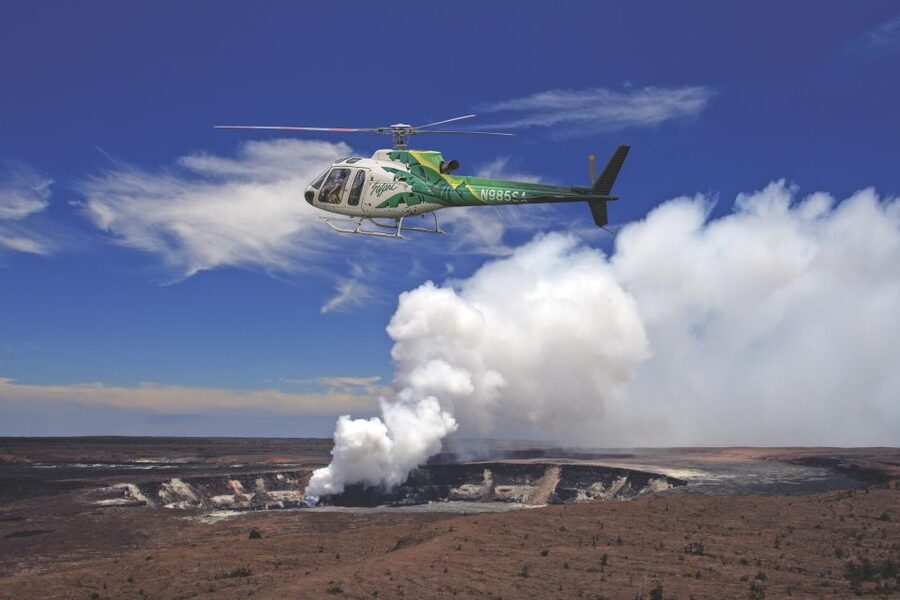
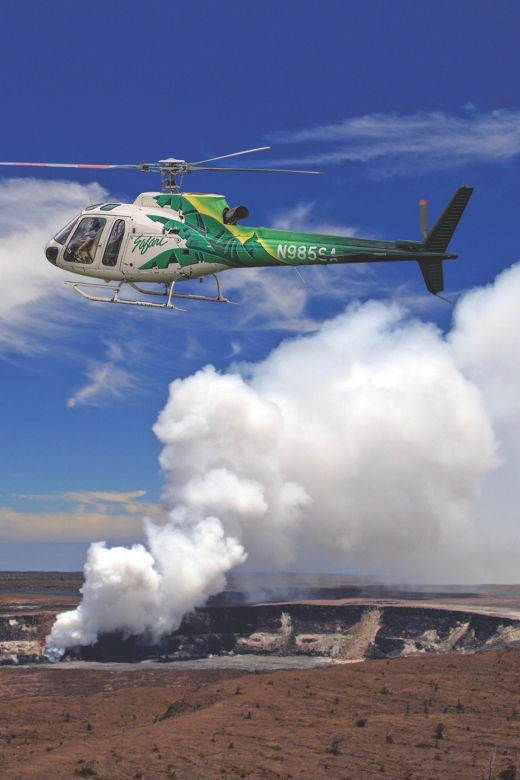
You meet at the Safari Helicopters office at 2220 Kekuanaoa Street in Hilo. From there, the helicopter heads toward Hawaii Volcanoes National Park, giving you a fast change of scenery from coastal Hilo to the island’s volcanic interior.
The flight lasts one hour, so this is not a slow, all-day sightseeing trip. It is a compact aerial tour built around the big sights. That makes it useful if you have limited time on the Big Island, or if you want to add an aerial view to a longer visit by car.
I would think of the flight as a moving story about how Hawaii was made. You begin over green, wet country, then see older lava fields, newer black ground, volcanic cones, and the ocean edge where lava once reached the sea. From the air, these changes make sense in a way they often do not from a roadside viewpoint.
The group is limited to six people. That matters because helicopter cabins are close quarters, and a smaller load usually makes it easier to hear the pilot’s comments. Previous pilots named Andrew, Sam, Matt, and Drew have been singled out for safety, route decisions, island history, and geology. The best part of the experience may be the combination of the view and the running explanation.
More Volcano National Park Tours in the USA
- Hilo Shore Excursion: Volcanoes National Park & Black Sand Beach
★ 4.5 · 2,338 reviews - Big Island: Fat Tire E-Bike Tour through Volcanoes National Park
★ 5.0 · 546 reviews - Big Island, Hawaii: Volcanoes National Park Safari
★ 4.5 · 545 reviews
Kilauea caldera, the flight’s main event
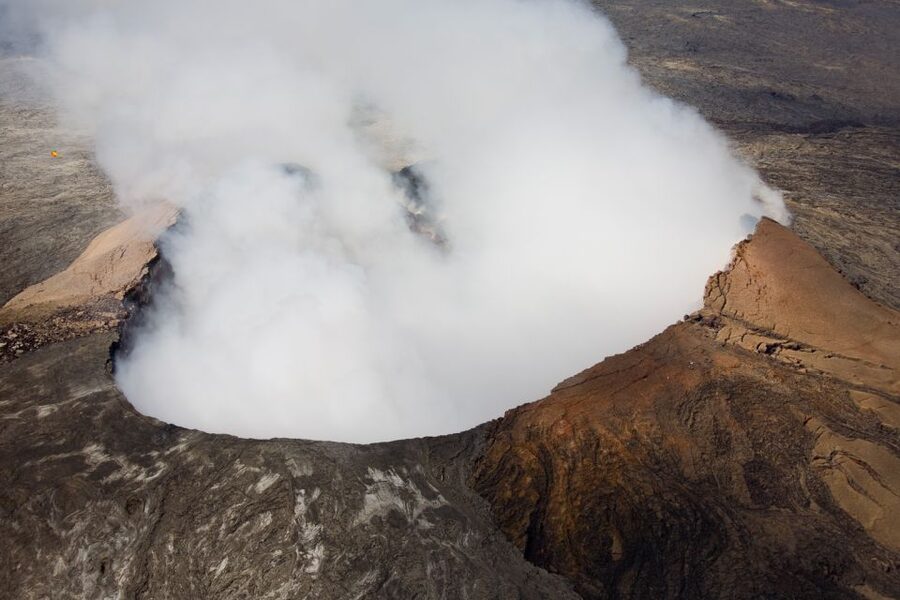
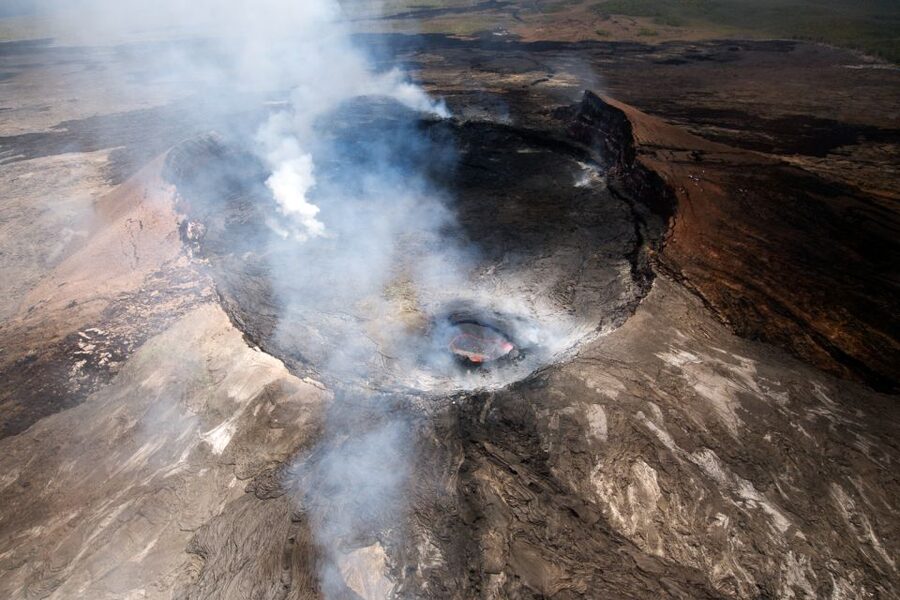
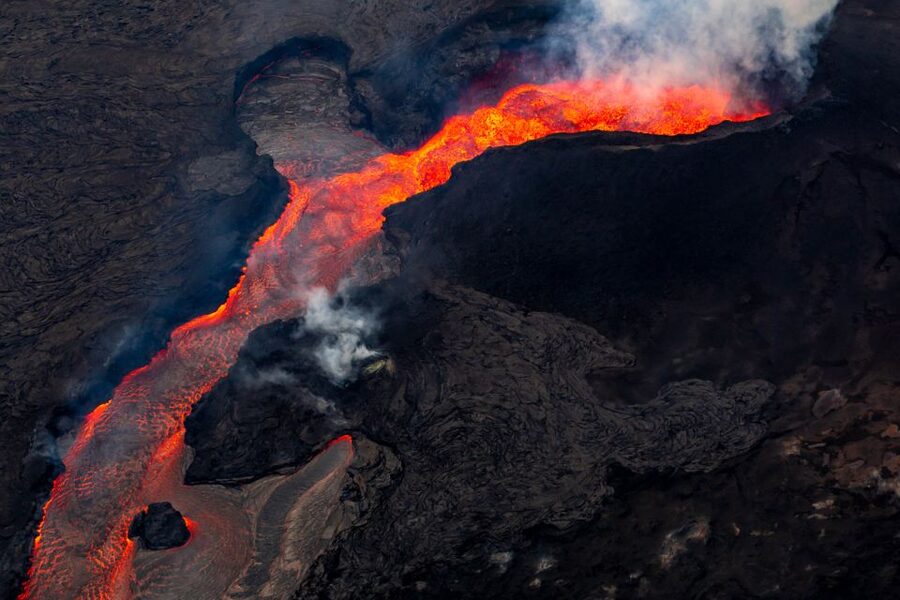
Kilauea is the center of this tour. From above, the caldera gives you a broad view of volcanic ground that is hard to take in from a single overlook. You can see the shape of the crater area, dark flows, and the way the ground has changed over time.
The word ever-changing is important here, but it should not be read as a promise of glowing lava. The tour description focuses on old lava fields and new fields that are forming, along with the effects of volcanic activity. Conditions and volcanic activity can change, so you should not book this flight expecting one exact eruption feature.
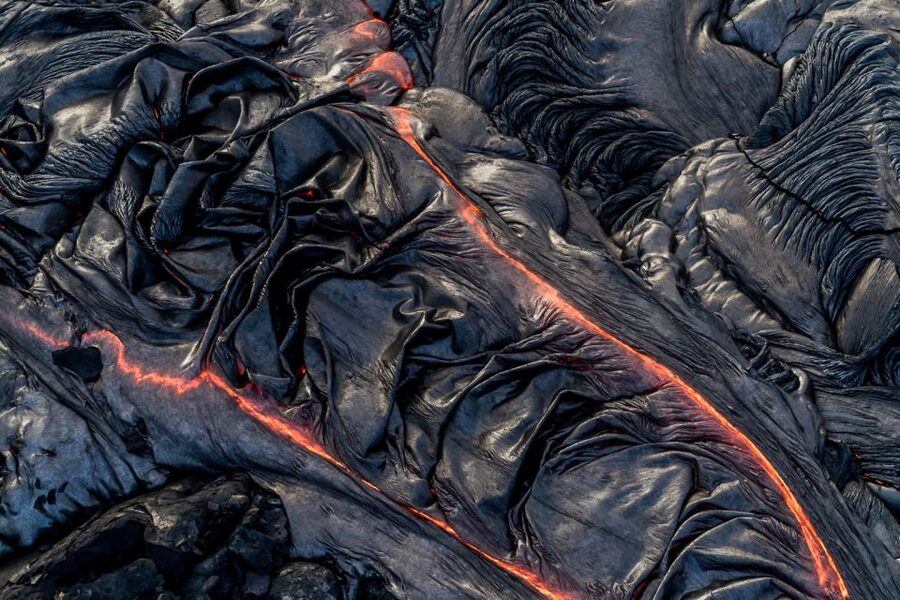
A helicopter also helps you see scale. On the ground, a lava field can feel like a rough patch of black rock. From the air, it becomes part of a much larger pattern, showing where lava moved, cooled, and spread. The pilot’s explanation helps turn that view into something you can understand rather than just photograph.
This is also one of the strongest reasons to choose the flight over a simple park drive. Roads and overlooks give you close-up detail, while the helicopter shows the full shape of the volcanic area. If you have already seen Kilauea from the ground, the flight adds a different point of view rather than repeating the same stop.
Puʻu ʻŌʻō and the marks of volcanic change
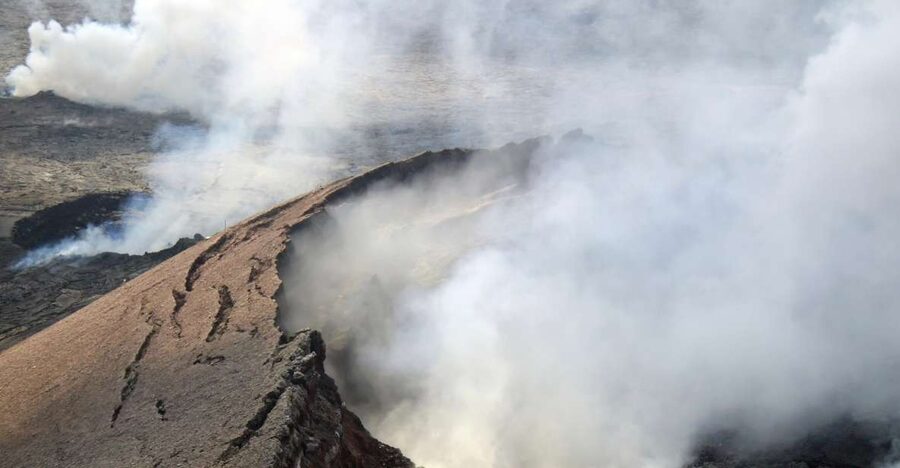
Puʻu ʻŌʻō is another key feature on the route. Its volcanic cone gives the flight a recognizable focal point, and it helps show the rough, irregular forms created by eruptions and cooled lava.
The cone is not presented as a landing stop. You see it from the air, along with the surrounding volcanic country. That is worth keeping in mind if you prefer tours with time on the ground. This experience is about perspective, motion, and distance, not walking through the park or stopping for a ranger talk.
The aerial view also lets you compare older and newer lava areas. The contrast may be subtle from a moving aircraft, especially if clouds or haze limit visibility, but the pilot can point out what you are seeing. One passenger described a pilot changing the planned route after better weather appeared farther up the mountain. That is a useful example of how the flight can adapt while keeping safety first.
Do not expect a fixed route with every feature guaranteed. The safest and clearest section of the park may change on the day. A flexible route can work in your favor, but it also means you should treat the advertised sights as planned targets rather than promises.
Black sand beaches and the coast shaped by lava
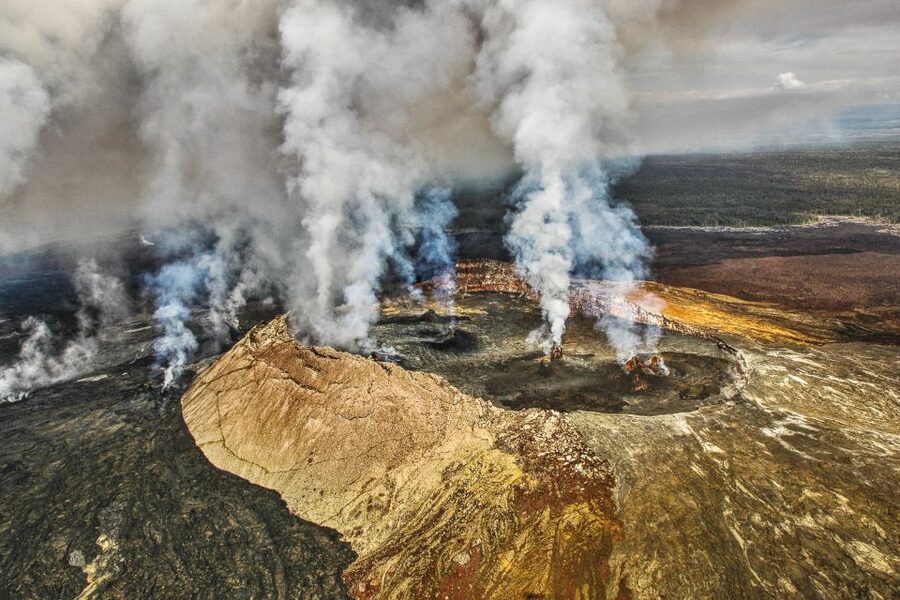
The flight also heads over black sand beaches where lava once flowed into the sea. These beaches offer a strong contrast with the forest and volcanic interior. The dark shore is a direct reminder that the island is still being built and reshaped by volcanic forces.
From a helicopter, you do not get a beach visit or time to walk on the sand. Instead, you see the meeting point between land and ocean from above. That makes the view quick but useful, especially if you want to understand how lava reached the coast.
The coast may also help break up the volcano views. An hour spent looking only at dark rock could feel repetitive, but this route changes colors and textures along the way. Green forest, black shore, blue water, gray volcanic ground, and the pale sky all arrive in short succession.
If your main goal is a beach day, this is not the right tour. If you want to see how the coast fits into the island’s volcanic story, it is a worthwhile part of the flight.
Same parks, a different way to see them:
- Miami: Everglades National Park Airboat Tour & Wildlife Show
★ 4.5 · 7,296 reviews - Clear Kayak Tour of Shell Key Preserve and Tampa Bay Area
★ 5.0 · 5,800 reviews - Yosemite Highlights & Giant Sequoias Day Tour from San Francisco
★ 4.5 · 3,455 reviews - Discover Rocky Mountain National Park
★ 5.0 · 3,419 reviews
Waterfalls, jungle, and a weather-dependent promise
One of the more appealing parts of the route is the possibility of flying over waterfalls in dense jungle. Water drops through green forest into deep blue pools, creating a sharp contrast with the dry, black volcanic areas.
This is also the feature to approach with the most caution. All specific sites depend on weather, and one passenger specifically noted completing the flight without a waterfall view. That does not make the tour poor, but it shows why you should not choose it only for waterfalls.
Hilo’s wet climate helps explain the thick jungle and flowing water, while the volcanic areas nearby can look stark and dry. The flight connects those two sides of the island in a short span. I like that contrast because it gives you a better sense of how varied the Big Island can be.
Clouds may also affect mountain views and the visibility of specific park features. The pilot can adjust the route, but no flight can guarantee clear skies over every target. If the day looks unsettled, keep your expectations broad and value the overall experience rather than a perfect checklist.
Mauna Kea and Mauna Loa from the air
The route includes views toward Mauna Kea and Mauna Loa, two enormous volcanoes that shape the Big Island’s profile. Seeing them from a helicopter helps you grasp their size and position in relation to Kilauea and the coast.
These distant views may not be as dramatic as looking directly into Kilauea, but they add useful context. You are not seeing one isolated volcano. You are seeing several major volcanic forms within the same island, each contributing to Hawaii’s shape.
The clarity of these views depends on weather, light, and cloud cover. The tour does not promise a landing or a close approach to both mountains. Instead, they appear as part of the wider flight route. If you want the best chance of seeing them, ask at check-in how conditions look that day, though the pilot makes the final safety decision.
What the pilot and crew add
A helicopter ride can be impressive even without commentary, but clear narration makes a major difference. Pilots Andrew, Sam, Matt, and Drew have been praised for explaining the island’s history and geology while also making passengers feel safe.
Sam, in particular, has been noted for friendly, first-rate information about the island, its history, and its volcanoes. Andrew has been praised for both skill and route judgment. Matt provided facts throughout one flight, while Drew helped make another passenger feel secure from the best seat in the aircraft.
The ground crew also plays an important role. You receive safety information before takeoff, and the staff helps manage schedules when weather affects the route. That patience matters because a helicopter flight is more dependent on conditions than a standard bus tour.
The experience is not meant to be silent or purely scenic. Listen to the pilot’s explanations, and keep your camera ready without letting it take over the flight. A few passengers have described the tour as educational as well as scenic, which is the right way to approach it.
Is $379 a fair price for one hour?
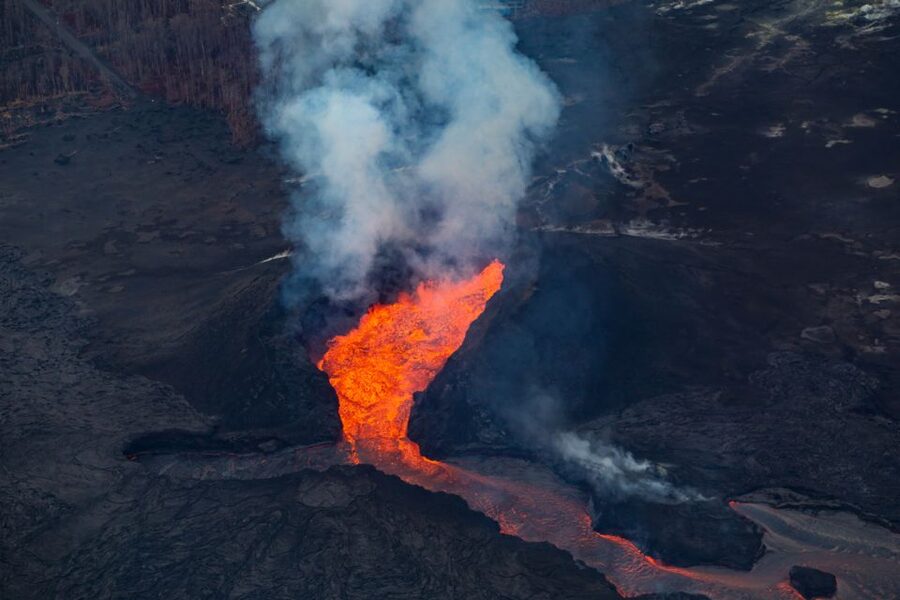
At $379 per person, this is a costly activity. You are paying for an aircraft, pilot, fuel, safety procedures, and a small group rather than a full-day excursion. For a couple or family, the total can rise quickly.
The value depends on what you want from the Big Island. If you already plan to spend several days visiting Hawaii Volcanoes National Park by car, you may see the helicopter as an optional second look. If your time is short, the flight gives you a large amount of geographic context in only one hour.
I think the price is easier to justify if you care about volcanoes, photography, or seeing the island from a point of view that roads cannot provide. It is less compelling if you mainly want a waterfall stop, a beach visit, or a long cultural tour.
The overall rating is 4.4 from 248 ratings, and 86 percent of participants gave the transport a perfect score. The strongest pattern is not one specific sight. It is the mix of safe flying, strong pilot commentary, good organization, and striking views. That is the value you are really buying.
Who should book this flight?
This tour suits adults and older children who are comfortable in a small aircraft and want a fast overview of the Big Island’s volcanic core. It is especially useful for first-time visitors, photographers, and anyone who wants to compare old lava fields, newer volcanic ground, jungle, and coast in one trip.
It is not suitable for children under two, pregnant women, people with vertigo, people who fear heights, people with claustrophobia, people with motion sickness, or anyone with a cold. Passengers must be able to sit upright.
Weight rules are strict. Anyone weighing 250 pounds or more must buy an additional seat. Two people who individually weigh less than 250 pounds but together weigh 420 pounds or more must also purchase an extra seat. Bring a passport or other identification and a credit card.
You can cancel up to 24 hours before departure for a full refund, and you can reserve now and pay later. Those policies are helpful if your schedule or weather outlook is uncertain, though they do not remove the need to check the forecast before flying.
Practical advice before takeoff
Arrive ready for a close cabin and a fast-moving view. You will want your camera, but listen closely during the safety briefing and pilot commentary. The flight is short, so fumbling with equipment can mean missing the very feature you hoped to see.
Keep your expectations flexible. Kilauea, Puʻu ʻŌʻō, black sand beaches, waterfalls, Mauna Kea, and Mauna Loa are all part of the planned route, but weather controls the exact flight path. The best day may be the one when the pilot shifts the route to find clearer conditions.
If the waterfall view is especially important to you, ask before boarding how the clouds look in that area. There is no promise that every specific site will be visible. I would book for the overall volcanic and coastal view, with waterfalls treated as a welcome extra.
Should you book the Safari Helicopters volcano flight?
Book it if you want a compact, well-organized flight over the Big Island’s volcanic heart, and if $379 fits your budget. The small group, careful ground staff, and pilots who explain what you are seeing give the ride more substance than a quick scenic loop.
Skip it if you dislike helicopters, need guaranteed clear views, or want time to walk through Hawaii Volcanoes National Park. Also skip it if waterfalls are your sole goal, since weather can remove that part of the route.
For the right passenger, this is one of the clearest ways to understand the scale of Kilauea and the forces that shaped the island. You may not see every advertised feature, but you will get a fresh view of Hawaii’s volcanoes, coast, jungle, and mountains in a single hour.
FAQ
Where does the helicopter tour start?
The tour starts at the Safari Helicopters office at 2220 Kekuanaoa Street in Hilo.
How long does the flight last?
The helicopter flight lasts one hour.
Which volcanoes can I see?
The route includes Kilauea, Puʻu ʻŌʻō, Mauna Kea, and Mauna Loa, subject to weather and visibility.
Are waterfalls guaranteed?
No. Specific sites, including waterfalls, depend on weather conditions and the route selected for the flight.
How many people can join the helicopter tour?
The tour is limited to six participants.
What identification should I bring?
Bring a passport or ID card, along with a credit card.
Are there weight requirements?
Yes. A passenger weighing 250 pounds or more must purchase an additional seat. Two passengers who individually weigh less than 250 pounds but together weigh 420 pounds or more must also purchase an additional seat.
Just added for the parks around the USA
- St. George: Sunset ATV Adventure near Zion National Park★ 5.0 · 12 reviews
- Springdale: Guided eBike Tour in Zion National Park★ 4.9 · 61 reviews
- Small Group: Olympic National Park Day Tour From Seattle★ 4.7 · 133 reviews
- Seattle:Small Group Mount Rainier National Park 1-Day Tour★ 4.6 · 46 reviews
- Sitka: Guided Alaskan Wilderness Trail Adventure Hike★ 5.0 · 3 reviews
- Seward: Kenai Fjords National Park Extended Cruise★ 5.0 · 47 reviews
- Seward: Captain’s Choice Kenai Fjords National Park Tour★ 5.0 · 16 reviews
- Seward: Kenai Fjords National Park Glacier & Wildlife Cruise★ 4.9 · 76 reviews
USA National Park Tours, compared.
Everglades National Park Airboat Tour & Wildlife Show
Read our review →
Clear Kayak Tour of Shell Key Preserve and Tampa Bay Area
Read our review →
Yosemite Highlights & Giant Sequoias Day Tour from San Francisco
Read our review →


Grand Canyon National Park South Rim Bus Tour from Las Vegas
Read our review →
Wilderness, Wildlife, Glacier Experience from Anchorage
Read our review →
Bryce Canyon & Zion National Park from Las Vegas with Lunch, WiFi
Read our review →Browse the lists this tour appears in