Review · BIG ISLAND
Private Tour: Hawaii Volcanoes National Park Eco Tour
The most useful thing about this private volcano tour is that it turns a huge national park into a story you can follow. You walk across old lava, peer into a tube formed about 500 years ago, feel heat rising at steam vents, and learn why Kilauea matters to both geology and Hawaiian culture. Guides including Erik, Jay, Michelle, and Tyson bring backgrounds in park work, geology, and local life.
I like two things right away: the flexible route, which lets your group favor hiking, driving, family stops, or less crowded areas, and the strong science focus. You are not simply pointed toward a crater and left to guess what you are seeing. You get explanations of lava fountains, native plants, volcanic gases, birds, and the 1959 eruption.
The trade-off is price and movement. At $160 per person, this is far more than exploring on your own, and your group must provide transportation between stops. The park admission fee, $30 per vehicle, is also extra. Still, the private format can make sense if you have only a few hours or want a guide to shape the day around your interests.
Key points to know before you book
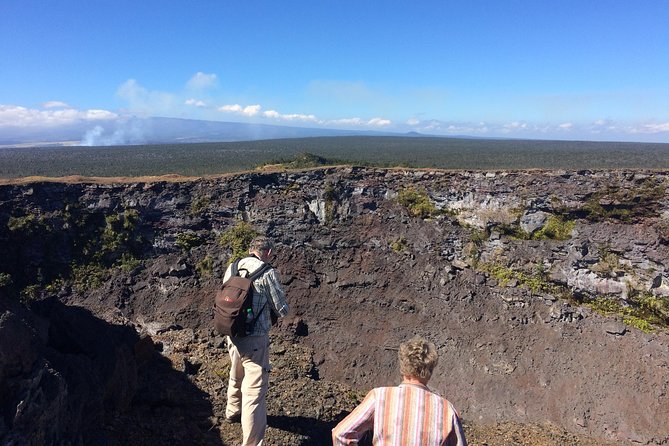
- The 1959 eruption takes center stage: Kilauea Iki Trail and Devastation Trail show how one eruption changed the forest, crater, and ground beneath your feet.
- You choose the pace: Three-hour outings give you a strong overview, while five to six hours allow more stops and a slower look at the park.
- The guide is the main value: Erik, Jay, Michelle, Tyson, Justin, Chris, and other guides bring different strengths, from geology and chemistry to park work and Hawaiian culture.
- You drive between stops: This is not a sightseeing bus. Your group travels in its own vehicle and meets the guide at the Volcano House area.
- Eruption viewing is never guaranteed: Keanakako’i Overlook is the best listed viewpoint when lava is visible, but conditions at Kilauea can change.
- Bring water and food: The park portion can involve a fair amount of walking, and food choices along the route are limited.
Why a private guide changes the volcano visit
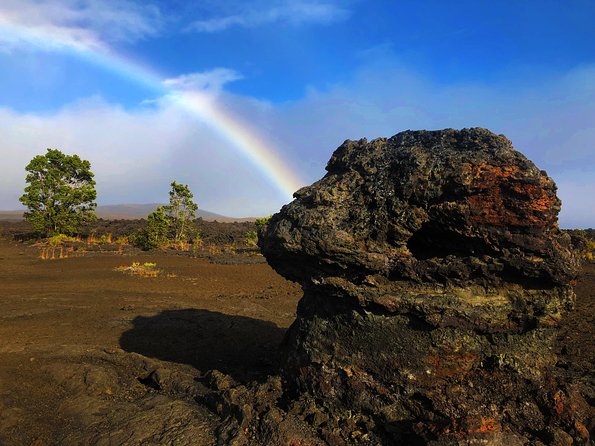
Hawaii Volcanoes National Park is easy to underestimate. A road map shows a few pullouts, trails, and overlooks, but the important details are often small: a plant adapted to volcanic gas, a crystal in dark ash, a pit crater hidden beside the road, or a change in rock color that marks a past eruption.
A private guide gives those details a voice. You can stop to ask why a lava tube formed, how a plant survives near Sulphur Banks, or what happened during the 1959 eruption. The guides also adjust the balance between walking and driving. One group may want more trail time, while another may need a lighter pace for older parents or children.
That flexibility is the strongest reason to pay the premium. On a self-guided visit, you can reach many of the same places. You will not necessarily understand what you are looking at, and you may spend time driving past stops that would have been especially useful for your group.
This is a private activity, with only your party taking part, though the booking can accommodate up to 25 people. A group of two to six is likely to get the most personal exchange, while a larger family group can still benefit from having one guide organize the day.
More Private National Park Tours in the USA
- One-Day Private Grand Canyon National Park/Sedona tour from Phoenix-Scottsdale
★ 5.0 · 329 reviews - The Narrows: Zion National Park Private Guided Hike
★ 5.0 · 209 reviews - 6 Hour: Premiere & Private Acadia National Park with Lobster Pier
★ 5.0 · 199 reviews
Starting at Volcano House and the summit area
The meeting point is at the historic Volcano House hotel on Crater Rim Drive, inside the national park. From there, the experience begins around the summit area, where steam vents and Sulphur Banks give you an immediate sense that Kilauea is not just a distant mountain.
At the steam vents, heat rises from cracks in the ground. It is a simple stop, but a useful one because you can feel the volcano at work without needing an eruption. The guide can connect that heat to the larger volcanic system and point out good places for photographs.
Sulphur Banks adds a different lesson. Volcanic gases alter the soil and shape which plants can survive. The area is described as safe to explore because gas levels are low, but you should still follow the guide’s directions and stay on the proper route.
The Halemaumau Trail brings the focus to the summit caldera. This is one of the better places to combine scenery with context. You may discuss native plants, birds, Hawaiian culture, and the physical changes caused by eruptions. The amount of walking depends on your selected route and time, so tell the operator what your group can manage after booking.
Thurston Lava Tube: a short walk with a clear lesson
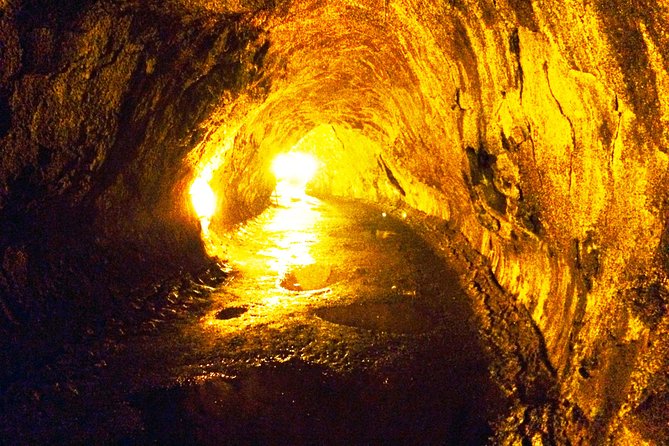
Nahuku, also called Thurston Lava Tube, is one of the park’s most accessible signature stops. You walk through old-growth native forest before entering a tube created when the outside of a lava flow cooled while molten material continued moving beneath it.
The listed visit is only about 15 minutes, so this is not a long hike. Its value comes from the guide’s explanation of how lava tubes form and what features to notice inside. The forest walk matters too. It shows that the park is not only black rock and open craters. Native growth returns, takes hold, and creates a different setting around the volcanic remains.
Because this is a popular part of the park, the private guide can help you make the stop efficient. You are not locked into a long group schedule, and you can ask questions as you go. Still, the private tour does not guarantee solitude at Thurston Lava Tube or any other busy attraction.
Kilauea Iki and Devastation Trail
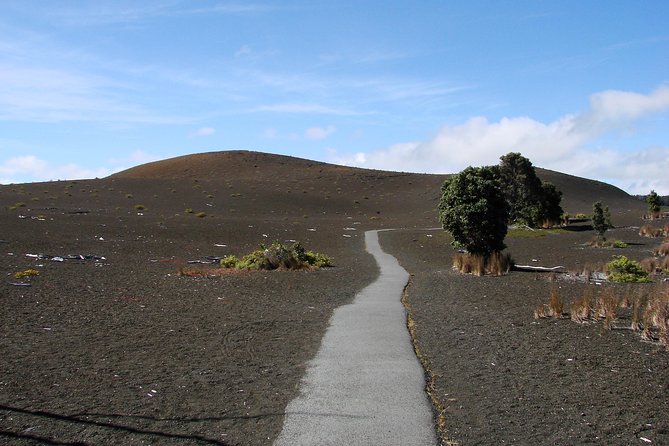
Kilauea Iki Trail is the major walking portion for many three-hour outings. The route crosses the floor of a crater shaped by the 1959 eruption, an event remembered for exceptionally high lava fountains. The dark, open surface can feel almost lunar, though the guide’s account of the eruption gives it a strong local and human context.
The listed time at this stop is about 15 minutes, but the total walking experience can vary based on the route your guide selects and the tour length you book. If you want a true hike rather than a quick viewpoint, say so when arranging your departure time and itinerary.
Devastation Trail offers a different view of the same eruption. Volcanic debris buried native rainforest, leaving a stark area where small details become important. You might look for Pele’s tears, olivine crystals, and unusual rock forms. These are easy to miss if you rush past, which is exactly where an experienced guide earns the fee.
Families can get extra value here. The guide can explain the science in plain terms, and younger children can receive a Junior Ranger program at the visitor center. The guide helps them complete it and receive an official badge at the end of the tour.
More Volcano National Park Tours in the USA
- Hilo Shore Excursion: Volcanoes National Park & Black Sand Beach
★ 4.5 · 2,338 reviews - Big Island: Fat Tire E-Bike Tour through Volcanoes National Park
★ 5.0 · 546 reviews - Big Island, Hawaii: Volcanoes National Park Safari
★ 4.5 · 545 reviews - Small-Group Big Island Tour: Hawaii Volcanoes National Park and Kona Coffee Farm
★ 5.0 · 343 reviews
Chain of Craters Road and the changing coast
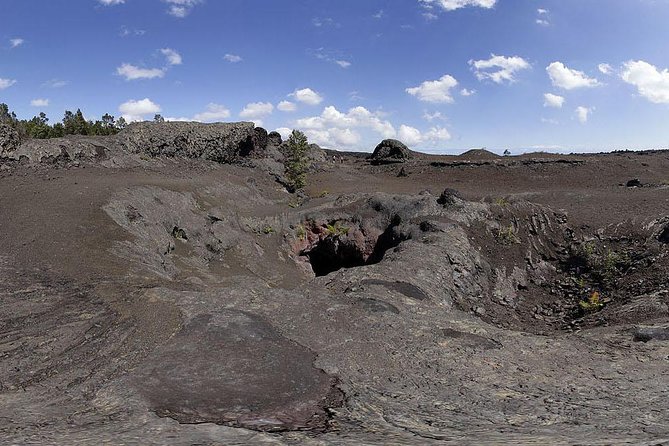
Chain of Craters Road lets you see several chapters of Kilauea’s activity from the comfort of your vehicle, with stops along the way. The listed route includes Lua Manu, where the discussion turns to pit craters and their role in the volcano.
This portion adds variety to a tour otherwise centered on walking. You see older volcanic features, unusual rock formations, and broad changes in the terrain. It is also where the private format helps with time management. A three-hour outing may need to choose only selected stops, while a six-hour visit gives the guide more room to use the road as a full part of the experience.
The road eventually leads toward the coast and Holei Sea Arch. The stop involves an easy walk and a photo opportunity, along with discussion of native seabirds. It is a brief ending to the geological story, shifting your attention from summit eruptions to the meeting point of volcanic rock and ocean.
You should remember that this is a driving tour between points, not a continuous guided walk. One past participant found that driving reduced the sense of being able to look around freely. That criticism is fair. You gain access to more of the park, but you also spend part of the outing in a vehicle.
Keanakako’i Overlook and eruption conditions
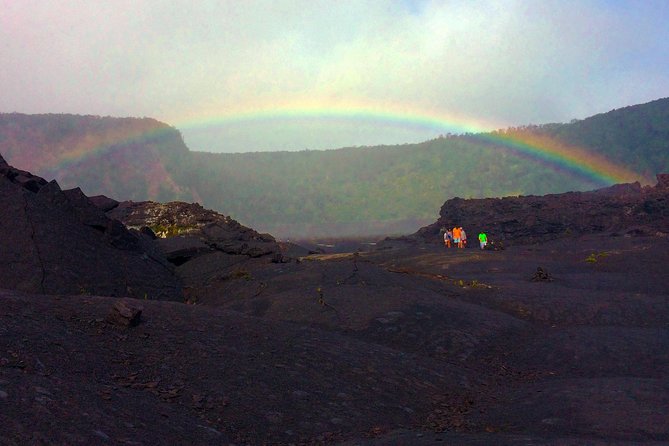
Keanakako’i Overlook is presented as the best place to see an active summit eruption when lava is visible. The guide may provide binoculars or a spotting scope, giving you a closer look than you would get with the unaided eye.
This is an important point to understand before booking: the tour cannot promise flowing lava. Kilauea’s activity changes, and access can also be affected by seismic conditions or park closures. You are paying for interpretation of the volcano and a well-planned park visit, not a guaranteed red glow.
If lava is visible, this stop can become the emotional high point of the day. If it is not, the steam vents, caldera views, crater trails, and older eruption sites still give you plenty to see. A good guide keeps the experience from depending on one unpredictable event.
Volcano House and the Volcano Art Center
Near the meeting area, the Volcano Art Center Gallery offers a short cultural stop. You can see local artwork and learn about the original Volcano House hotel, described as the oldest hotel in the state.
This is not a major portion of the tour, but it rounds out the visit. The park is not only a place for volcanic science. Art, Hawaiian culture, plants, birds, and long human connections to Kilauea all belong in the story.
The Kilauea Visitor Center is another optional quick stop. You can look for park material, books about the volcano or Hawaiian culture, and Junior Ranger materials for children. Since the tour returns to its starting point, you can finish with a final question for the guide or browse before leaving.
What the guides add to the day
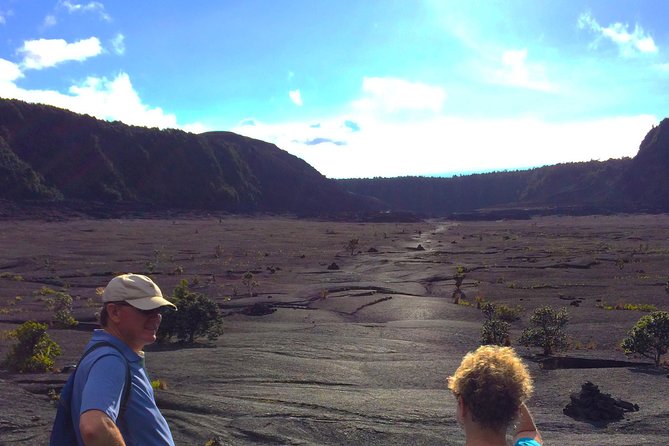
The strongest part of this experience is the person leading it. Erik is repeatedly described as engaging with children, explaining geology clearly, and adapting the day to group needs. Jay has worked as a park ranger and previously worked at the park, giving him a useful connection to both the site and its stories.
Tyson brings geology training and a friendly teaching style. Michelle has been praised for building a customized route with a mix of hiking and less familiar areas. Justin is a good fit if you want humor, flexibility, and attention to plants and birds. Chris has also been singled out for making a six-hour outing especially lively and informative.
You cannot necessarily request every guide, but you can ask about guide availability when you contact the operator. The company is Kilauea EcoGuides, and the tour is offered in English.
The guide’s role is not just to recite facts. You can ask about Hawaiian culture, island life, geology, birds, or plant survival. Several outings were adjusted because of flight schedules, park access, or a preference for more walking. That is the practical benefit of a private booking.
Price, timing, and what to bring
The cost is $160 per person, with a minimum of two people per booking. National park admission is not included and costs $30 per vehicle. Food, drinks, hotel pickup, hotel drop-off, and transportation to and from the attractions are also not included.
For a couple, the price is substantial. For a family or small group, it can be easier to justify because the fee buys a dedicated guide rather than a standard group schedule. I would consider it good value if you care about learning, have limited time, or want the route adjusted around children and older family members.
The tour lasts about three to six hours. A three-hour version can cover the summit area, a few trails, and key volcanic features. The longer option gives you more room for Chain of Craters Road, coastal views, additional walks, and questions without rushing.
Departure time is flexible, but you need to contact the local operator after booking to provide your preferred time. You can also discuss the route then. Bring water, snacks or a packed meal, sun protection, and shoes suitable for walking on uneven volcanic ground. The need for food deserves emphasis because there is not really a full lunch stop along the route.
Confirmation is sent within 48 hours, subject to availability. You can cancel up to 24 hours before the experience for a full refund. Most people can participate, but you should still explain any mobility concerns when arranging the itinerary so the walking portions can be chosen sensibly.
Who should book the Hawaii Volcanoes National Park Eco Tour?
I would book this for someone who wants to understand Kilauea, not simply photograph it. It suits couples, families, and mixed-age groups who value a private schedule and are happy to spend part of the day walking and part of the day driving.
It is especially useful for a first visit. You can see the caldera, steam vents, lava tube, crater trails, eruption sites, coastal rock, and cultural stops without spending your limited park time sorting out the route on your own.
I would skip it if you want a cheap self-guided day, prefer complete freedom to stop and linger, or dislike riding between several points. You can visit many of these places independently for much less than $160 per person, provided you are willing to do the research and interpret the park yourself.
For most people who want science, Hawaiian culture, and a flexible route, the private format is the point. Choose three hours if you need a focused introduction. Choose five to six hours if the volcano is a main reason for your Big Island visit and you want time for both the summit and Chain of Craters Road.
FAQ
Where does the tour begin and end?
The tour begins at 1 Crater Rim Drive, at the historic Volcano House area inside Hawaii Volcanoes National Park. It ends back at the meeting point.
How long does the tour last?
The experience lasts approximately three to six hours. You can discuss your preferred departure time and itinerary with the local operator after booking.
Is the tour private?
Yes. Only your group participates in the activity. A minimum of two people is required, and a booking can include up to 25 people.
Is the national park entrance fee included?
No. The National Park entrance fee is listed separately at $30 per vehicle.
Will I definitely see active lava?
No. Lava viewing at Keanakako’i Overlook depends on current eruption conditions. An active summit eruption cannot be guaranteed.
Is transportation included?
No. Hotel pickup and drop-off, transportation to and from attractions, and transportation between the listed park stops are not included. Your group needs to provide transportation for the tour.
Can children take part?
Most people can participate, and children can receive a Junior Ranger program at the Kilauea Visitor Center. The guide can help a child complete the program and receive an official badge. Discuss your group’s walking needs when arranging the route.
Just added for the parks around the USA
- St. George: Sunset ATV Adventure near Zion National Park★ 5.0 · 12 reviews
- Springdale: Guided eBike Tour in Zion National Park★ 4.9 · 61 reviews
- Small Group: Olympic National Park Day Tour From Seattle★ 4.7 · 133 reviews
- Seattle:Small Group Mount Rainier National Park 1-Day Tour★ 4.6 · 46 reviews
- Sitka: Guided Alaskan Wilderness Trail Adventure Hike★ 5.0 · 3 reviews
- Seward: Kenai Fjords National Park Extended Cruise★ 5.0 · 47 reviews
- Seward: Captain’s Choice Kenai Fjords National Park Tour★ 5.0 · 16 reviews
- Seward: Kenai Fjords National Park Glacier & Wildlife Cruise★ 4.9 · 76 reviews
Big Island National Park Tours, compared.
Hilo Shore Excursion: Volcanoes National Park & Black Sand Beach
Read our review →
Fat Tire E-Bike Tour through Volcanoes National Park
Read our review →
Big Island, Hawaii: Volcanoes National Park Safari
Read our review →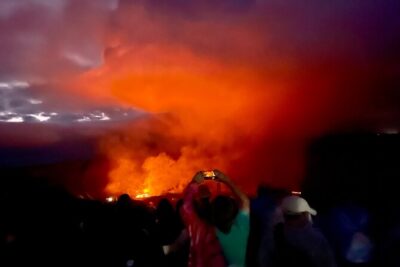
Small-Group Big Island Tour: Hawaii Volcanoes National Park and Kona Coffee Farm
Read our review →