
Review · USA
Sequoia National Park: Group Stargazing Program
Sequoia National Park gets wonderfully dark after sunset, and this one-hour program gives you a way to enjoy the sky without a late drive back to your rental. Scott has spent 11 years leading stargazing programs here, mixing astronomy, cultural stories, and the occasional dad joke while you sit or stand beneath the trees.
I like the easy access and the fact that you do not need to hike with a red face lamp and a backpack full of snacks. I also like the mix of science and culture: you may learn how stars form, then hear how different peoples have understood the same sky. The main drawback is the setting itself. It can feel very dark and a little spooky, there is no cell coverage at the Potwisha meeting point, and cold nights call for serious layers.
Key points to know before you book
- Two Sequoia meeting areas: Choose between the Potwisha Overflow Lot, about 10 minutes inside the Three Rivers entrance, and the General Sherman Tree parking area, about 10 minutes from Wuksachi Lodge or Lodgepole Campground.
- Scott leads the hour: He has 11 years of stargazing experience in Sequoia and uses a laser pointer, star maps, and hands-on solar system models.
- No hike required: You sit or stand in one place while looking at constellations, star clusters, and other night sky objects.
- More than Greek mythology: The program connects astronomy with stories and traditions from cultures around the world.
- Useful for mixed groups: Beginners can follow along, while children, astronomy fans, and future astronauts have room to ask questions.
- Bring warmth and light: Dress for a cold night and carry a flashlight. Red lights mark the Potwisha meeting area.
Why this simple hour works so well
Stargazing in a national park sounds easy until you try to plan it. You need a dark place, a clear view, enough time to adjust your eyes, and some idea of what you are looking at. This program takes care of the last part without turning the evening into a strenuous outing.
The format is relaxed. You sit or stand while Scott points out constellations with a laser pointer. He explains the science in plain language, then adds cultural stories that show how the sky has shaped people’s ideas and traditions. That change of pace keeps the hour from feeling like a classroom lecture.
I especially like this approach for families and mixed-age groups. A child may remember a story or a surprising space fact, while an adult can ask about current missions or how stars change over time. One family reported that their children were still repeating facts from the session afterward, which is a good sign for parents trying to make a park visit feel meaningful rather than rushed.
The program also works for complete beginners. You do not need to know the names of constellations before arriving. If you already follow astronomy, you can ask about new discoveries, missions, or unusual events such as a comet or nova. Those events depend on nature and timing, so they are possibilities, not promises.
More national park tours around the USA:
- Miami: Everglades National Park Airboat Tour & Wildlife Show
★ 4.5 · 7,296 reviews - Clear Kayak Tour of Shell Key Preserve and Tampa Bay Area
★ 5.0 · 5,800 reviews - Discover Rocky Mountain National Park
★ 5.0 · 3,419 reviews
Choosing between Potwisha and General Sherman
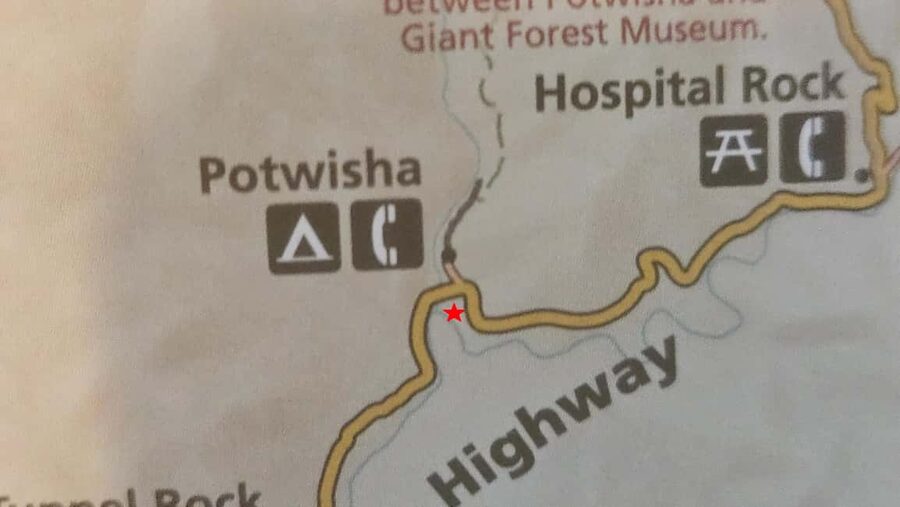
The Potwisha Overflow Lot is across the Generals Highway from Potwisha Campground. The campground entrance is on one side of the road, while the meeting area is on the other. This location is about 10 minutes inside the park from the Three Rivers entrance station, making it the practical choice if you are staying in Three Rivers or entering from the south.
Do not drive into the campground looking for the group. The meeting point is in the overflow parking area across the road. There is no Google Maps location for the exact spot, and there is no cell service there, so study the meeting instructions and photo guidance before you leave your lodging. Scott places red lights at the meeting area, which helps you find the group without flooding the dark with a bright beam.
The second option is the parking area for the General Sherman Tree. It is about a 10-minute drive from Wuksachi Lodge or Lodgepole Campground, so it makes more sense for visitors staying in the upper park. You avoid the long return drive toward Three Rivers after the program, which is one of the strongest practical reasons to book this experience.
The supplied information gives the program a Potwisha start and return point, but also explains that sessions meet at either location. Check the location attached to your chosen time. This matters in Sequoia, where a short distance on a map can mean a longer night drive on winding roads.
What happens during the one-hour program
The hour begins with a simple orientation to the night sky. You may use one of the provided planispheres, or star maps, to get a sense of what should be visible. Scott then uses his laser pointer to connect the dots and help you spot constellations.
The laser pointer is useful because it lets everyone follow the same explanation. You are not left trying to guess which tiny patch of sky contains the object being discussed. The program is not a telescope session, though. A telescope is not listed as part of this group activity, and the laser pointer, maps, and models do most of the teaching work.
The models add a hands-on layer. You can examine a three-dimensional solar system model and a separate model of Saturn. These are especially helpful if you are traveling with children or if the scale and arrangement of planets are hard to picture from words alone.
The science portion can include current discoveries and space missions. The exact material will depend on the sky and the questions in the group, but the program is designed to serve both first-time stargazers and people who already follow astronomy.
The cultural section gives the session a wider frame. Constellations are not just patterns with official names. People in many cultures have used the stars for stories, identity, memory, navigation, and ideas about the future. The program includes living traditions and cultural connections, rather than treating mythology as a list of old names to memorize.
Past sessions have included discussion of Māori and Hawaiian cultural traditions, which may be especially meaningful if you have connections to those places. The focus is not only on what a constellation is, but also on why people have looked up and given meaning to the same sky.
The dark setting is part of the experience
The darkness helps you see more, but it also changes how the evening feels. One participant described the Potwisha setting as a little spooky, with the sense that wildlife could appear from the surrounding park. Scott is First Aid and CPR certified, and the program is designed around a fixed meeting area, but you should still respect the fact that you are outdoors at night in a national park.
Bring a flashlight for walking safely before and after the session. Use it carefully around other people, since bright light can ruin everyone’s night vision. The red lights at Potwisha help with the meeting point, but they do not replace your own light for the road or parking area.
There is no hiking during the program, which is a major plus after a full day on park trails. You still need to walk from your vehicle to the meeting area, and the ground may be dark, so practical footwear makes sense. Bare feet are not allowed, and drones and fireworks are prohibited.
Dress warmer than you think you need. A clear night can feel cold when you are standing still, even after a warm afternoon. Hand warmers are available on cold nights, and seating can be arranged upon request for visitors with mobility needs.
Same parks, a different way to see them:
- Yosemite Highlights & Giant Sequoias Day Tour from San Francisco
★ 4.5 · 3,455 reviews - Mt. Rainier National Park Highlights Tour
★ 5.0 · 3,156 reviews - Grand Canyon National Park South Rim Bus Tour from Las Vegas
★ 4.5 · 3,071 reviews - Wilderness, Wildlife, Glacier Experience from Anchorage
★ 5.0 · 3,004 reviews
Who will get the most from it
This is a good choice if you want a gentle evening activity, have limited time, or are staying close to one of the meeting areas. It is also useful on a final night in the park, when you may not want to make a long drive after dark. One family used the program on its last evening in Sequoia and found it an easy way to finish the trip.
Families with older children should find plenty to hold their attention. Scott has interacted well with a nine-year-old, and the session can move between stories, facts, and questions. Children under two are not suitable for the program, and unaccompanied minors are not allowed.
Couples can also make it a calm evening outing. The one-hour length keeps it manageable, and the sky gives you something to share without requiring a major hike or a long schedule commitment. An August session even gave one participant a first clear view of the Milky Way, an experience that can make the program worthwhile on its own.
Astronomy fans will not be left out. The program includes up-to-date science and discussion of modern missions. Still, you should understand the limits of a group session. It is not a private telescope night, and rare events such as a comet or nova can only be discussed or viewed when nature provides them.
The activity is wheelchair accessible, with seating available on request. At the same time, the information says it is not suitable for visually impaired or hearing-impaired people, and no visual aids for visually impaired participants are included. Ask about your needs before booking if you require accommodations beyond the listed seating.
Is $25 a fair price?
At $25 per person, the program is priced as an affordable add-on to a Sequoia visit. You are paying for a guided hour, the local setting, the star maps, the models, and Scott’s long experience leading these sessions. There is no transport included, so you need your own way to the meeting area.
The value is strongest if you would otherwise spend the evening driving around in search of a dark place or trying to identify stars on your own. It is also good value for a family because the program gives children a shared activity and adults a chance to learn something new without paying for a full-length excursion.
The price does not guarantee a spectacular astronomical event. Clouds, seasonal visibility, and the natural timing of comets or novas are beyond anyone’s control. Think of the ticket as payment for a guided introduction to the night sky, not a promise of a particular object.
You can cancel up to 24 hours ahead for a full refund, and reserve now while paying later. Those policies make it easier to keep the evening flexible, especially when your park schedule depends on weather and road conditions.
Small details that make the hour better
Plan your dinner and restroom stop before you arrive. The Potwisha meeting point has no cell coverage, and the program lasts only an hour, so you will want to arrive prepared rather than sorting out directions at the last minute.
Save the meeting information before leaving your lodging. At Potwisha, remember the key detail: the campground entrance and overflow lot are on opposite sides of the highway. Look for the red lights across from the campground, not inside it.
Bring a warm jacket, extra layers, a flashlight, and perhaps gloves. Hand warmers may be available, but your own clothing is the best first defense against a cold night.
If you have questions, message Scott before the program. Private tours, telescope stargazing, and subject-specific sessions are available through Big Trees Tours, but those are separate options from this group hour.
Should you book this Sequoia stargazing program?
I would book it if you want an easy, low-cost night activity with a real guide rather than a phone app. The combination of star science, cultural stories, models, and local experience gives the hour more substance than simply standing in a parking lot and hoping someone points out Orion.
Choose the Potwisha session if you are near Three Rivers or the southern entrance. Choose the General Sherman area if you are staying near Wuksachi or Lodgepole. Skip it if you need a telescope, cannot manage a dark outdoor setting, or expect a guaranteed comet or other rare event.
For most beginners, families, couples, and curious park visitors, the program offers a practical way to see Sequoia after sunset without adding a hike or a long drive. Pack warm clothes, learn the meeting point before you go, and let Scott handle the sky map.
FAQ
How long is the Sequoia stargazing program?
The guided stargazing session lasts one hour.
How much does it cost?
The price is $25 per person.
Where does the program meet?
The program can meet at the Potwisha Overflow Lot across the Generals Highway from Potwisha Campground, or at the parking area for the General Sherman Tree. Check the location for your selected time.
Is hiking required?
No. You sit or stand in one place while Scott points out constellations and discusses astronomy and cultural traditions.
Who leads the program?
Scott leads the program. He has 11 years of stargazing tour experience in Sequoia National Park.
What should I bring?
Dress warmly because nights can be cold, and bring a flashlight for safety. Save the meeting details before arriving because there is no cell coverage at the Potwisha meeting area.
Is the program wheelchair accessible?
Yes. Seating can be provided upon request for mobility and ADA needs.
Can I cancel or pay later?
You can cancel up to 24 hours in advance for a full refund. The activity also offers a reserve now and pay later option.
Just added for the parks around the USA
- St. George: Sunset ATV Adventure near Zion National Park★ 5.0 · 12 reviews
- Springdale: Guided eBike Tour in Zion National Park★ 4.9 · 61 reviews
- Small Group: Olympic National Park Day Tour From Seattle★ 4.7 · 133 reviews
- Seattle:Small Group Mount Rainier National Park 1-Day Tour★ 4.6 · 46 reviews
- Sitka: Guided Alaskan Wilderness Trail Adventure Hike★ 5.0 · 3 reviews
- Seward: Kenai Fjords National Park Extended Cruise★ 5.0 · 47 reviews
- Seward: Captain’s Choice Kenai Fjords National Park Tour★ 5.0 · 16 reviews
- Seward: Kenai Fjords National Park Glacier & Wildlife Cruise★ 4.9 · 76 reviews
USA National Park Tours, compared.
Everglades National Park Airboat Tour & Wildlife Show
Read our review →
Clear Kayak Tour of Shell Key Preserve and Tampa Bay Area
Read our review →
Yosemite Highlights & Giant Sequoias Day Tour from San Francisco
Read our review →
Grand Canyon National Park South Rim Bus Tour from Las Vegas
Read our review →
Wilderness, Wildlife, Glacier Experience from Anchorage
Read our review →
Bryce Canyon & Zion National Park from Las Vegas with Lunch, WiFi
Read our review →Browse the lists this tour appears in