
Review · AUSTRALIA
Uluru: National Park Astronomy Tour with Telescope and Photo
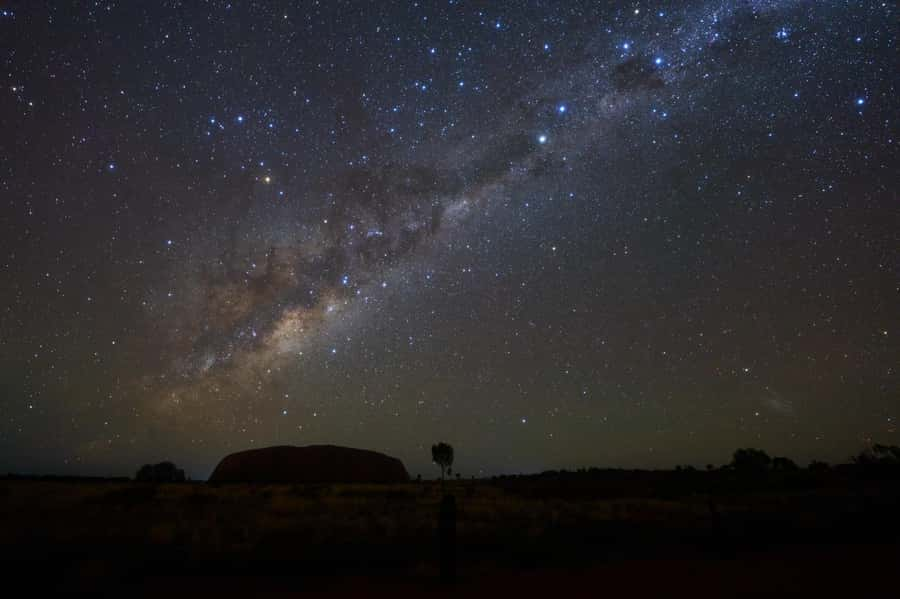
Uluru after dark is a different world. Away from resort lights, the red rock becomes a silhouette beneath the Milky Way, and the sky feels far bigger than it does at home. I like the mix of plain-language astronomy and Indigenous sky stories, plus the chance to see planets, nebulae, star clusters, and Saturn’s rings through proper telescopes.
I also like that transport, blankets, stools, telescope use, and a digital photograph are included in the $91 price. Guides including Neil, Lucy, Zack, and Olina have been praised for making the science friendly and answering questions without turning the evening into a lecture. The main drawback is group size: busy departures can mean queues for the telescopes and a 45 to 60 minute wait for the long-exposure photo.
Key points at a glance
- The sky is the main event: A dark National Park setting gives you a clear look at the Milky Way, constellations, planets, and shooting stars.
- Telescopes add real detail: Depending on the night, you might see Saturn’s rings, nebulae, star clusters, the Moon, Alpha Centauri, or other distant objects.
- Indigenous astronomy is part of the story: Guides use ancient stories and practical sky knowledge alongside modern astronomy.
- The included portrait is worth keeping: You receive a professional digital photo with Uluru and the stars behind you.
- Winter nights can be cold: Blankets are supplied, but warm layers, closed shoes, and a water bottle are sensible.
- Crowds affect the pace: Two full buses and only a few telescopes can create waits, especially for the photograph.
Why Uluru is especially good after sunset
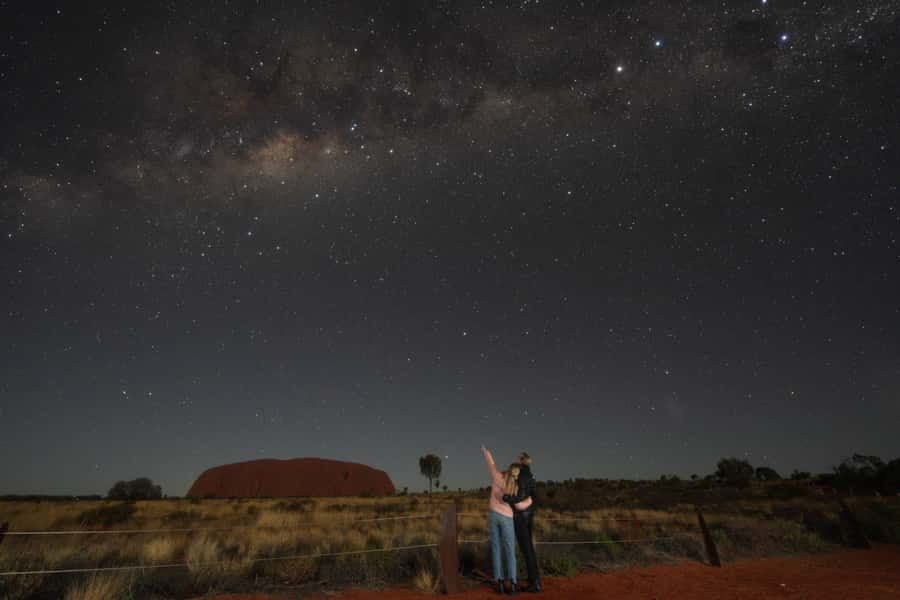
Uluru is famous in daylight, but darkness changes your sense of scale. The rock may appear as a dark outline rather than a glowing monolith, while the sky takes over the scene. At a remote viewing point inside Uluru and Kata Tjuta National Park, there is far less artificial light than around the resort.
That matters more than fancy equipment. Light pollution washes out faint stars, the Milky Way, and many of the objects that make southern Australia’s sky special. Here, you can look up with your own eyes before anyone points out a constellation, and you may see far more than you expect.
The setting also gives the evening a strong sense of place. This is not a generic astronomy talk in a planetarium. You are sitting in the outback, with Uluru nearby, listening to stories connected to the southern sky. Several guides combine modern science with Indigenous astronomy, explaining how stars and constellations have been used in cultural storytelling and daily life.
The exact view depends on cloud, moonlight, and the time of year. A bright first-quarter or full moon can make the ground easier to see but can also hide faint stars. A new moon usually gives you darker skies, though the tour schedule cannot always line up with it. I would treat the moon as part of the night rather than expect identical conditions every time.
More national park tours around Australia:
- Litchfield National Park and Jumping Crocodile Cruise
★ 5.0 · 2,119 reviews - Grampians National Park Small-Group Eco Tour from Melbourne
★ 5.0 · 761 reviews - From Port Arthur: Tasman Island Wilderness Cruise
★ 4.9 · 704 reviews
The bus ride into the National Park
Pickup is included from your accommodation. On the day, the provider sends the confirmed pickup schedule by email, and you should look for the bus marked Atrip. The drive to the viewing area has been described as roughly 20 minutes from the resort, though the exact timing depends on your pickup and the evening’s arrangements.
This is a useful part of the package. You do not need to arrange a designated driver after spending several hours outside in the dark, and you do not need to buy a separate National Park Pass for this tour. At the end, the bus returns you to your hotel.
The transport is practical rather than scenic. The real attraction begins when you leave the resort lights behind. Bring a small amount of gear, not a full camera bag, unless you are serious about night photography. You need warm clothing, closed-toe shoes, and a reusable water bottle. A tripod is welcome if you want to try your own star photos.
A 150-minute evening under the stars
The full experience lasts about 150 minutes, including pickup and return arrangements as scheduled. Once at the site, the evening usually combines several activities rather than following a rigid lecture format.
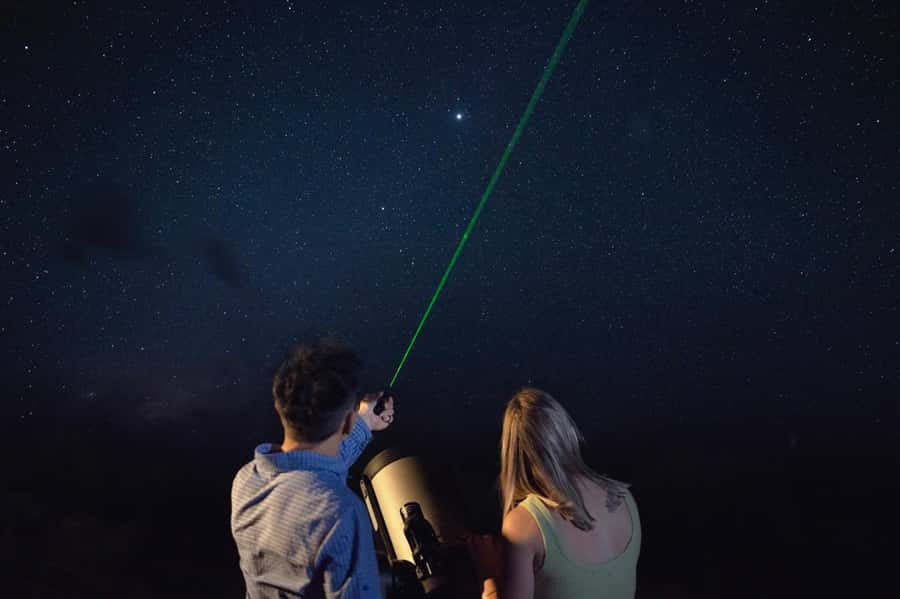
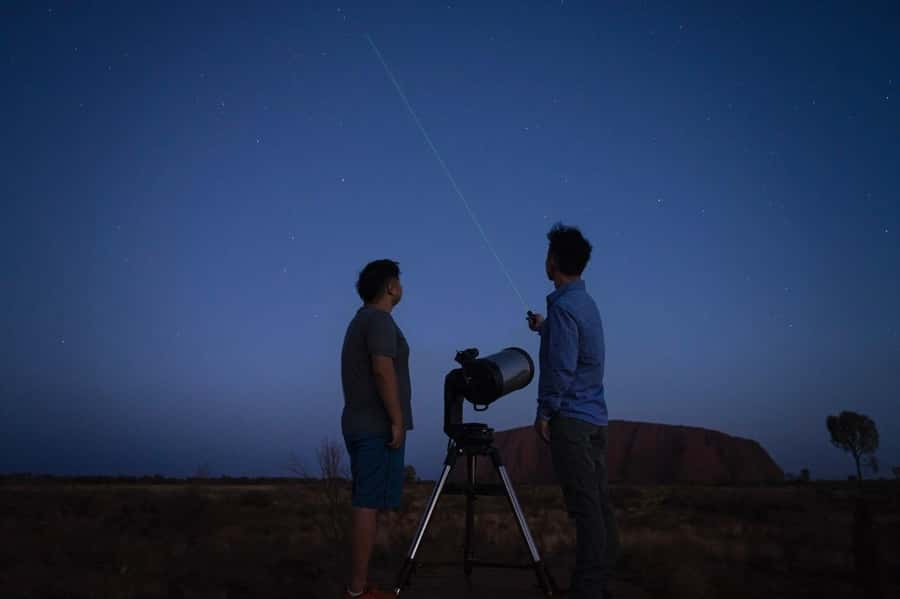
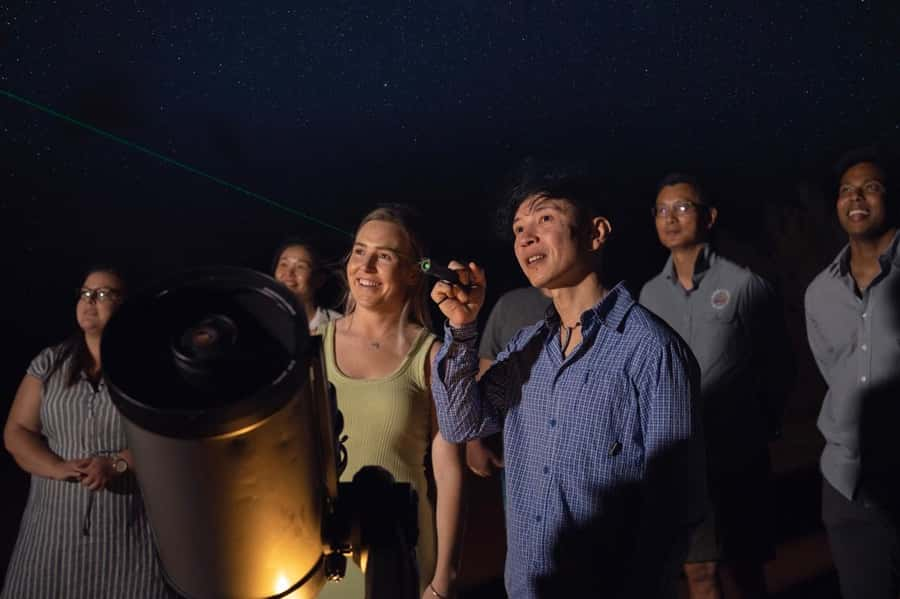
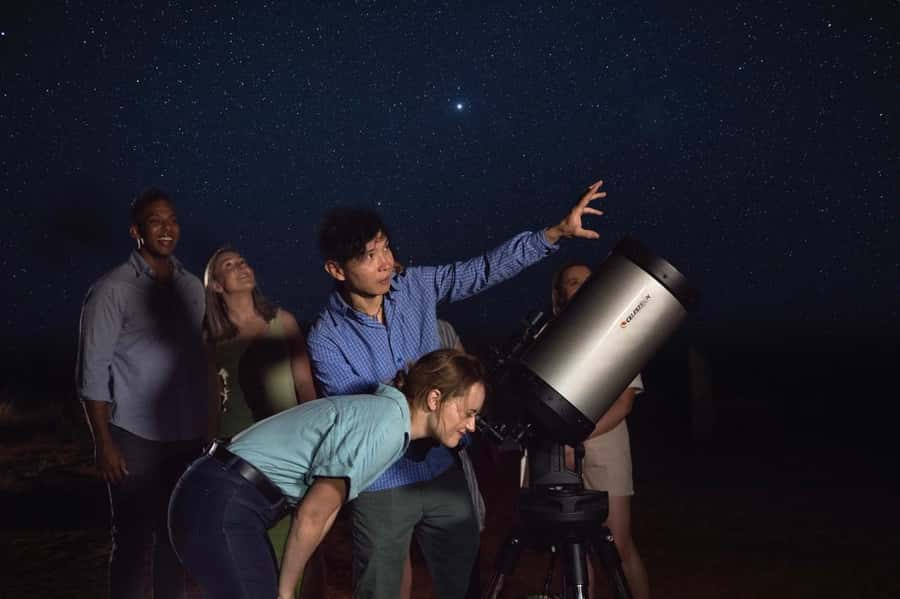
First comes time to look at the sky with the naked eye. Guides use laser pointers to identify stars and constellations, then explain what you are seeing. The best guides keep this accessible for beginners while still giving keen amateur astronomers something to think about.
You may hear stories connected to Indigenous uses of the sky, followed by explanations of planets, galaxies, nebulae, and star formation. That combination is one of the tour’s strongest features. The stories help you remember the patterns, while the science gives you a sense of distance and scale.
There is also time for questions. Neil, Lucy, Zack, and other guides have been praised for being friendly, funny, and easy to approach. If astronomy is new to you, you do not need to know the names of stars in advance. If you already know the basics, you can ask about particular objects or the southern sky.
The pace can vary with the group. At a quiet departure, you may have a relaxed flow between storytelling, telescope viewing, and photography. At a busy one, you will need patience. Some people spend a long time at the eyepiece or take extra time organizing their photo group, so the evening may feel less smooth when two large buses arrive together.
What you can see through the telescopes
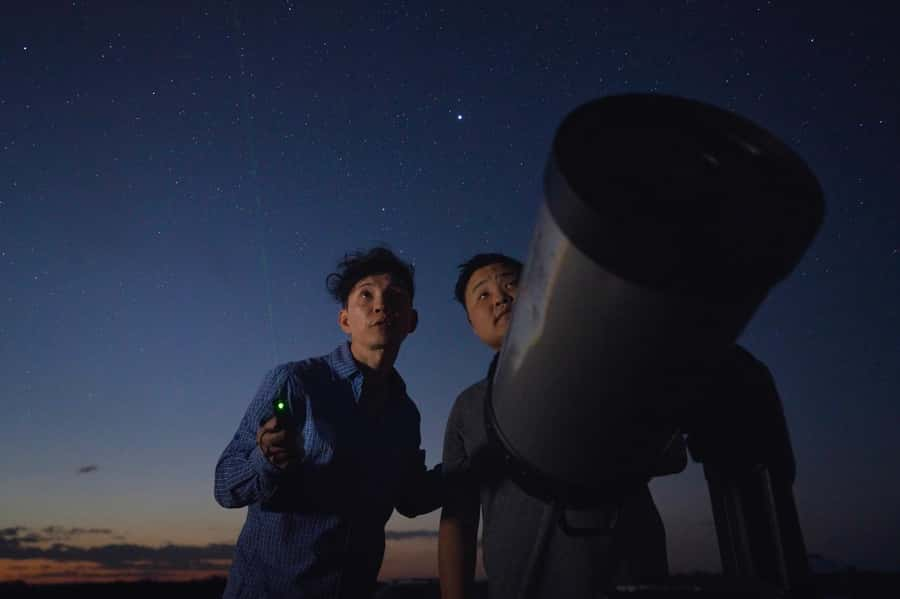
The telescopes are not just decoration. They let you see objects that are too small or faint for the naked eye. Depending on the season, moon phase, and cloud cover, the guides may point them toward planets, nebulae, clusters, or other distant objects.
Saturn’s rings are a major highlight when the planet is visible. Seeing the rings as a distinct feature rather than a bright point gives the night a memorable turning point. The Moon can also look striking through the equipment, although bright moonlight can reduce the number of faint stars visible around you.
Past viewing conditions have allowed people to see objects including the Seven Sisters, Alpha Centauri, Pluto, and deep-sky targets. You should not treat every one of these as guaranteed. Astronomy changes from night to night, and the guide has to work with what is above the horizon at that time.
The main limitation is access. There may be only three telescopes serving a large group, which creates queues. One person described a long wait for the equipment, while others felt the telescope session was a highlight. If you are booking mainly for serious observing, ask yourself how comfortable you are sharing the instruments. If you want a broad introduction to the night sky, the telescopes work well as one part of a larger evening.
Same parks, a different way to see them:
- Sydney: Blue Mountains National Park Tour with River Cruise
★ 4.6 · 701 reviews - From Hobart/Adventure Bay: Bruny Island Wilderness Cruise
★ 4.8 · 601 reviews - Port Arthur Full-day Guided Tour with Harbour Cruise and Tasman National Park
★ 4.5 · 585 reviews - Grampians National Park Small-Group Eco Day Tour
★ 4.8 · 577 reviews
Stories, science, and the southern sky
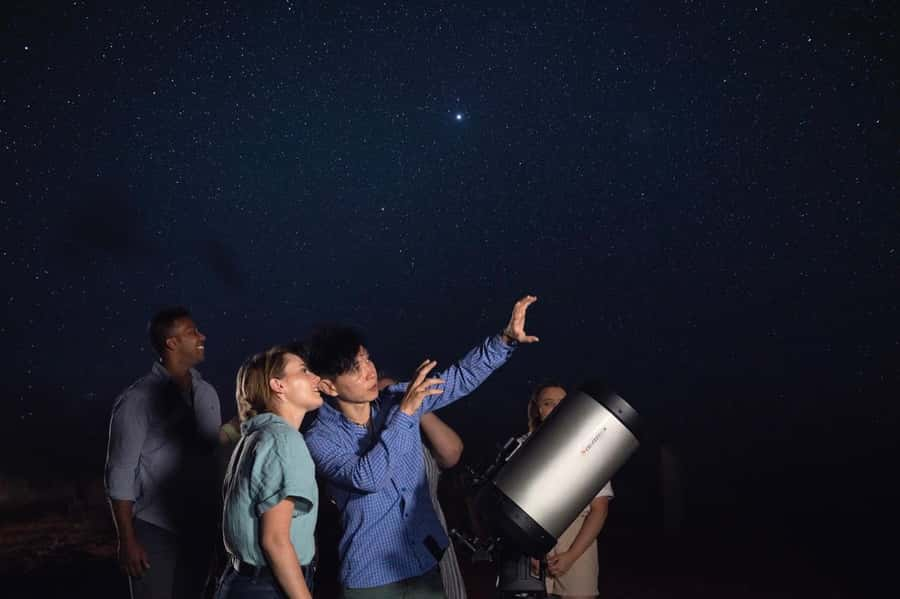
The southern sky has objects and viewing angles that many northern visitors rarely see. The guides make use of that difference, pointing out stars and constellations with lasers and explaining how the sky changes across the seasons.
I value the Indigenous astronomy section because it gives the setting cultural meaning. The stars are not presented only as scientific objects. Guides explain stories, beliefs, and practical uses connected to the sky, helping you understand that astronomy can be both a science and a way of organizing knowledge.
The balance varies by guide. Some evenings lean more toward storytelling, while others spend more time on technical facts. One guide may explain the cosmos in simple terms, while another may go well beyond a beginner’s level. That is useful for curious adults, but younger children or people who prefer light entertainment may find some sections dense.
The strongest approach is to ask questions. If a detail goes over your head, say so. The guides are there to explain, and several have been praised for making complex subjects easy to follow.
The professional photo with Uluru behind you
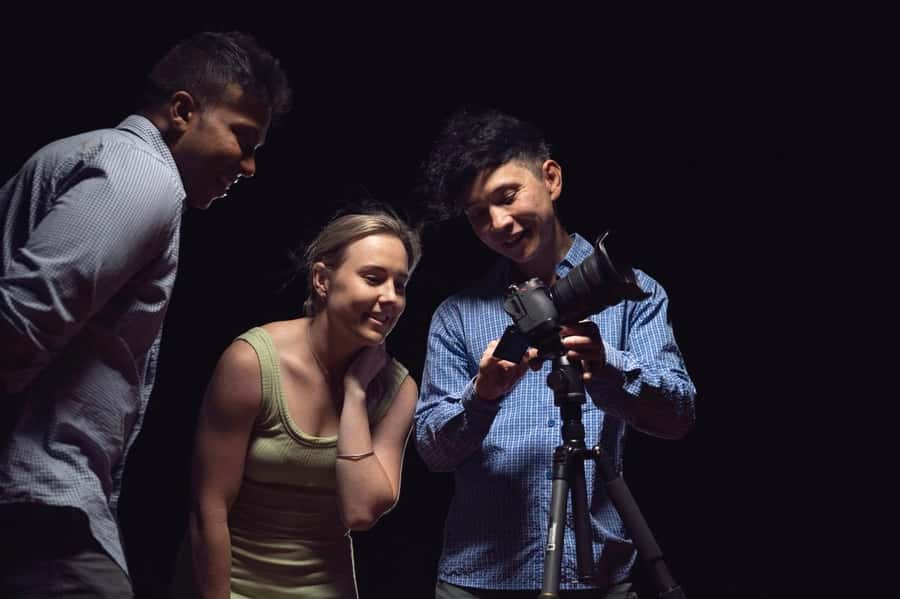
The digital photograph is a practical extra, not a throwaway snapshot. You are photographed with Uluru and the star-filled sky behind you, using a long-exposure setup that captures details your phone may miss. It gives you a proper record of the night, not just a dark selfie.
The photograph also explains some of the waiting. Long exposures take time, and each person or small group needs to hold still. At a crowded departure, the queue can last 45 to 60 minutes. You may spend that time sitting under the stars, but it can still feel long after the main astronomy talk has finished.
You receive one professional digital photograph. If you are traveling with family or friends, decide in advance who should be in the frame. This keeps the line moving and prevents last-minute discussions at the camera.
The finished image can be especially good because it combines three things in one frame: your group, the night sky, and Uluru. Several people have found it a favorite souvenir. I would not book the tour only for the photo, but it adds clear value to the price.
Taking your own night-sky photographs
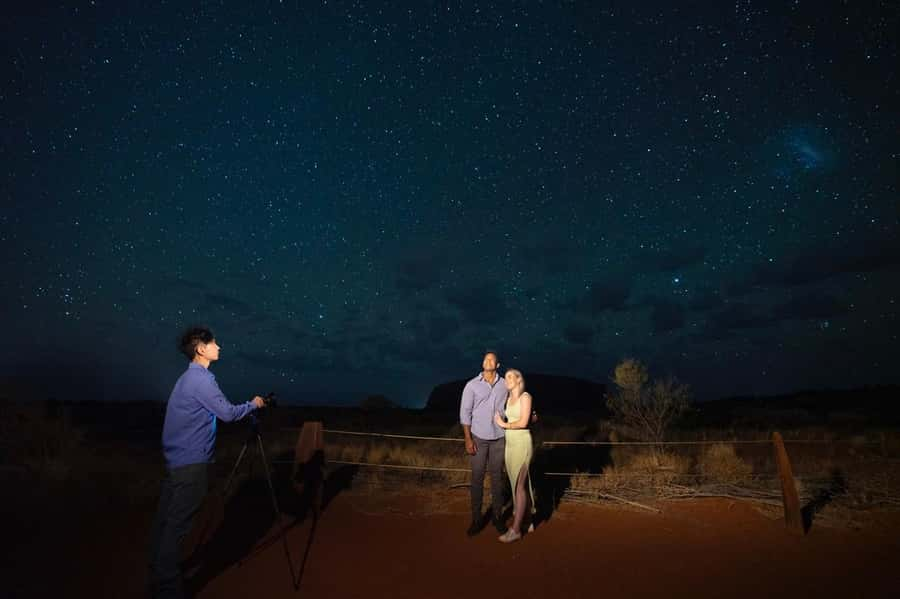
You may bring your own camera and tripod. The guides can also help with phone settings, and people have been shown how to get better night-sky images with smartphones.
A tripod matters because long exposures need the camera to remain still. Even without advanced equipment, you can learn useful basics such as stabilizing the phone, selecting a night mode, and avoiding unnecessary movement during the shot.
Keep your expectations reasonable. Your phone may record more stars than you can see on its screen, but results depend on the device, cloud, moonlight, and your settings. The included professional image is the safer keepsake. Your own photographs are a bonus and a chance to practice.
Cold evenings, blankets, and comfort
Uluru can feel warm during the day and surprisingly cold after sunset. The temperature drops sharply in some months, especially around April, May, and winter. Several people have been caught out by the cold, while others found the supplied blankets very helpful.
Wear layers rather than one heavy coat. You can remove clothing if the night stays mild, particularly during warmer months. Closed-toe shoes are required as a practical choice for moving around an outdoor viewing area.
Folding stools or benches are provided, along with blankets. That makes a difference during the storytelling and waiting periods. You should still bring enough clothing to stay comfortable for the whole 150 minutes, since sitting still feels colder than walking.
In summer, do not overpack. One December departure was described as still warm in the evening. Conditions vary, so check the forecast and dress for the actual season rather than assuming every desert night is freezing.
Group size and the real pace of the evening
The biggest question is not the quality of the sky. It is how many people share the equipment and photo setup.
A small group gives you more time at the telescope and makes it easier to hear the guide. A large departure can mean two buses, three telescopes, and a busy line for the photograph. You still get the same basic components, but the experience feels less personal and the waiting takes up more of the night.
Some people have also found that chatting within the group makes it harder to hear the guide. A small microphone could help on busy evenings. If you have hearing difficulties, position yourself close to the guide and ask for clarification when needed.
The tour remains well suited to beginners because you do not need to operate the telescopes yourself. The guide sets up the equipment and explains what you are seeing. Serious amateur astronomers may want more telescope time and a smaller group, while families and first-time stargazers are likely to appreciate the easy structure.
Is $91 good value for Uluru?
At $91 per person, this is not the cheapest evening activity around Uluru. The price makes more sense when you count what is included: return transport, a guide, access to a remote National Park viewing area, telescope use, blankets and seating, help with phone photography, and a professional digital photo.
The dark-sky setting is the part you cannot easily reproduce on your own. You could drive somewhere outside the resort and look up for free, but you would need transport, local knowledge, equipment, and a way to photograph yourself with Uluru behind you. The tour packages those pieces into one evening.
The value is strongest if you care about the explanation and the portrait as well as the stars. If you only want to lie quietly under the sky, a less structured option might suit you better. If you want to learn what you are seeing, use telescopes, and return with a polished image, the price is reasonable.
Free cancellation up to 24 hours before the start and the reserve-now, pay-later option also make planning easier. The provider offers English and Chinese tours.
Who should book this Uluru stargazing tour?
I would recommend it to first-time stargazers, couples, families with older children, and anyone who wants a memorable evening without organizing equipment. Teenagers have particularly enjoyed the mix of telescopes, stories, and the chance to see planets.
It is also a good choice for people who want a cultural layer rather than a purely technical astronomy talk. The Indigenous sky stories give the night a strong connection to place.
I would hesitate only if you dislike group activities, long waits, or changing natural conditions. Clouds, moonlight, and the seasonal position of the Milky Way can affect what you see. A crowded departure may also reduce telescope time.
Should you book it?
Yes, if you want an easy, well-organized introduction to Uluru’s night sky. The clearest reasons to book are the dark National Park setting, the guides’ mix of astronomy and Indigenous stories, and the included portrait with Uluru behind you.
Choose your clothing carefully, keep your camera expectations realistic, and accept that a large group may mean queues. If you can book around a darker moon phase and are happy to share the telescopes, this is a strong use of one evening at Uluru.
FAQ
How long is the Uluru astronomy tour?
The activity lasts 150 minutes. Pickup and drop-off from your accommodation are included.
What does the $91 price include?
The price includes the tour, guide, accommodation pickup and drop-off, use of the telescopes, and one digital professional photograph.
Is National Park entry included?
You do not need to bring your own National Park Pass for this tour.
What can I see through the telescopes?
Depending on the conditions and what is visible that night, you might see planets, Saturn’s rings, nebulae, star clusters, the Moon, the Seven Sisters, Alpha Centauri, or other distant objects.
Do I need astronomy experience?
No. The tour suits beginners, and the guides explain the stars, planets, and constellations in accessible terms. You can also ask questions during the session.
Are Indigenous astronomy stories included?
Yes. The guides discuss Indigenous stories, beliefs, and uses of the night sky alongside modern astronomy.
What should I wear?
Bring warm clothing and closed-toe shoes. Temperatures can fall quickly after sunset, and blankets are provided. A reusable water bottle is also recommended.
Can I bring my own camera?
Yes. You can bring a camera and tripod for your own night-sky photographs. Guides may also help you improve smartphone photos.
Is the tour offered in languages other than English?
The tour has live guides in English and Chinese.
Just added for the parks around Australia
- Spring Brook National Park Driving Tour with an APP★ 4.4 · 2 reviews
- Port Douglas: Daintree National Park Tour, Cruise, & Zipline★ 4.9 · 31 reviews
- Port Stephens: Worimi National Park Sandboarding Adventure★ 4.8 · 18 reviews
- Port Lincoln: Lincoln National Park Sunset Sand Dunes Tour★ 4.9 · 17 reviews
- Port Arthur: Cape Raoul Wilderness Cruise★ 4.8 · 80 reviews
- Noosa: Epic Ocean Kayak with Dolphins & 4WD Beach Adventure★ 4.6 · 247 reviews
- Noosa: National Park and Dolphin Watching Safari★ 5.0 · 5 reviews
- Melbourne: Wilsons Promontory Morning Wilderness Cruise★ 5.0 · 71 reviews
Australia National Park Tours, compared.
Litchfield National Park and Jumping Crocodile Cruise
Read our review →
Grampians National Park Small-Group Eco Tour from Melbourne
Read our review →
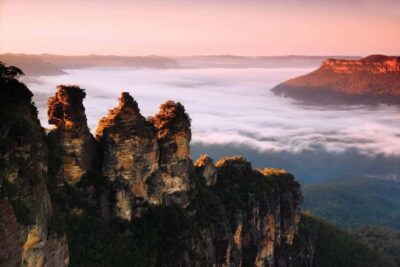
Blue Mountains National Park Tour with River Cruise
Read our review →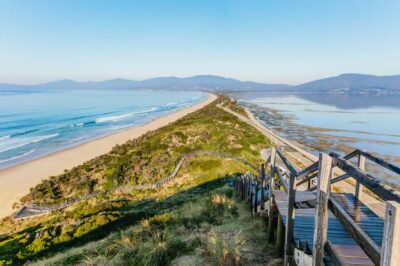
From Hobart/Adventure Bay: Bruny Island Wilderness Cruise
Read our review →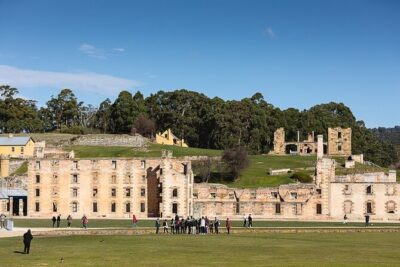
Port Arthur Full-day Guided Tour with Harbour Cruise and Tasman National Park
Read our review →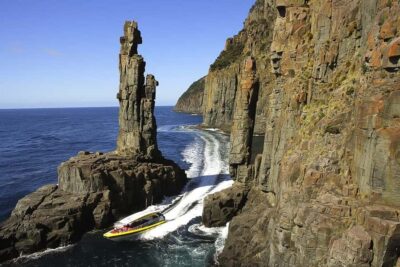
Bruny Island Wilderness Coast Eco Cruise with Lunch
Read our review →
Wilsons Promontory Wilderness Cruise from Tidal River
Read our review →Browse the lists this tour appears in