
Review · MULTI-DAY SAFARI
Uyuni: Guided 3-Day Tour Salt Flats & Avaroa National Park
The best part of this trip is the change of scenery. You begin on the blinding white Uyuni Salt Flats, then spend two days crossing high desert, volcanic country, flamingo-filled lagoons, and the red water of Laguna Colorada. Few three-day tours pack in this much variety.
I like the small group size, with no more than 11 people, and the fact that meals, transport, a guide, and lodging are included. I also like the sunset stop with wine and the chance to bathe in the Polques hot springs. The catch is real: this is a demanding high-altitude trip with bumpy roads, cold nights, basic lodging, and limited hot water.
Key points to know before you book
- Day one delivers the classic Uyuni sights: The Train Cemetery, Colchani, the salt flats, Salt Hotel-Museum, Dakar Monument, Flags of the World, and Incahuasi Island.
- Avaroa National Park is the real three-day test: Expect flamingo lagoons, the Stone Tree, Laguna Colorada, geysers, hot springs, and volcano views.
- The small group matters: The 4×4 carries up to 11 participants, making this more manageable than a large convoy.
- Accommodation is basic: The first night uses shared rooms with four, five, or six beds, and the second night may also involve shared rooms and shared toilets.
- Prepare for altitude and cold: The salt flats sit at about 3,663 meters, and nights can reach around minus 10 Celsius.
- Budget for extra fees: You need separate money for Incahuasi, Avaroa National Park, hot springs, roadside toilets, drinks, and personal costs.
The salt flats are only the opening act

At $371 per person, this is not simply a day trip to the white flats. The price covers three days, a 4×4 vehicle, an English-speaking guide, a local driver, seven meals, and two nights of lodging. That makes the cost reasonable for a remote route, though the value depends heavily on how comfortable you are with rough conditions.
The trip leaves Uyuni at about 10:30 a.m. Hotel pickup runs between 10:15 and 10:30, so you should wait in the lobby rather than wander off for breakfast. If your hotel is not on the pickup list, you need to reach the operator’s office at the corner of Colón Street and Camacho by 10:00 a.m. Airport pickup is possible if you provide your flight time and airline in advance.
The small group limit of 11 is useful here. A 4×4 is not a spacious vehicle, especially with luggage, but a smaller group usually means less time sorting out people and more time at the stops. The vehicle has a rooftop luggage rack, so pack a compact bag and keep anything you need during the day inside the car.
More Multi-Day Safari Tours in the world:
- Yosemite National Park 2-Day Tour from San Francisco with Lodging
★ 4.5 · 412 reviews - Khao Lak: Khao Sok National Park Overnight Treehouse Trip
★ 4.7 · 216 reviews - 2-Day Yellowstone National Park Upper and Lower Loop Exploration
★ 5.0 · 200 reviews
Day one: locomotives, salt production, and Incahuasi
The first stop is the Train Cemetery outside Uyuni. Rusting locomotives and wagons sit in the open desert, remnants of Bolivia’s railway era from the eighteenth and early twentieth centuries. It is a stark place, with twisted metal against a bare horizon, and it gives you some of the trip’s best opportunities for artistic photos.
Next comes Colchani, a settlement tied to salt production. You can see how local producers work with the salt and browse a small artisanal market and museum. This stop is short, but it adds useful context before you reach the enormous salt pan. The salt is not simply a pretty surface. It supports local work and shapes the identity of the region.
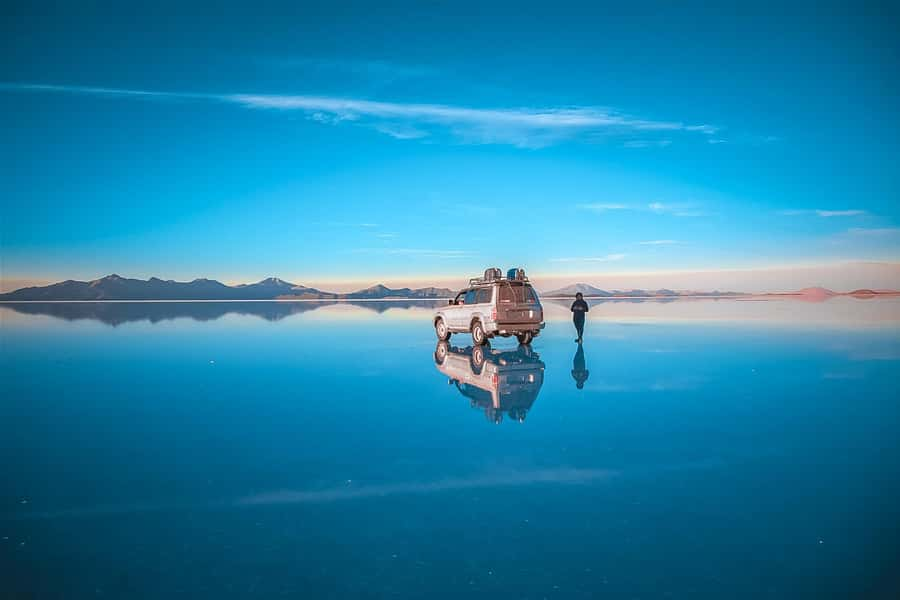
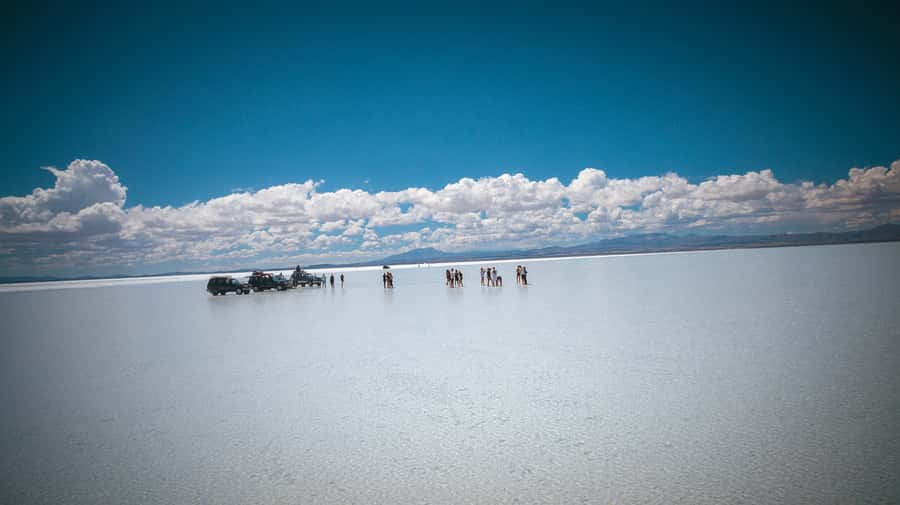
Then the road reaches the Uyuni Salt Flats at approximately 3,663 meters above sea level. Covering around 12,000 square kilometers, the flats can make distance and direction feel strange. In the dry season, the surface is a broad white crust marked by geometric salt patterns. During the rainy season, water can create mirror effects, but January through April brings an important limitation: Incahuasi Island may be inaccessible.
The route includes salt eyes, places where groundwater pushes up through the crust, along with the Salt Hotel-Museum built from salt blocks. You will also stop at the Dakar Monument and the Flags of the World area. These are familiar photo stops, but they break up the vast white space and help you understand how the salt flats have become a major stop on South America’s overland routes.
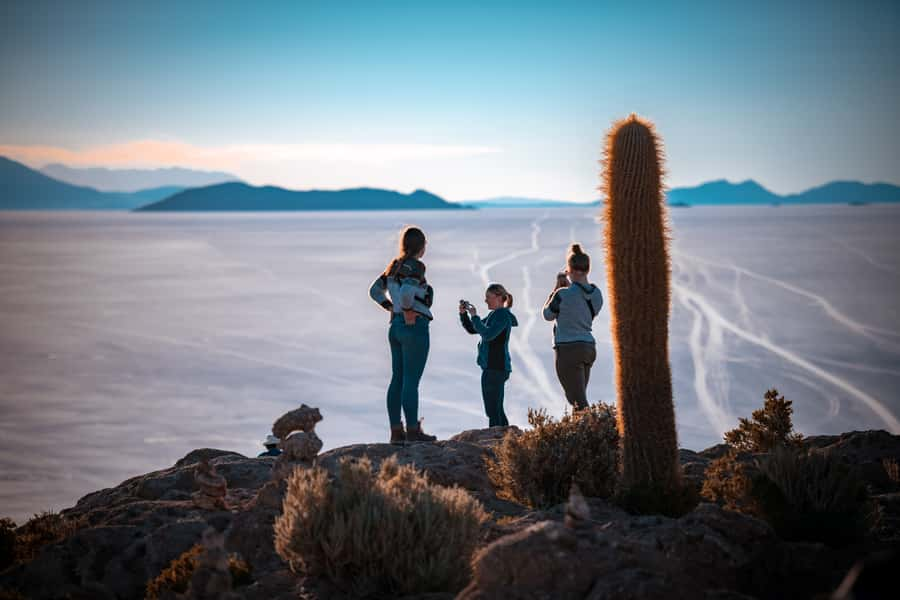
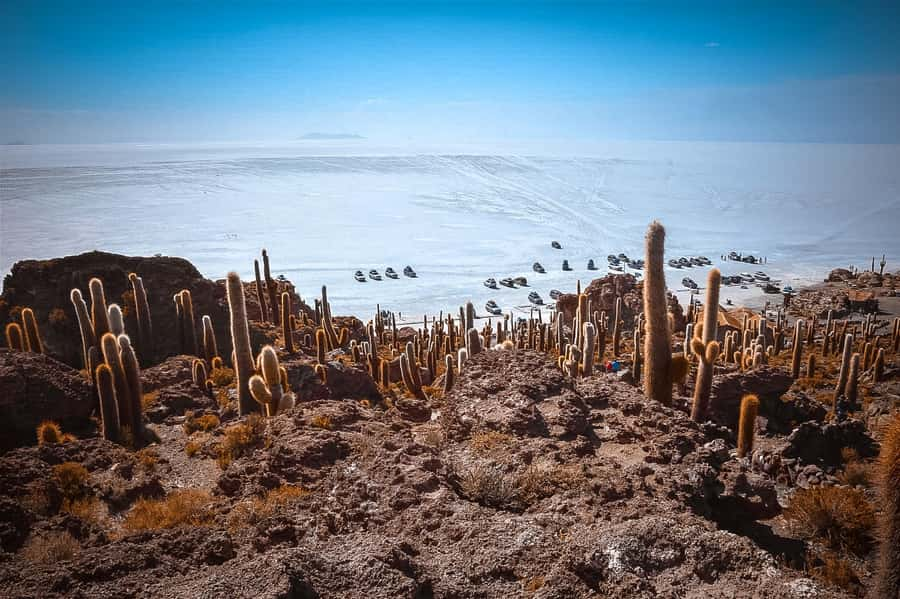
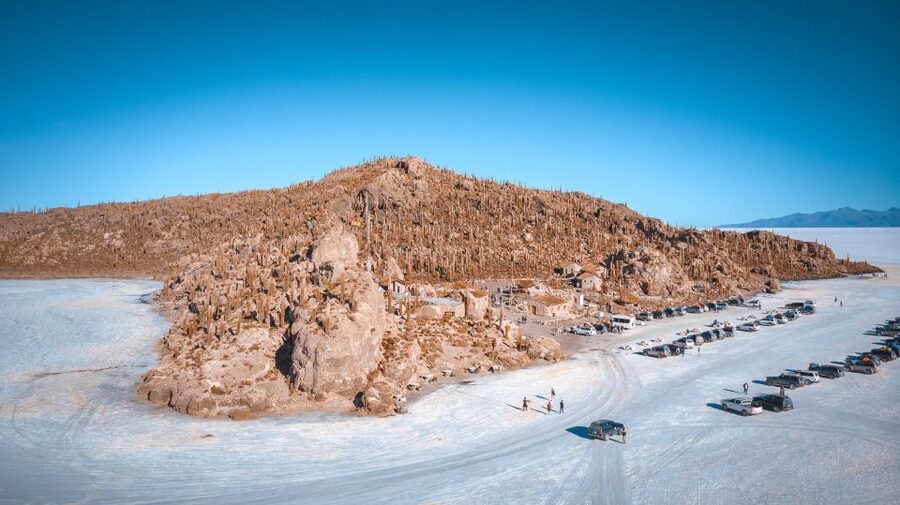
Incahuasi Island is the day’s visual high point when access is possible. Giant cacti rise from the rocky island, some reaching impressive heights, while the higher ground gives you a wide view over the salt pan. The contrast between rough volcanic rock, green cactus, and endless white is exactly why this island is worth the separate entrance fee of 30 bolivianos.
The day ends with time for sunset and a glass of wine before dinner at the hostel. That pause matters. The first day contains several stops, but it is not rushed in the same way as the early starts that follow. Bring a jacket even if the afternoon feels warm, since the open salt surface loses heat quickly after sunset.
Day two: flamingos, volcanic rock, and the red lagoon
Day two changes the mood completely. After breakfast, the 4×4 heads toward Chiguana and the Ollague lookout point, then continues through a chain of high Andean lagoons. Cañapa, Hedionda, and Chiarcota are known for flamingos, and the birds are one of the most memorable parts of the national park section.
The lagoons are not identical. Their colors, mineral content, and surrounding rock vary, so the stops feel like a series of separate scenes rather than one repeated view. You may see Chilean, James, and Andean flamingos around Laguna Colorada, giving the birdlife here unusual variety.
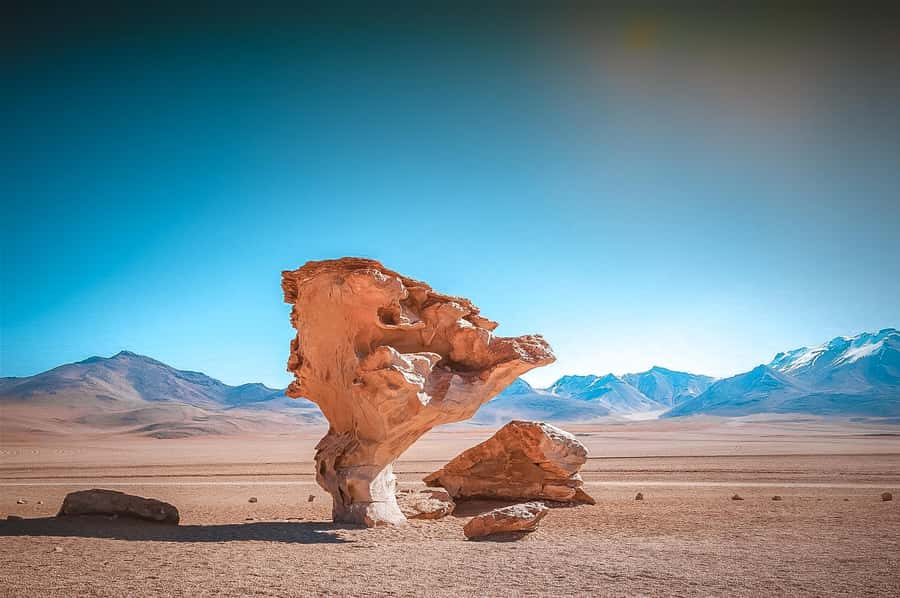
A lunch stop is included, followed by the Siloli Desert and the Stone Tree. The Stone Tree is a naturally shaped rock formation formed by erosion. It is a classic stop, but the wider setting is just as important: bare ground, wind-shaped stone, and high volcanic terrain with very little shelter from the elements.
The biggest challenge on this day is not the number of sights. It is the road. The route uses dusty, bumpy desert tracks, and several hours in a 4×4 can be tiring. If you have back problems, this is a serious concern, not a minor inconvenience. You should also avoid assuming that a three-day tour means easy sightseeing. Much of the appeal comes from reaching places that are far from paved roads and ordinary facilities.
Late in the day, you reach Laguna Colorada, or the Red Lagoon. Its reddish tone comes from minerals and microscopic life in the water, while flamingos gather along the edges. The color can vary with light and conditions, so do not expect one fixed shade of red. The setting is exposed and cold, but it is one of the most distinctive stops in Avaroa National Park.
The second night is spent in the community of Huayllajara. Accommodation is basic, and the room setup can involve shared sleeping arrangements and shared toilets. Past departures have had lodging changes because of access and organizational problems, and some overnight facilities have been described as very cold, with no heating, limited electricity, and little or no hot water.
That is the part of the trip to take seriously. Pack warm layers, gloves, a hat, long pants, and a sleeping bag if you have one. A sleeping bag is not included. The optional private-room upgrade may include a private toilet, toilet paper, and a towel, but you need to add it during the final payment process.
Day three: geysers, hot springs, and the Chilean border

The third day begins very early. The first major stop is Sol de Mañana, an area of volcanic activity with fumaroles, bubbling mud, steaming holes, and a strong sulfur smell. This is not a landscaped viewing area. You are looking at active geothermal ground, so follow the guide and keep a careful distance from unstable surfaces.
The early start is necessary because the geysers are part of a long return route to Uyuni. It also means you may be outside in the coldest part of the morning. At this altitude, the combination of wind, thin air, and low temperatures can make a short walk feel harder than expected.
After the geysers, the tour reaches the Polques hot springs. You can pay the 6 boliviano entrance fee and bathe while looking across the high Andean setting. This is one of the few chances to relax physically during the trip, and a towel is included on your packing list for good reason.
The route continues to the Salvador Dali Desert, named for its surreal-looking rock formations. The rocks and open desert create some of the tour’s most unusual photographs, especially when sunlight picks out the different colors of the volcanic formations.
Next comes a viewpoint over the Green Lagoon, White Lagoon, and Licancabur Volcano. Licancabur rises near the Bolivia-Chile border and gives this section a strong sense of scale. Sometimes the vehicle may continue toward the Chilean border to drop off passengers, which can add time to an already long day. If you need to make a tight onward connection, ask about this before booking.
After lunch, the return drive includes bofedales, wet high-altitude meadows, and more rock formations. Arrival in Uyuni is expected around 6:30 p.m., although weather, road conditions, border transfers, or roadblocks can change the schedule. You should avoid booking an immediate flight or a tight same-day connection.
More Three-Day Trips in the world:
- 3-Day Chitwan National Park Jungle Safari Tour Package with Pick Up
★ 5.0 · 184 reviews - 3 Day Serengeti National Park & Ngorongoro Crater Camping Safari
★ 5.0 · 142 reviews - From Johannesburg: Kruger National Park 3-Day Safari
★ 4.7 · 78 reviews - MIKUMI NATIONAL PARK – 3 Days
★ 4.5 · 63 reviews
What the $371 price really covers
The cost includes an English-speaking guide, a local driver, transport in a 4×4 with a rooftop luggage rack, three lunches, two dinners, two breakfasts, and two nights of accommodation. That is a useful package for a remote route where meals and transport are not easy to arrange independently.
The guide can make a major difference. Past departures have named guides such as James and Ronaldo, with James singled out for his humor and warm manner, while Ronaldo was praised for his information and help with logistics. Driver Oli has also been specifically praised. The assigned team can change, but these details show why the human side of the trip matters. You spend long hours in the vehicle, so a guide who explains the area and keeps the mood up is valuable.
The price does not include three key entry fees:
- Incahuasi Island: 30 bolivianos
- Eduardo Avaroa National Park: 150 bolivianos
- Polques hot springs: 6 bolivianos
You also need money for roadside toilets, listed at 30 bolivianos, plus drinks, toiletries, and other personal expenses. Carry small cash. Toilets are not available at every stop, and the extra fees add up even though each one is modest.
The package is good value if you want the full salt-flat and national-park route without arranging a separate vehicle, driver, guide, food, and lodging. It is weaker value if you only care about the salt flats. Day one is the easiest section to enjoy, while days two and three involve long drives and basic facilities.
Who should book this trip?
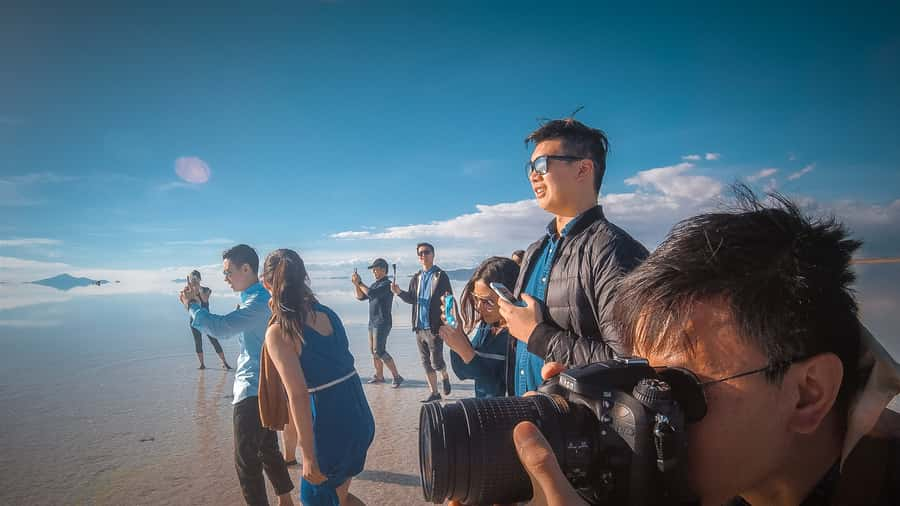
I would choose this tour if you want a broad view of the region and are willing to accept discomfort in exchange for remote scenery. You get much more than the salt pan: flamingos, volcanoes, hot springs, geysers, mineral lagoons, desert rock, and possible wildlife such as vicuñas, foxes, and viscachas.
You should be comfortable with altitude. The tour is not suitable for people with altitude sickness, heart problems, epilepsy, claustrophobia, or serious back problems. Children under 10 are excluded, as are people over 95.
This is also not the right choice if you need private bathrooms, reliable heating, regular hot water, or smooth roads. The overnight stays are part of the expedition feel, not a hotel holiday. Temperatures may fall to around minus 10 Celsius at night, so warm clothing is essential.
Bring your passport or identity card, comfortable shoes, a hat, towel, jacket, gloves, scarf, long-sleeved shirt, long pants, drinks, and comfortable clothes. Alcohol and drugs are not allowed, and pets cannot join the tour.
Should you book it?
Book this three-day tour if the salt flats are only one part of what you want to see. The strongest reason to go is the range of scenery packed into a single route, with a small group, English guidance, meals, and transport already arranged.
Choose a shorter salt-flat visit instead if your time is limited or you dislike rough roads and cold shared accommodation. Before paying, confirm the lodging arrangement, ask about the likely guide and driver, and make sure you have enough warm clothing and cash for entry fees. If you accept the physical demands, $371 is a fair price for a memorable but rugged journey through Uyuni and Eduardo Avaroa National Park.
FAQ
Where does the tour start and finish?
The tour starts in Uyuni City and returns to Uyuni City. Expected arrival at the Uyuni office on the final day is around 6:30 p.m.
What time is hotel pickup?
Hotel pickups take place between 10:15 and 10:30 a.m. You should wait in the hotel lobby. The tour starts at about 10:40 a.m.
Can I be picked up at Uyuni Airport?
Yes. You need to provide your flight time and airline name in advance.
What happens if my hotel is not on the pickup list?
Go to the operator’s office at the corner of Colón Street and Camacho by 10:00 a.m.
Is an English-speaking guide included?
Yes. The tour includes an English-speaking guide and a local driver.
How many people are in the group?
The tour is limited to 11 participants.
Is Incahuasi Island always accessible?
No. During the rainy season, from January through April, access to Incahuasi Island may not be possible.
What accommodation is included?
The first night is in a hostel with four, five, or six-bed rooms and a shared toilet. The second night is in basic accommodation with shared sleeping arrangements and a shared toilet. The location may change because of road access.
Are meals included?
Yes. The package includes three lunches, two dinners, and two breakfasts.
Which costs are not included?
You pay separately for Incahuasi Island, Eduardo Avaroa National Park, the hot springs, roadside toilets, drinks, toiletries, personal expenses, and a sleeping bag.
Just added for the parks around the world
- Stone Town: Jozani Chwaka Bay National Park Half-Day Tour★ 4.7 · 5 reviews
- Stockholm: Dog Walk in Nature Reserve with Swedish Fika★ 5.0 · 3 reviews
- Stockholm: Sunset Hike in Tyresta National Park with Meal★ 4.8 · 126 reviews
- Stockholm: Self Guided Kayak Adventure in Nature Reserve★ 5.0 · 69 reviews
- Stewart Island: Guided Wilderness Walk★ 5.0 · 10 reviews
- Stewart Island: Ulva Island Guided Wilderness Walk & Cruise★ 4.5 · 165 reviews
- Wasgamuwa: Wasgamuwa National Park Private 3-Hour Safari★ 4.9 · 10 reviews
- Sri Lanka: Yala National Park Private Safari★ 3.2 · 5 reviews
Multi-Day Safari Tours, compared.
Yosemite National Park 2-Day Tour from San Francisco with Lodging
Read our review →
Khao Lak: Khao Sok National Park Overnight Treehouse Trip
Read our review →
2-Day Yellowstone National Park Upper and Lower Loop Exploration
Read our review →
3-Day Chitwan National Park Jungle Safari Tour Package with Pick Up
Read our review →
2-Day Yellowstone National Park Tour with Lunches
Read our review →
Browse the lists this tour appears in