
Review · NEW ZEALAND
Doubtful Sound Wilderness Day Cruise from Manapouri
Doubtful Sound is the main event, but the journey to reach it is half the story. You cross Lake Manapouri, ride through Fiordland rainforest over Wilmot Pass, then board a larger catamaran for a long cruise through one of New Zealand’s most isolated fiords. It is a full day, not a quick boat ride.
I like the gradual build-up from lake to forest to fiord, and I like that the crew cuts the engines for a few quiet minutes. That rare pause lets rain, waterfalls, and bird calls fill the air. The main drawback is size: the vessel can carry up to 135 people, so this is not a private wilderness outing. Bring warm, waterproof clothing and expect a long day.
Key points to know before you book
- Three-part journey: You cross Lake Manapouri, drive for about 45 minutes over Wilmot Pass, then cruise Doubtful Sound for roughly two hours.
- The silence stop matters: The engines are shut down so you can hear the fiord without boat noise.
- Wildlife is possible, not promised: Fur seals, bottlenose dolphins, and Fiordland crested penguins may appear, but sightings depend on luck.
- Rain improves the scenery: Wet weather brings hundreds of waterfalls down the cliffs, though the outer deck can be cold and windy.
- This is a large-group tour: The boat may carry up to 135 people, with several viewing areas to spread out.
- Pack your own food if you want to save money: Food and drinks are sold on board, but prices can be high and lunch queues may form.
Why reaching Doubtful Sound takes all day

Doubtful Sound is not a roadside attraction. There is no simple public road from Manapouri to the fiord, which is why this trip feels more like an expedition than a standard boat excursion. You begin at 64 Waiau Street in Manapouri, a small town near Te Anau, and return to the same meeting point after about seven hours.
The route uses two boats and a coach. That sounds like a lot of changing, but each part has a clear purpose. Lake Manapouri gives you a calm opening, Wilmot Pass provides a rainforest and mountain crossing, and the Doubtful Sound cruise takes you into the main wilderness area.
I think this format gives the day a welcome sense of progress. You do not simply board a boat, circle a few viewpoints, and go home. The scenery changes several times, and the trip keeps revealing a more remote part of Fiordland.
The trade-off is time. Some people are surprised by the two boat crossings and the coach journey before the main cruise begins. If you want a short outing, this is the wrong choice. If you enjoy a full day built around changing scenery, the long approach is part of the appeal.
More national park tours around New Zealand:
- From Manapouri: Doubtful Sound Wilderness Day Trip
★ 4.8 · 1,621 reviews - Jet Boat Journey through Fiordland National Park – Pure Wilderness
★ 5.0 · 678 reviews - Dart River Jet Boat and Wilderness Experience
★ 5.0 · 531 reviews
Crossing Lake Manapouri through island-studded water
The first boat ride takes about 45 minutes across Lake Manapouri. The lake is dotted with islands and surrounded by mountains and rainforest, so the trip begins quietly rather than dramatically. Mist, rain, and even rainbows can appear early in the day, giving the crossing a moody Fiordland feel.
This section also gives you time to settle in. You can sit inside or move around for views, depending on the boat and conditions. Keep your camera ready, but do not treat the lake crossing as a mere transfer. It is a scenic part of the outing in its own right.
The water is often calmer than the open fiord, though weather can change quickly. A warm layer is useful from the start. Even if the day looks mild in Manapouri, the temperature can feel much lower once you are exposed to wind and rain.
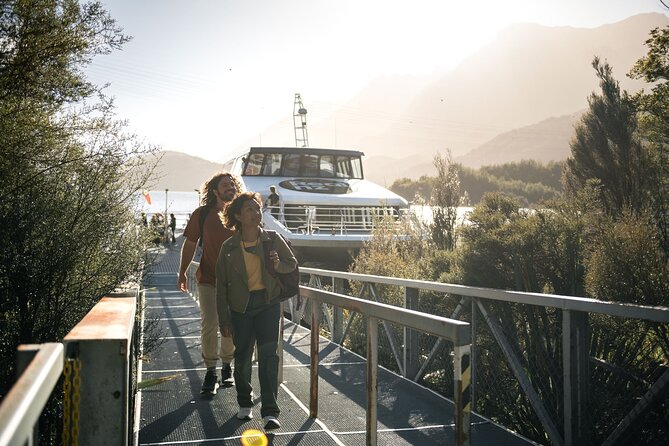
At the end of the crossing, you reach West Arm and transfer to a coach. The staff organize the changeover, and the tour is designed to keep moving without feeling rushed.
Wilmot Pass, rainforest, and the first big view
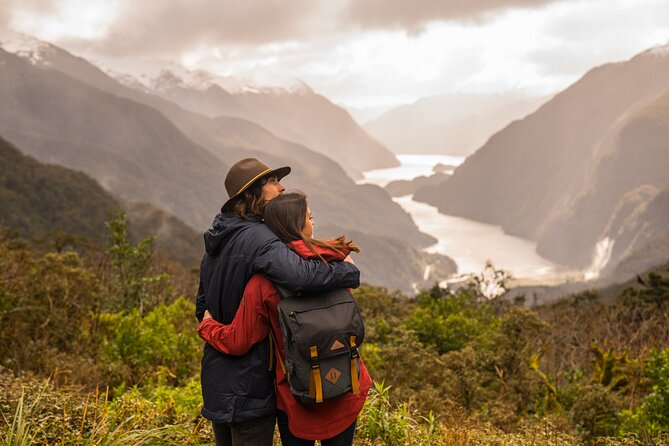
The coach travels over Wilmot Pass, rising about 671 metres through dense Fiordland rainforest. The drive takes around 45 minutes and includes views across steep mountain country toward Doubtful Sound.
This road is one of the parts I would not skip or mentally file away as transportation. It gives you a close look at the wet forest that defines Fiordland. You may see thick vegetation, dripping branches, and waterfalls after rain. The road itself is winding, so anyone prone to motion sickness should consider bringing suitable medication.
The coach usually pauses at scenic points, giving you time to look down toward the fiord and take photographs. One bus guide, Flash, received special praise for his humor and commentary. That matters on a road journey because a good driver and guide can turn a necessary transfer into a useful introduction to the area.
The ride is also a reminder of how isolated Doubtful Sound is. From the road, you see how little development exists beyond the transport route. You are not passing through a string of shops or resorts. The focus stays on forest, mountains, water, and weather.
Two hours through Doubtful Sound
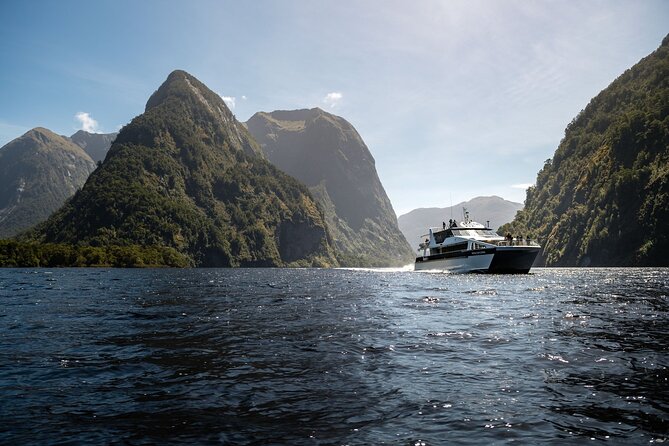
At the far side of Wilmot Pass, you board the catamaran for the cruise through Doubtful Sound, also known by its Māori name, Patea. The fiord stretches for about 40 kilometres, and the boat follows a route shaped by weather, sea conditions, and wildlife opportunities.
This is where the day earns its price. The mountains rise directly from the dark water, and rain often sends temporary waterfalls down the rock faces. On a wet day, the number of waterfalls can seem almost absurd. Pack a waterproof jacket, not just a water-resistant shell, if you plan to spend time outside.
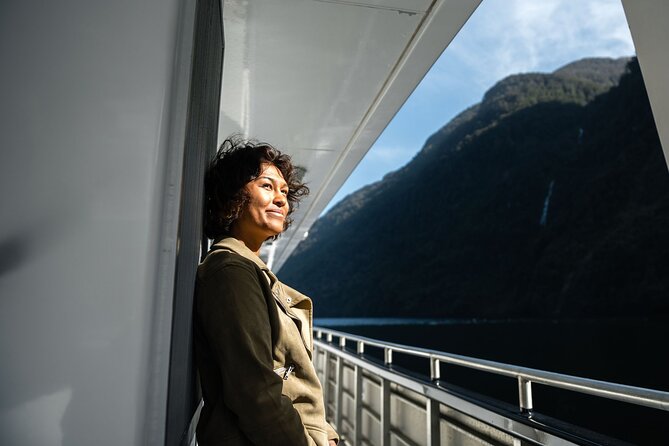
The vessel has several viewing areas, which helps it feel less cramped even with a large group. You can move between indoor seating and the outer deck as conditions change. The outside areas provide the best sense of scale, but wind can be strong and rain can come sideways. Hold onto hats and loose items.
Live commentary runs throughout the cruise. The guides point out natural features, explain the setting, answer questions, and help you understand what you are seeing. You are not left to guess which peak, waterfall, or animal deserves your attention.
The captain also adjusts the route to the conditions. That means the exact timing and direction can vary, but it gives the crew room to respond to wildlife and weather. The pace is generally relaxed, with time to watch the scenery rather than racing from one photo stop to the next.
Same parks, a different way to see them:
- Waitakere Ranges Wilderness Experience Tour from Auckland
★ 4.8 · 340 reviews - From Queenstown: Doubtful Sound Wilderness Day Trip
★ 4.7 · 314 reviews - Doubtful Sound Wilderness Cruise from Te Anau
★ 4.5 · 286 reviews - Jet Boat and Wilderness Walk Tour from Wanaka
★ 5.0 · 259 reviews
Wildlife sightings require luck and patience
Doubtful Sound is a strong place to look for wildlife, but no responsible tour can promise a particular animal. Possible sightings include fur seals, bottlenose dolphins, and Fiordland crested penguins.
Fur seals are among the more likely highlights. A seal colony can be watched from the boat without disturbing the animals. Dolphins may also approach the vessel, sometimes swimming or leaping in the wake. That can turn an ordinary stretch of water into the most exciting few minutes of the day.
The Fiordland crested penguin is the rare prize. Some departures see one or several, while others do not see penguins or dolphins at all. I would book this for the fiord first and wildlife second. That keeps the day worthwhile even when the animals remain out of sight.
Bring binoculars if you have them, though the guides help by pointing out movement and likely viewing areas. Keep scanning the water and shoreline, but do not spend the entire cruise staring through a camera. The scale of the fiord is easy to miss when you are focused only on getting a photograph.
The best few minutes are when the engines stop
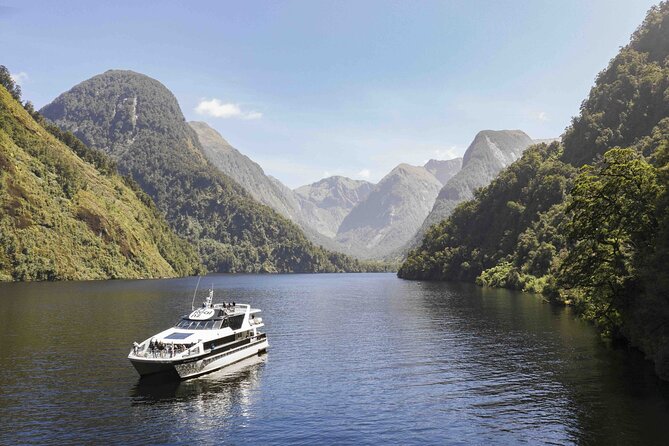
At one point, the crew shuts off the engines for a brief period of silence. It is a simple idea, but it is the most thoughtful part of the cruise.
With the boat still, you hear the natural sounds around you. Rain may tap on the deck, waterfalls may rumble in the distance, and wind may move through the surrounding valleys. The pause helps you understand why the place is called a sound, even though it is technically a fiord.
This moment can be especially powerful in poor weather. Fog and rain soften the peaks, while waterfalls multiply along the cliffs. On a clear day, you get stronger views of the mountains. Both conditions have something to offer, so do not assume rain ruins the outing.
If solitude is your main goal, keep your expectations realistic. You share the silence stop with the rest of the boat, and a group of more than 100 people cannot produce perfect wilderness quiet. Still, the engines being off makes a real difference.
What the large boat means for your day
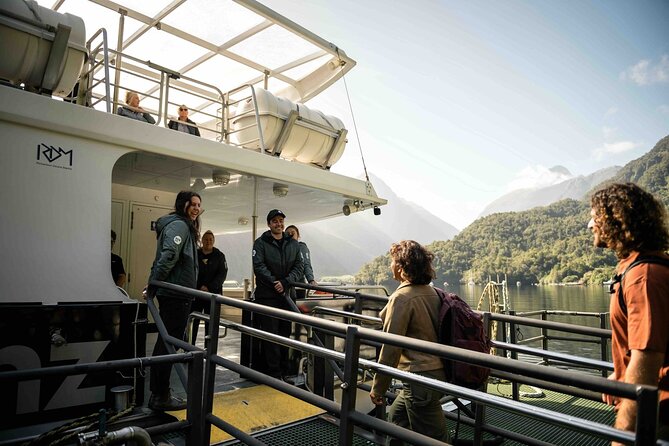
The advertised maximum is 135 people, and some departures can feel close to that size. Marketing images may suggest a smaller, more private boat, so this is worth understanding before you pay.
The upside is comfort and stability. A larger catamaran provides indoor areas, toilets, multiple decks, and more room to change position during the cruise. Families and people who prefer not to spend several hours on a small vessel may appreciate that arrangement.
The downside is that the outer deck can become crowded during a wildlife sighting or at a major viewpoint. You may need to move early or wait your turn for a clear photo. The trip still reaches a remote place, but the experience is shared rather than intimate.
I would not call the group size a deal breaker. It simply changes the kind of wilderness day you are buying. You get organized access to an extremely hard-to-reach fiord, plus shelter and commentary, rather than a private charter or a silent solo trip.
Food, clothing, and practical packing advice
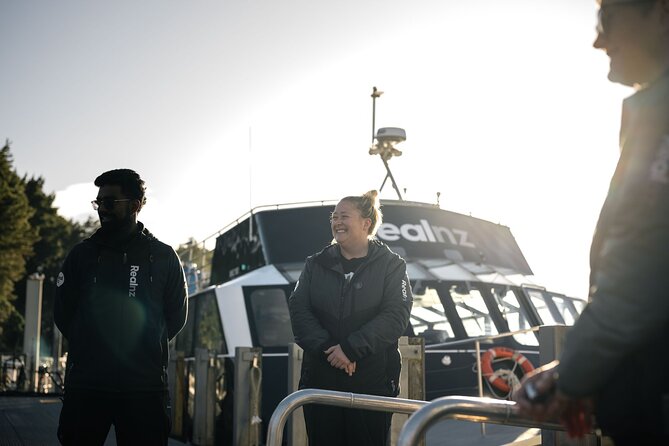
Food and drinks are available to buy on board, including alcoholic drinks. Prices can be higher than you might expect, and the lunch queue can take time. I would bring snacks and, if allowed under the operator’s current arrangements, a packed lunch so you are not dependent on the onboard selection.
Wear non-slip shoes or boots. You may move between wet decks, coach stops, and outdoor viewing areas, so ordinary smooth-soled shoes are a poor choice.
Pack:
- A waterproof jacket
- A warm sweater or fleece
- Comfortable, non-slip shoes
- Sunglasses and sunscreen
- Insect repellent
- A camera
- Motion-sickness medication if winding coach roads affect you
Dress for standing outside, even if you expect to spend much of the day indoors. The best views and wildlife sightings often happen from the outer deck. You can retreat inside when the wind becomes too strong, but you cannot make a thin jacket warm after you leave it at the hotel.
The tour operates in all weather conditions, so rain is not automatically a reason to stay home. Poor weather may lead to cancellation in some cases, with a different date or full refund offered. If the tour runs, you should be prepared for wet and windy conditions.
Is $216.58 a fair price?
At $216.58 per person, this is an expensive day out. The price makes more sense when you count everything included: the Lake Manapouri crossing, the coach over Wilmot Pass, the Doubtful Sound catamaran, live commentary, and return transport to Manapouri.
You are also paying for access. Reaching this part of Fiordland independently is extremely difficult, and the route requires transport that is not available as a simple self-drive option. The cost is not just for two hours on the water. It covers the whole chain of transport that gets you there.
Still, value depends on what you want. If you want a small boat, private attention, or a quiet trip with very few people, the price may feel steep. If you want a well-organized full-day route into a remote fiord without arranging several separate transport legs, it is easier to justify.
The experience compares well with a Milford Sound trip because the two places feel different. Doing both can make sense if you have enough time and budget. Doubtful Sound requires more effort to reach, which is part of its character.
Who should book this trip?
I would recommend it to people who want dramatic mountain and water views, enjoy nature commentary, and are willing to spend most of a day getting to a remote place. It also suits families and older visitors who prefer a structured trip with indoor seating, toilets, and organized transfers.
Wildlife lovers should consider it, but with realistic expectations. You might see seals, dolphins, or penguins, and those sightings can be memorable. You might also see only waterfalls, mountains, rainforest, and changing weather. Those are not consolation prizes here.
The trip is less suited to anyone who dislikes long transport days, winding coach roads, wet weather, or large groups. It is also not ideal if your main goal is a private or boutique boat outing.
Booking is flexible up to 24 hours before the start time for a full refund. Changes or cancellations inside that window are not accepted for a refund, so check the local start time carefully before making last-minute plans. Children must be accompanied by an adult, and most people can take part.
Should you book the Doubtful Sound day cruise?
Book it if you want the full journey into Fiordland, not just a quick boat ride. The lake crossing, Wilmot Pass drive, rainforest, waterfalls, wildlife search, and engine-free silence all add something different.
Skip it if a large boat or seven-hour day sounds tiring. The group may be bigger than the promotional photographs suggest, and food on board can cost extra. For everyone else, this is one of the most practical ways to reach Doubtful Sound and experience its powerful combination of rain, rock, forest, and open water.
FAQ
Where does the Doubtful Sound cruise start?
It starts at 64 Waiau Street in Manapouri, New Zealand. The tour also ends back at this meeting point.
How long does the tour take?
The tour lasts approximately seven hours.
What transport is used during the trip?
You travel by boat across Lake Manapouri, by coach over Wilmot Pass, and by catamaran through Doubtful Sound.
How long is the Lake Manapouri boat ride?
The scenic crossing takes about 45 minutes each way.
How long is the Wilmot Pass coach ride?
The coach journey over Wilmot Pass takes about 45 minutes each way.
How long is the Doubtful Sound cruise?
The main cruise through Doubtful Sound takes about two hours.
What wildlife might I see?
Possible wildlife includes fur seals, bottlenose dolphins, and Fiordland crested penguins. Sightings are not guaranteed.
Is food included?
No. Food, non-alcoholic drinks, and alcoholic drinks are available to purchase on board.
What happens if bad weather cancels the tour?
If the experience is canceled because of poor weather, you can choose a different date or receive a full refund.
Just added for the parks around New Zealand
- Stewart Island: Guided Wilderness Walk★ 5.0 · 10 reviews
- Stewart Island: Ulva Island Guided Wilderness Walk & Cruise★ 4.5 · 165 reviews
- Lake Tekapo Scenic 4WD Cass Valley Wilderness Tour★ 4.9 · 13 reviews
- From Queenstown: Dart River Wilderness Jet Boat Experience★ 4.9 · 123 reviews
- Auckland Private Tour: West Coast Wilderness & Piha Beach★ 4.9 · 17 reviews
- Mount Cook: Tasman Glacier & National Park Scenic Flight★ 4.8 · 20 reviews
- Abel Tasman National Park: Waka & Walk Tour★ 5.0 · 3 reviews
- Abel Tasman National Park: Sailing and Self-Guided Walk★ 4.8 · 238 reviews
New Zealand National Park Tours, compared.
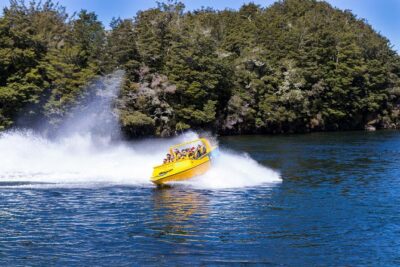
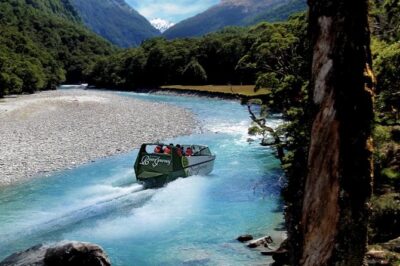
Jet Boat Journey through Fiordland National Park – Pure Wilderness
Read our review →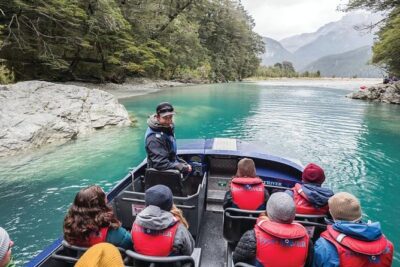
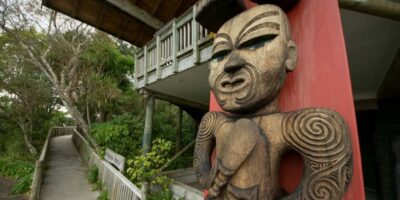
Waitakere Ranges Wilderness Experience Tour from Auckland
Read our review →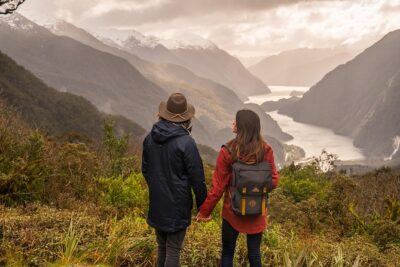
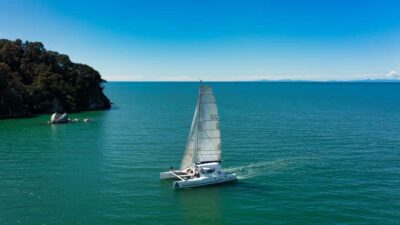
Abel Tasman National Park: Sailing and Self-Guided Walk
Read our review →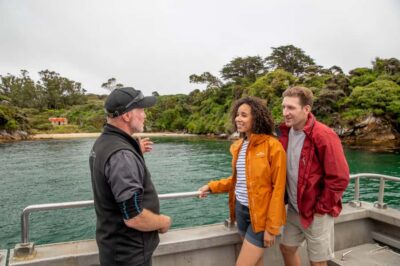
Stewart Island: Ulva Island Guided Wilderness Walk & Cruise
Read our review →Browse the lists this tour appears in