
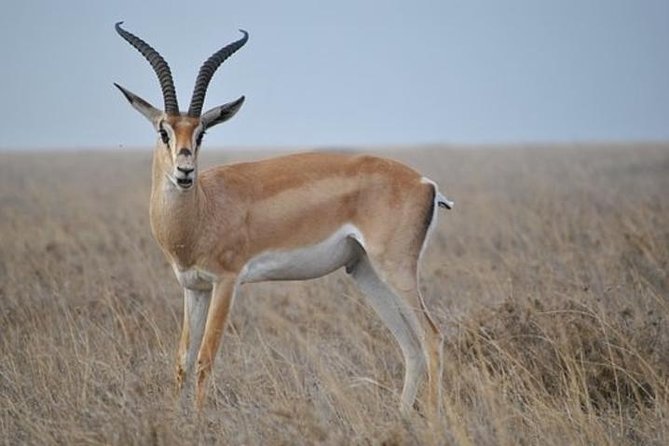
Review · ARUSHA
7 Days Tanganyika Wilderness Safari
The best part of this safari is the range packed into one week: quiet Tarangire, wide-open Serengeti, and the wildlife-filled bowl of Ngorongoro Crater. You get private use of a 4WD vehicle, so your group can spend more time watching an animal instead of waiting for strangers to take their photographs.
I like the practical setup: lodging, meals, bottled water, park fees, airport transfers, and game drives are bundled into the price. I also like the focus on guides such as Laban, George, Juma, Francis, and Albert, whose animal tracking and steady driving can make a real difference. The main drawback is the road time. This is a true overland safari, with bumpy stretches and long drives between parks.
Key points to know before booking
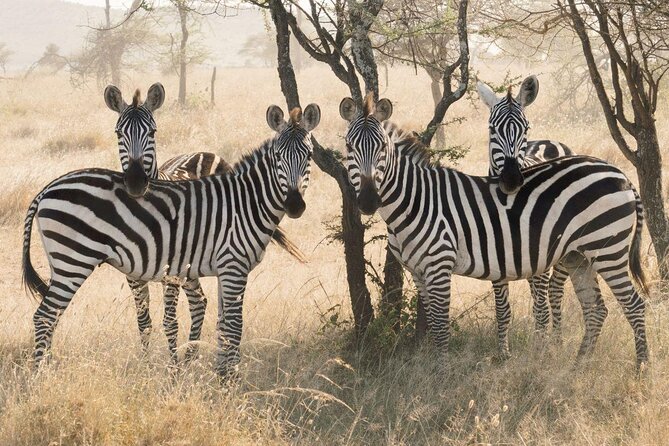
- Tarangire gives you a quieter start: This park is known for elephants, birds, and a less crowded safari feel.
- The Serengeti gets two nights: Central Serengeti, around Seronera, is the main wildlife portion of the trip.
- Ngorongoro Crater is a major highlight: You visit Lake Magadi, where flamingos, hippos, and water birds may gather.
- The safari is private: Only your own group takes part, with a driver-guide in a 4WD vehicle.
- The price covers much of the daily cost: Lodging, meals, water, fuel, park fees, snacks, and transfers are included.
- Expect basic safari realities: Roads can be bumpy, days can be long, and the final night’s accommodation is not included.
A seven-day route through Tanzania’s best-known parks
At $2,929.49 per person, this safari is not a budget park visit. But the price includes nearly all of the costs that can surprise you on a Tanzania trip: accommodation, food, park fees, private transportation, bottled water, guide service, and airport transfers.
That makes the number easier to judge. You are paying for a full private circuit rather than a short game drive from one lodge. You also avoid having to arrange each park permit, meal, transfer, and night separately. The value depends partly on your group size and how much you care about privacy. If you want the lowest possible price, a shared vehicle may cost less. If you want your own vehicle and more control over the pace, this package is easier to justify.
The schedule begins with an airport pickup and ends with a return to Arusha. The published start time is 8:30 a.m. from Arusha, while the first day includes a meet and greet at Kilimanjaro Airport. Confirm the exact pickup plan when you book, especially if your flight arrives on Day 1.
More National Park Safaris in Arusha
- 3 Day Serengeti National Park & Ngorongoro Crater Camping Safari
★ 5.0 · 142 reviews - Arusha National Park Private Safari
★ 5.0 · 59 reviews - 6 days 5 nights safari Ngorongoro, Serengeti and Tarangire National Parks
★ 5.0 · 39 reviews
Day 1: Kilimanjaro Airport to Kibo Palace Hotel
Your guide meets you at Kilimanjaro Airport and takes you to your Arusha accommodation, Kibo Palace Hotel. This first day is mainly about arrival and getting settled.
That is useful after a long international flight. You do not need to find your own airport taxi or arrange a separate transfer into town. The schedule also gives you a chance to meet the safari team before the road portion begins.
Do not expect a full wildlife outing on this day. The attraction is convenience, not sightseeing. If your flight arrives late, the airport transfer and included first night help keep the start simple.
Day 2: Tarangire’s elephants and open country
After breakfast, you drive from Arusha to Tarangire National Park. The park is especially known for elephant migration and birdlife, and it is presented here as a quieter alternative to the better-known parks farther north.
Tarangire is a smart first stop. It brings you quickly into the safari rhythm without beginning with the longest possible drive. From the open-roof vehicle, you can watch for elephants, lions, giraffes, birds, and other animals in their natural setting. The park’s quieter feel may appeal to you if you prefer patient viewing over a crowded rush from one sighting to the next.
The exact time spent inside Tarangire can vary with the day’s driving schedule. That is worth asking about before departure, since the next stop is Maramboi Tented Lodge near the lake region. You sleep there after the game drive.
A private vehicle matters here. Your guide can pause when you want a better look, within park rules and the day’s route. The included binoculars, guidebooks, and destination maps are useful additions, especially for birdwatching.
Day 3: Olduvai Gorge and the central Serengeti
After breakfast at Maramboi Tented Lodge, the route turns toward the Serengeti, with a stop at Olduvai Gorge. This prehistoric site is associated with Dr. Louis Leakey’s discovery of Homo habilis, often called handy man. The stop adds a human-evolution story to a trip otherwise centered on wildlife.
Olduvai is valuable because it breaks up the drive and gives you a different way to understand northern Tanzania. You are not simply crossing empty ground between parks. You are passing through a region tied to some of the most important discoveries about early humans.
The rest of the day brings you into the central Serengeti. The park covers about 15,000 square kilometers and supports roughly three million large mammals, including the animals commonly grouped as the Big Five: lion, leopard, elephant, buffalo, and rhinoceros.
The Serengeti has several kinds of habitat, including woodland, swamps, soda lakes, and short-grass plains. That variety helps explain why sightings can change quickly. One hour may bring open views across the plains, while the next puts you near water or thicker vegetation.
You spend the night at Serengeti Acacia Camps. This is a long day, and the transfer can be tiring. Still, reaching the Serengeti in time for a game drive gives you a strong first look at one of Africa’s most famous wildlife parks.
More National Park Safaris in Tanzania
- 3 Days Safari to Serengeti National Park & Ngorongoro Crater in Tanzania
★ 5.0 · 34 reviews - 3 Days Safari Ngorongoro Crater and Serengeti National Park
★ 5.0 · 21 reviews - Arusha: Tarangire National Park Full-Day Wildlife Safari
★ 4.8 · 6 reviews - Arusha: Arusha National Park Day Trip w/ Game Drives & Lunch
★ 5.0 · 4 reviews
Day 4: A full game-drive day around Seronera
Day 4 is the most focused wildlife day of the schedule. After breakfast, you set out for a full-day drive in central Serengeti, around the Seronera area.
This is where a skilled guide can shape the day. Guides named in connection with this safari include Laban, George, Juma, Francis, Emmanuel, Albert, William, Ombeni, and Calvin. The strongest praise centers on animal tracking, careful driving, clear explanations, and the ability to spot animals that you might miss.
That skill matters more than a fancy vehicle. A leopard can blend into a tree, and a lion may be partly hidden in grass. Several guides associated with this trip are credited with finding Big Five animals, cheetahs, hippos, giraffes, and other wildlife. Laban is especially noted for tracking ability and a warm, helpful manner. George is praised for route planning and reading animal behavior. Juma is known for combining driving, navigation, and animal spotting.
The day can also include a picnic or snacks during the drive, and a glass of wine at a sundowner is included. Bottled water is supplied without a stated limit, which is important in a hot, dusty environment.
You return to Serengeti Acacia Tented Camps for a second night. Two nights in the central Serengeti are better than simply passing through. You get a full day without packing up and changing lodging halfway through.
Day 5: From the Serengeti toward Ngorongoro
After breakfast, you leave the Serengeti and travel toward the Ngorongoro Conservation Area. The route is described as moving from the northern Serengeti toward Ngorongoro, with an afternoon drive and a return to Ngorongoro Farm House Lodge.
This is another long transfer day, so set realistic expectations. You may spend a good portion of the day in the vehicle. The reward is a change from broad Serengeti plains to the volcanic setting around the crater.
Ngorongoro is about 20 kilometers across, around 600 meters deep, and roughly 300 square kilometers in area. It is the world’s largest unflooded, unbroken volcanic caldera. Those numbers help you understand its scale, but the first view from above is likely to say more than any measurement.
Lake Magadi sits in the crater’s southwestern area. It is a large, shallow alkaline lake and a regular place to look for flamingos, hippos, and other water birds. Sightings are never guaranteed, but the lake gives the crater a strong mix of open water, animals, and dramatic volcanic walls.
You sleep at Ngorongoro Farm House Lodge. The lodge becomes your base for the next morning’s crater drive, so you do not need to change accommodation again that night.
Day 6: A morning inside Ngorongoro Crater
After breakfast, you head into Ngorongoro Crater for a morning game drive. This is one of the most concentrated wildlife outings on the route. The crater’s enclosed shape gives you a strong chance to see several species in one area, though no safari can promise a particular animal.
The setting is the main attraction. You are surrounded by crater walls while searching for lions, elephants, buffalo, rhinos, hippos, flamingos, and other wildlife. The visit to Lake Magadi is especially worthwhile for birdlife and water animals.
A morning drive is a good choice because it leaves the late afternoon for the return to Ngorongoro Farm House Lodge. Still, this is not a gentle sightseeing day. The access roads and crater tracks can be rough, and the trip is better suited to people who can manage long periods in a vehicle.
The private format helps families and couples set a comfortable pace. Children must be accompanied by an adult, and the stated fitness level is moderate. You should also share dietary needs when booking, since meals are included throughout the itinerary.
Day 7: Return to Arusha and onward travel
After breakfast at the lodge, you drive back to Arusha. From there, the operator provides a transfer to the airport for an international flight, or to a hotel arranged separately by you.
The final day works best if your onward flight leaves late enough to allow for the return drive. The supplied schedule does not give a fixed arrival time in Arusha, so do not book a tight connection without confirming the timing.
The last day’s accommodation is not included. That is easy to overlook because every earlier night is covered. If you need a hotel before a later flight, arrange it separately.
What the private 4WD setup adds
The safari vehicle has a pop-up roof, refrigerator, binoculars, guidebooks, maps, and space for snacks and water. The roof gives you a better view than a normal closed vehicle, while the refrigerator helps keep drinks comfortable during long drives.
The private format is one of the strongest reasons to choose this trip. Only your own group participates, so you do not have to match the habits of strangers. You can ask more questions, spend longer at a sighting, and discuss your priorities with the guide.
The guide is both driver and wildlife interpreter. That makes the individual guide especially important. Francis is praised for steady driving and clear explanations after more than 15 years with the company. Albert is noted for explaining animal behavior and sharing information about Maasai life. Emmanuel is praised for helping with practical needs and explaining the country along the way.
These are useful signs of what to look for, but a specific guide is not guaranteed in the supplied details. If you have a strong preference, ask the operator before paying.
Meals, lodging, and what the price really covers
Accommodation is included on Days 1 through 6. The route uses Kibo Palace Hotel, Maramboi Tented Lodge, Serengeti Acacia Camps, and Ngorongoro Farm House Lodge.
Meals are included according to the schedule, with breakfast, lunch, and dinner listed. Bottled water is supplied, and snacks are available during game drives. Alcoholic drinks other than the included glass of wine at a sundowner cost extra.
The package also includes park fees, government tax, fuel surcharge, landing and facility fees, and unlimited game mileage during the listed drives. That last point matters because wildlife viewing is not a fixed route. Your guide can spend time searching rather than rushing back because the vehicle has reached an arbitrary mileage limit.
International and local flights are not included. Neither are visa costs or travel insurance. Plan for those separately.
Who should book this safari
I would choose this trip if you want the classic northern Tanzania circuit in one week and value a private vehicle more than a slow, relaxed holiday. It suits couples, families, and small groups that want a guide focused on their interests.
It also suits first-time safari visitors who want the major names: Tarangire, Serengeti, and Ngorongoro Crater. The itinerary gives you elephants and birds early, two nights in the Serengeti, and a dedicated crater outing.
I would hesitate if you dislike long drives, rough roads, or early starts. You spend many hours on the road, and wildlife sightings are never guaranteed. The itinerary also leaves little free time for rest or extra activities.
The best practical tip is to treat the guide as part of the value. Ask about the likely guide, the pickup time at Kilimanjaro Airport, the amount of time planned in each park, and the final-day transfer before booking. Dietary requests should be given at booking, and children must travel with an adult.
Should you book the 7 Days Tanganyika Wilderness Safari?
Book it if your priority is seeing a wide range of Tanzanian wildlife in a private vehicle with most daily costs handled in advance. The combination of Tarangire, central Serengeti, Olduvai Gorge, Lake Magadi, and Ngorongoro Crater gives you more variety than a short park visit.
Skip it if you want a low-cost shared safari or a slower itinerary with fewer transfers. At $2,929.49 per person, the package earns its price through privacy, included fees, meals, lodging, equipment, and airport transfers. It is a strong choice for a first Tanzania safari, provided you are ready for bumpy roads and long days.
Cancellation terms are strict close to departure. A full refund is available when you cancel at least six full days before the start time, while cancellations two to six days ahead receive 50 percent. Less than two full days usually means no refund.
FAQ
Where does the safari start?
The listed starting point is Arusha in Tanzania, with a stated start time of 8:30 a.m. The first day also includes a meet and greet at Kilimanjaro Airport and a transfer to Arusha accommodation.
How long does the safari last?
The trip lasts approximately seven days, from arrival and transfer on Day 1 through the return to Arusha and airport transfer on Day 7.
Is this a private safari?
Yes. Only your own group participates in the tour and vehicle.
Which parks and sites are included?
The route includes Tarangire National Park, the Serengeti, Olduvai Gorge, the Ngorongoro Conservation Area, Ngorongoro Crater, and Lake Magadi.
Is accommodation included?
Accommodation is included through Day 6. The final day’s accommodation is not included.
Are meals included?
Yes. Breakfast, lunch, and dinner are included according to the itinerary.
Is airport transportation included?
Yes. Airport pickup and drop-off, along with round-trip private transfer service, are included. Confirm the exact timing for your flight connections.
What equipment is provided in the safari vehicle?
The 4WD vehicle includes a pop-up roof, refrigerator, binoculars, guidebooks, and destination maps. Bottled water and game-drive snacks are also provided.
Are flights, visas, and insurance included?
No. International and local air transportation, travel insurance, and visa costs are not included.
More Week-Long Trips in Arusha
- From Las Vegas: 7-Day Utah and Arizona National Parks Tour
★ 4.9 · 17 reviews - 7-Day Yellowstone National Park Rocky Mountain Explorer
★ 4.9 · 8 reviews - Utah Mighty 5 National Parks: Small Group 7-Day Tour
★ 4.5 · 7 reviews - From Vegas to San Francisco: 7-Day National Park Tour
★ 4.2 · 6 reviews
Just added for the parks around Arusha
- Private 4×4 Vitara Safari in Arusha National Park★ 5.0 · 3 reviews
- Day trip to tarangire national park★ 4.7 · 6 reviews
- Arusha: Tarangire National Park Full-Day Wildlife Safari★ 4.8 · 6 reviews
- Arusha: Arusha National Park Day Trip w/ Game Drives & Lunch★ 5.0 · 4 reviews
- 3 Days Safari Ngorongoro Crater and Serengeti National Park★ 5.0 · 21 reviews
- 3 Days Safari to Serengeti National Park & Ngorongoro Crater in Tanzania★ 5.0 · 34 reviews
- The Amaizing Private Day Trip to the lovely Arusha National Park★ 5.0 · 5 reviews
- Private Guided Day Trip in Tarangire National Park★ 5.0 · 5 reviews
Arusha National Park Tours, compared.
3 Day Serengeti National Park & Ngorongoro Crater Camping Safari
Read our review →
4 Day Ngorongoro Crater Tarangire and Serengeti National Park
Read our review →
6 days 5 nights safari Ngorongoro, Serengeti and Tarangire National Parks
Read our review →
3 Days Safari to Serengeti National Park & Ngorongoro Crater in Tanzania
Read our review →

Browse the lists this tour appears in