Review · TARANGIRE AND SERENGETI
Day trip to tarangire national park
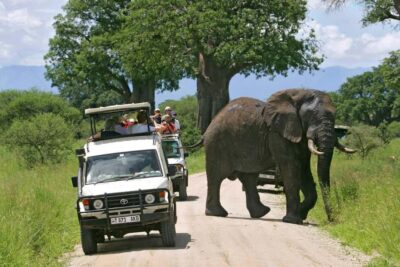
Tarangire is the place to go when you want a serious wildlife day without committing to a longer northern Tanzania safari. The park’s year-round river draws animals from nearby areas, and elephant herds can reach about 300. I like the strong chance of seeing elephants and the fact that the day includes park fees, a guide, water, binoculars, and a picnic.
I also like the timing: a two to three-hour drive from Arusha gets you to a proper national park, not a quick roadside stop, while the return before sunset keeps this manageable for a short visit. The drawback is simple: one day means a long road day, with limited time if traffic, delays, or a slow wildlife sighting works against you.
Key points at a glance
- Elephant country: Tarangire has the highest density of elephants in northern Tanzania, with herds sometimes reaching around 300 animals.
- Best dry-season months: From July through October, animals gather around the Tarangire River as water becomes scarce elsewhere.
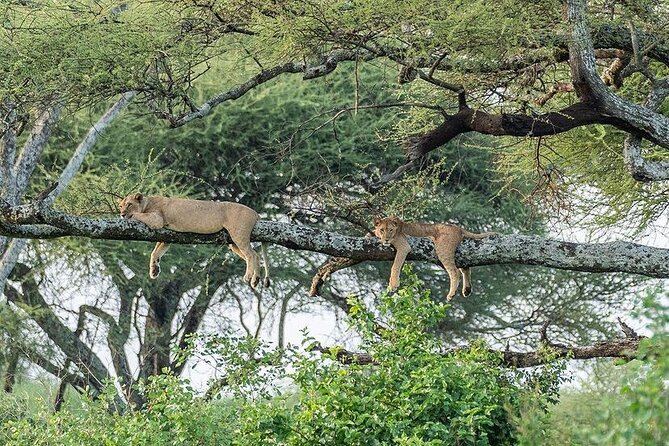
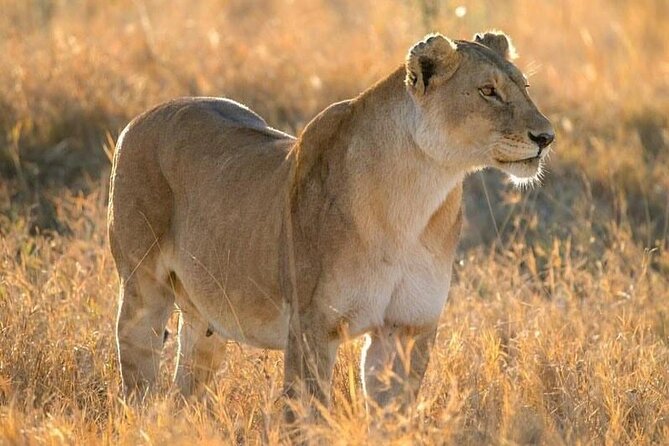
- Wildlife range: You may see lions, giraffes, buffaloes, wildebeests, zebras, antelopes, gazelles, and, with luck, a python.
- Birdwatching bonus: The park has more than 550 recorded bird species, including the huge Masai ostrich.
- Full-day format: Expect a two to three-hour drive each way, morning and afternoon game viewing, and a return to Arusha before sunset.
- Flexible booking: You can cancel up to 24 hours before departure for a full refund and reserve without paying immediately.
Why Tarangire works so well for a one-day safari
Tarangire gives you a genuine northern Tanzania safari experience in a single day. You are not simply driving around the outskirts of Arusha hoping to spot an animal. You enter a large national park with open savannah, seasonal marshes, scattered trees, and the Tarangire River as its main water source.
The park is especially useful for a short trip because wildlife can remain here even when nearby areas dry out. From July through October, animals from the surrounding region come toward the river to drink. That does not guarantee a lion at the waterhole or an elephant herd beside your vehicle, but it improves the basic conditions for game viewing.
I would choose this trip primarily for elephants. Tarangire is known for having northern Tanzania’s highest elephant density, and the herds can be remarkably large. Seeing one elephant is memorable. Seeing a long line of them moving through the savannah, with smaller animals nearby, gives the park its particular character.
You also get a useful mix of animals. The day can produce lions, giraffes, buffaloes, wildebeests, zebras, antelopes, gazelles, and many kinds of birds. A python is a much less certain sighting, so treat that as a lucky extra rather than part of the promise.
More National Park Day Trips in Arusha
- Day Trip to Kilimanjaro National Park
★ 5.0 · 20 reviews - Arusha National Park Day Trip
★ 4.5 · 18 reviews - 1 Day: Arusha National Park
★ 5.0 · 9 reviews
The 2 to 3 hour drive from Arusha
Your day begins with collection from your Arusha hotel. The drive to Tarangire takes about two to three hours, so this is an early start and a fairly long day on the road. That distance is the main price you pay for fitting a national park visit into one day.
The route also makes airport timing important. Same-day pickup from Arusha Airport is included, but airport pickup is not included if your flight arrives on a different day from the safari. If you are connecting this trip with a flight, confirm the timing before booking rather than assuming the airport transfer covers your whole stay.
The safari may be arranged as a private, joint, or group outing. Since the exact group size is not stated, ask before you pay if having a private vehicle matters to you. A shared vehicle can reduce the cost per person, while a private arrangement usually gives you more control over pauses and photography.
The guide is central to the day. English, German, French, Spanish, and Italian guiding is available. Brayson was specifically praised for taking time with wildlife viewing and photography, and for explaining animal habits. You cannot assume he will be assigned to your vehicle, but you can ask if he is available when booking.
Entering Tarangire National Park
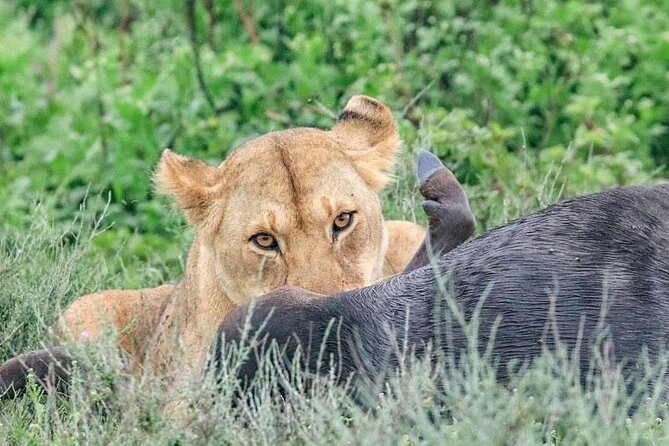
Once you reach the park, the day changes pace. The road trip gives way to a game drive, where the guide watches the grass, trees, riverbanks, and open ground for movement. You will spend the morning looking for animals before stopping around lunchtime at a suitable picnic place.
The park’s setting has a strong historical connection to old-style big-game hunting. Ernest Hemingway is associated with safaris in this region, and the former hunting grounds later became protected national park territory. The important change is that today the main tool is a camera, not an elephant gun.
That history is worth keeping in the background rather than letting it dominate the visit. The real value of Tarangire is the chance to see wildlife in a protected setting and to understand how water shapes animal movement. The river is not just a pretty feature. It is the reason this area becomes so important during the dry season.
Your guide will be looking for more than the largest animals. Giraffes may be easier to spot against the open sky, while zebras and wildebeests can blend into the grass at a distance. Buffaloes often reward patience, and antelopes and gazelles add movement throughout the day.
Elephants, lions, and the patience of a game drive
The most dependable focus here is elephants. Tarangire allows you to see them through much of the year, and the herds may be large. You might find them near the river, crossing open ground, or feeding among the trees.
Photography takes patience. A guide who gives you time, as Brayson did for one visitor, makes a real difference. The best sighting is not always the first sighting. If the animals are moving, feeding, or gathering, a few extra minutes can turn a quick glimpse into a much better view.
Lions are possible, but no safari can promise them. The same is true of giraffes, buffaloes, and other mammals. The strongest expectation is variety, not a fixed checklist. That is a healthier way to approach a one-day safari, since wildlife is free to ignore your schedule.
I appreciate that binoculars are included, with at least one pair in the vehicle. You should still ask how many pairs will be available if you are sharing the car. Binoculars help with distant animals and birds, particularly when the vehicle cannot approach closely.
More National Park Day Trips in Tanzania
- Arusha: Tarangire National Park One-Day Trip
★ 3.9 · 8 reviews - Arusha: Tarangire National Park Full-Day Wildlife Safari
★ 4.8 · 6 reviews - The Amaizing Private Day Trip to the lovely Arusha National Park
★ 5.0 · 5 reviews - Private Guided Day Trip in Tarangire National Park
★ 5.0 · 5 reviews
The picnic stop and the afternoon drive
Around lunchtime, you stop at a suitable picnic place. A picnic is included, along with drinking water for the day. The food has received praise for being plentiful, which matters after a morning spent on rough roads and in the open air.
There is a small wording point to watch. The package includes the picnic and the meals specified for the safari, but it does not cover lunch or dinner at your hotel before or after the outing. Think of this as a park lunch, not a full hotel meal plan.
After lunch, the wildlife drive continues into the afternoon. This second section gives you another chance to find animals missed earlier and to spend longer with a promising sighting. If you enjoy photography, the later part of the day is useful because you are no longer trying to see everything at once.
The return to Arusha takes another two to three hours, with arrival planned before sunset. You should expect to be tired. This is not a slow, leisurely outing with a hotel break in the middle. It is an efficient full-day safari built around the drive into the park and back.
Birdwatching and the Masai ostrich
Tarangire is not only a big-mammal park. More than 550 bird species are recorded here, making the drive worthwhile for anyone who likes birds. The Masai ostrich is a particularly striking possibility. It is the world’s largest bird and is hard to miss once you see one in the open.
You will get more from this part of the day if you tell your guide that birds matter to you. The tour is marketed around game viewing and elephants, so a guide may naturally focus on larger animals unless you show interest in smaller or more distant species.
Birdwatching also gives the one-day format more depth. If lions are resting out of sight or the larger herds are far away, birds keep the drive interesting. The park’s trees, marshes, river, and grassland support different types of wildlife, so the day is not dependent on one dramatic encounter.
The best time to choose this trip
The dry season, from July through October, is the clearest choice if your priority is concentrated wildlife around water. As nearby sources shrink, animals come toward the Tarangire River. This can make game viewing easier and may give you a stronger chance of seeing several species in one outing.
The park is still described as a year-round destination for elephants. If your schedule only allows another month, I would not dismiss the trip. Just keep your expectations centered on the park’s main strength, elephants and varied wildlife, rather than assuming the dry-season pattern will be identical.
The supplied ratings average 4.7 from six reviews, with praise focused on the guide, the food, the scenery, and the number of animals seen. That pattern is useful: the strongest part of this experience is the combination of a good guide and a productive park, not luxury transport or a slow lodge-based safari.
Is $345 per person good value?
At $345 per person, this is not a cheap day out, but a Tanzanian national park safari includes costs that add up quickly. The price covers entrance fees, taxes and VAT, a professional guide, drinking water, the picnic, and binoculars in the vehicle. Those inclusions make the price easier to justify than a basic transport-only excursion.
The value depends partly on the vehicle arrangement. A private safari gives you more control, while a joint or group safari may make the per-person cost more attractive. Confirm which format you are booking, because the advertised experience allows all three.
You are also paying for convenience. The operator collects you from your Arusha hotel, handles the park entry, provides the guide, and gets you back before sunset. For a visitor with only one free day, that can be more useful than trying to arrange separate transport, park access, food, and guiding.
The tradeoff is that the price does not include international flights, visa fees, insurance, souvenirs, or hotel meals before and after the safari. Government increases in taxes or park fees may also be added. Set aside money for those items so the headline price does not become your entire day-trip budget.
Who should book this Tarangire safari?
I would recommend it to you if you have one free day in Arusha and want elephants, open savannah, and a real national park visit. It is also a good fit if you are building a longer Tanzania trip but cannot spare several days for the full northern circuit.
Families and first-time safari visitors may like the clear format. You leave from your hotel, have a guide and picnic arranged, and return the same day. The wheelchair-accessible status is also useful for anyone who needs that facility, though you should confirm the vehicle setup and any personal requirements before departure.
Photography-minded visitors should ask for a guide who is willing to wait at sightings. Brayson is one name worth requesting, although assignment cannot be guaranteed. Birdwatchers should also state their interests early, since the park’s 550-plus bird species deserve more attention than a standard big-game checklist allows.
I would hesitate if you dislike long road journeys or need a relaxed pace. The two to three-hour drive each way takes a large part of the day. If you have several days available, a longer safari can offer more time in the parks and less pressure to fit everything into one outing.
Practical booking advice before you go
The tour offers free cancellation up to 24 hours before departure and allows you to reserve now and pay later. That is helpful if your Arusha schedule is still moving, but you should still check the starting time and airport arrangements carefully.
Ask these questions before confirming:
- Is the vehicle private, shared, or a group vehicle?
- How many binoculars will be available?
- Can you request guide Brayson?
- Is same-day airport pickup suitable for your arrival time?
- What exactly is included in the picnic?
- Are any new park fees or government charges expected?
The language choice is broad, with English, German, French, Spanish, and Italian listed. If you need a particular language, request it clearly rather than assuming it will be assigned automatically.
Should you book it?
Book this Tarangire day trip if elephants are high on your list and you want a practical one-day safari from Arusha. The park offers strong wildlife variety, useful dry-season conditions, a well-regarded food stop, and guides who can make the difference between a rushed sighting and a rewarding one.
Skip it if you want a slow safari, dislike long drives, or have enough time for a longer circuit. For everyone else, $345 is a reasonable price for the park entry, guide, transport arrangement, water, picnic, and full day of wildlife viewing, provided you confirm the vehicle type and airport details first.
FAQ
How long does the Tarangire safari last?
It lasts one day. The drive from Arusha to Tarangire takes about two to three hours, followed by game viewing, a picnic stop, afternoon wildlife viewing, and a return to Arusha before sunset.
What animals can I see in Tarangire?
Possible sightings include elephants, lions, giraffes, buffaloes, wildebeests, zebras, antelopes, and gazelles. With good luck, you might also see a python.
Are elephants seen throughout the year?
The park is described as offering elephant sightings all year. Tarangire has the highest density of elephants in northern Tanzania, and herds can sometimes reach about 300 animals.
When is the best time for wildlife viewing?
The dry season from July through October is especially useful because animals from surrounding areas come to the Tarangire River for water.
Is lunch included?
A picnic is included during the safari, along with drinking water. Lunch and dinner at your hotel before or after the safari are not included.
Which languages are available for the guide?
Live guiding is available in English, German, French, Spanish, and Italian.
Is airport pickup included?
Pickup from Arusha Airport is included when it takes place on the same day as the safari. Airport pickup is not included if your flight arrives on a different day.
Can I cancel the booking?
Yes. You can cancel up to 24 hours in advance for a full refund, and you can reserve now and pay later.
More Day Trips in Arusha
- Arusha: Arusha National Park Day Trip w/ Game Drives & Lunch
★ 5.0 · 4 reviews - From Manapouri: Doubtful Sound Wilderness Day Trip
★ 4.8 · 1,621 reviews - Split: Krka National Park Day Trip with Boat Ride & Swimming
★ 4.6 · 1,321 reviews - From Dresden: Saxon Switzerland National Park Full-Day Trip
★ 4.7 · 931 reviews
More Tarangire and Serengeti Safaris in Arusha
- 3 Day Serengeti National Park & Ngorongoro Crater Camping Safari
★ 5.0 · 142 reviews - 4 Day Ngorongoro Crater Tarangire and Serengeti National Park
★ 5.0 · 44 reviews - 6 days 5 nights safari Ngorongoro, Serengeti and Tarangire National Parks
★ 5.0 · 39 reviews - 3 Days Safari to Serengeti National Park & Ngorongoro Crater in Tanzania
★ 5.0 · 34 reviews
Just added for the parks around Arusha
- Private 4×4 Vitara Safari in Arusha National Park★ 5.0 · 3 reviews
- Arusha: Tarangire National Park Full-Day Wildlife Safari★ 4.8 · 6 reviews
- Arusha: Arusha National Park Day Trip w/ Game Drives & Lunch★ 5.0 · 4 reviews
- 3 Days Safari Ngorongoro Crater and Serengeti National Park★ 5.0 · 21 reviews
- 3 Days Safari to Serengeti National Park & Ngorongoro Crater in Tanzania★ 5.0 · 34 reviews
- Arusha National Park: Private Jeep Tour★ 4.8 · 9 reviews
- The Amaizing Private Day Trip to the lovely Arusha National Park★ 5.0 · 5 reviews
- Private Guided Day Trip in Tarangire National Park★ 5.0 · 5 reviews
Tarangire and Serengeti Safaris, compared.
3 Day Serengeti National Park & Ngorongoro Crater Camping Safari
Read our review →
4 Day Ngorongoro Crater Tarangire and Serengeti National Park
Read our review →
6 days 5 nights safari Ngorongoro, Serengeti and Tarangire National Parks
Read our review →
3 Days Safari to Serengeti National Park & Ngorongoro Crater in Tanzania
Read our review →
Serengeti National Park: Balloon Safari at Dawn
Read our review →