Review · TARANGIRE AND SERENGETI
3 Days Safari Ngorongoro Crater and Serengeti National Park
The real appeal here is the amount of northern Tanzania packed into three days. You move from Arusha to the open grasslands of the Serengeti, then down into the wildlife-filled bowl of Ngorongoro Crater. It is a fast, demanding route, but it gives you two very different safari settings without the cost of a longer private itinerary.
I like the chance to explore several Serengeti areas, including the southern plains, central Serengeti, and Seronera Valley. I also like the small-group format, capped at six people, since that gives you a better chance of seeing out of both sides of the vehicle and asking your guide questions. The tradeoff is simple: six hours of driving on the first day leaves limited time for the actual game drive, and camping may feel basic after a long day.
Key points to know before booking
- Southern Serengeti on day one: The route enters through the Ngorongoro gate and reaches the grasslands after a roughly six-hour drive.
- A second Serengeti safari period: Day two includes more time around Moru Kopjes and central Serengeti, where rocks give predators a high lookout.
- Ngorongoro on the final day: The crater offers a compact setting with strong chances of seeing several major species in one outing.
- Small group size: The trip is limited to six people, a useful balance between price and personal space.
- Camping and included meals: Two breakfasts, three lunches, and two dinners are included, while the camping setup is described as basic.
- Strong support before departure: Communication by WhatsApp and email has been a repeated strength, especially from contacts such as Felix and Heaven Light.
What the $810 price really buys you
At $810 per person, this is not a budget bus ride, but it can be good value if you want the two headline parks in a short window. The price includes the safari structure, game drives, camping nights, and six meals. It also removes much of the planning work involved in arranging park access, transport, food, and a guide separately.
The value comes from the combination. Serengeti gives you broad plains and a sense of scale, while Ngorongoro gives you a concentrated wildlife setting. Seeing both in three days is more useful than spending the same time in only one park if this is your first northern Tanzania safari.
Still, you should understand what the price does not cover. Tips for the driver-guide and safari cook are excluded, as are visas. Accommodation details are not fully specified, so ask exactly where you will sleep and what camping equipment is supplied before paying. One useful lesson from past bookings is to be specific if you want more input on accommodation choices.
This is a join-group safari, not a private trip. That keeps the price lower, but your pace will also depend on the other people in the vehicle. The maximum group size of six is reasonable, though couples wanting complete control over stops may prefer a private booking.
More National Park Safaris in Arusha
- 7 Days Tanganyika Wilderness Safari
★ 5.0 · 159 reviews - 3 Day Serengeti National Park & Ngorongoro Crater Camping Safari
★ 5.0 · 142 reviews - Arusha National Park Private Safari
★ 5.0 · 59 reviews
Day one: a long road to the southern Serengeti

The stated schedule begins with breakfast at 7 a.m. and pickup at 8 a.m. from your accommodation. The drive to southern Serengeti is listed at about 335 kilometers and six hours, with entry through the Ngorongoro gate.
That road journey is a serious part of the day. You are not stepping straight from an Arusha hotel into a game drive. You will spend much of the morning and early afternoon in transit, so this day suits you best if you accept driving as part of the safari rather than seeing it as wasted time.
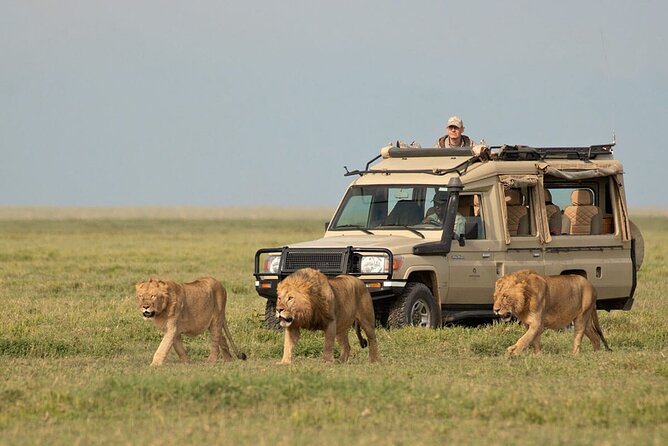
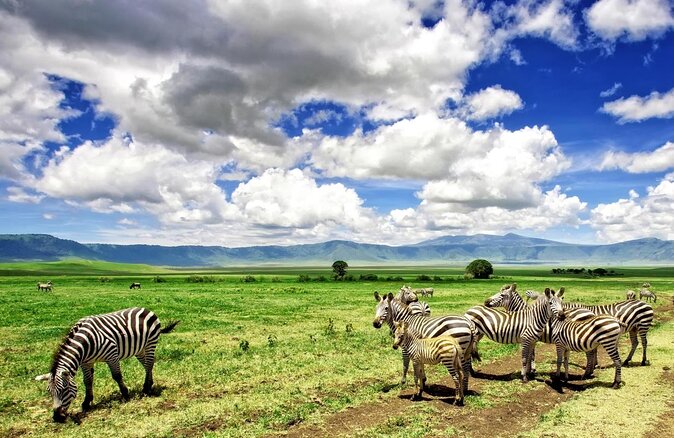
Once inside Serengeti, the route reaches the southern, central, and Seronera Valley areas. The southern zone is known for open savannah grassland and year-round grazing. That attracts wildebeest, zebra, Coke’s hartebeest, waterbuck, Grant’s gazelle, Thomson’s gazelle, and impala.
This is also the day described as including a visit to a hippo habitat. Hippos give you a change from the usual grassland sightings, and watching them gathered in water adds variety to a day already filled with driving.
The name Serengeti comes from the Maasai word Serengit, meaning endless plains. You will understand the idea quickly. The views are broad, low, and open, with wildlife often appearing as small moving shapes before your guide helps you identify them.
The main limitation is time. A seven-hour game-drive period is listed, but the long approach from Arusha means the exact rhythm can vary. Your guide’s skill matters here. Guides named in similar trips include Felix, Simon, Christian, and Bulldozer, but your assigned guide may be someone else. The best guide will help you make sensible choices rather than chase every sighting.
Day two: Moru Kopjes, elephants, and predator country
Day two keeps you in Serengeti for about six hours of game viewing. This is valuable because you are not packing up immediately after one rushed afternoon. More time in the park gives you a better chance to see how the scenery changes and how animals use different areas.
Moru Kopjes are among the most distinctive features on this route. These huge rock outcrops rise from the grassland like islands in a green-gold sea. They break up the flat views and create high points where predators can watch for prey.
The area also has unusual plant life, including candelabra trees and short-lived flowers that appear after rain. The mood can change with the season. One past itinerary found the Serengeti particularly dry in October, with large areas of dry grass and fewer easy sightings. That does not make the park empty, but it can make the animals harder to spot.
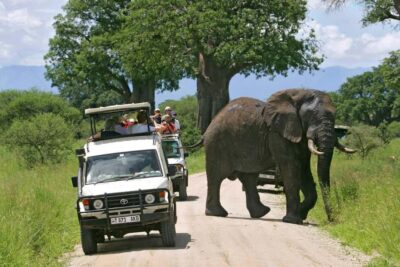
Elephants are found across the plains, and herds may be led by older females. You might also encounter rare black rhinos, although no safari can promise a particular animal. The central area contains rock sites associated with Maasai paintings, including elephants, shields, and abstract patterns.
The kopjes are useful for more than photographs. They explain why animals gather in certain places. Rocks provide shade, shelter, and lookout points. A guide who knows the area can turn a distant movement into a lesson about hunting, grazing, or family groups.
This second day is one of the strongest parts of the route. You have already reached the Serengeti, so the morning is not consumed by the full drive from Arusha. The drawback is that the day remains short for such a large park. If you want a slower Serengeti program with several dawn and late-afternoon drives, you need more than three days.
Day three: down into Ngorongoro Crater
The final safari period takes place in the Ngorongoro Conservation Area and lasts about six hours. Ngorongoro changes the scale of the outing. Instead of a vast plain stretching in every direction, you enter a giant natural enclosure where many animals can be seen within a concentrated area.
The crater is particularly appealing for a short safari. The itinerary describes it as a place where you may see the Big Five in a single day. That is a possibility, not a guarantee, but the compact setting gives you a strong chance to encounter a wide mix of wildlife during one outing.
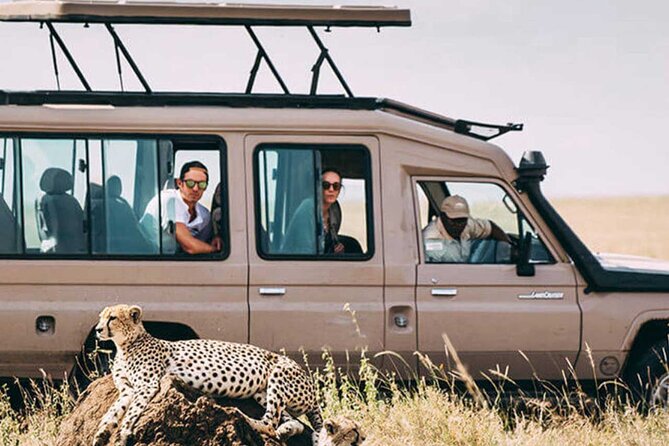
Species listed for the area include wildebeest, gazelle, golden jackals, bat-eared foxes, hippopotamus, African wild dogs, leopards, buffalo, waterbuck, and eland. Some animals are less commonly seen here, including giraffes, oribi, topi, spotted hyenas, cheetahs, and impalas.
That list is useful because it keeps expectations realistic. Ngorongoro is excellent for variety, but no park delivers every species on demand. You may have a day with buffalo, hippos, and large herds but miss cheetahs or giraffes.
The crater also adds cultural and human history to the safari. Maasai families live in circular homes known as bomas in the conservation area. The region is also tied to early human evolution research by Mary and Louis Leakey. This gives the day more depth than a simple animal checklist.
The main drawback is that this is your last day. After the crater visit, you return toward Arusha, so the timing matters if you have an evening flight or another booking. Confirm the expected arrival time before you commit to a tight onward schedule.
More National Park Safaris in Tanzania
- 6 days 5 nights safari Ngorongoro, Serengeti and Tarangire National Parks
★ 5.0 · 39 reviews - 3 Days Safari to Serengeti National Park & Ngorongoro Crater in Tanzania
★ 5.0 · 34 reviews - Arusha: Tarangire National Park Full-Day Wildlife Safari
★ 4.8 · 6 reviews - Arusha: Arusha National Park Day Trip w/ Game Drives & Lunch
★ 5.0 · 4 reviews
Camping, food, and the daily rhythm
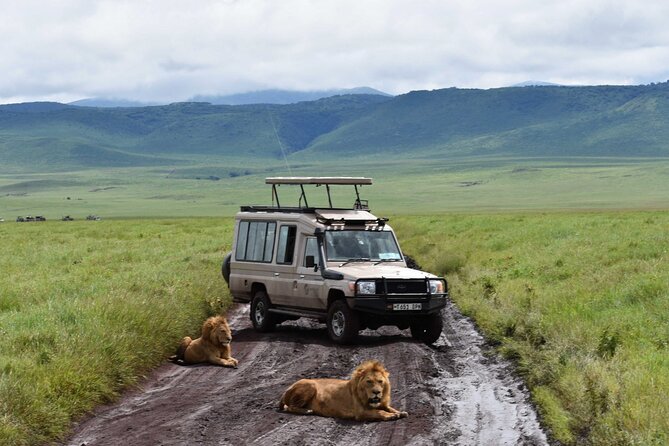
This is a camping safari, and that phrase deserves attention. The trip includes two breakfasts, three lunches, and two dinners. Past descriptions of similar departures praise the safari cook, with food served at picnic sites and meals described as a strong part of the trip.
Do not expect lodge service. Camping is chosen here as the lower-cost way to spend nights near the parks. After long drives and game viewing, a basic tent can feel perfectly adequate, but it will not suit you if you need polished accommodation or a quiet private room.
Ask before departure what the tents include and where the nights will be spent. The information supplied does not give a full accommodation schedule. It also does not specify whether particular sites have extra facilities, so a direct question is worthwhile.
The food appears to be more than an afterthought. That matters because safari days start early and include long hours on the road. A reliable cook can make the difference between enjoying the next game drive and simply trying to get through it.
Guides, communication, and group comfort
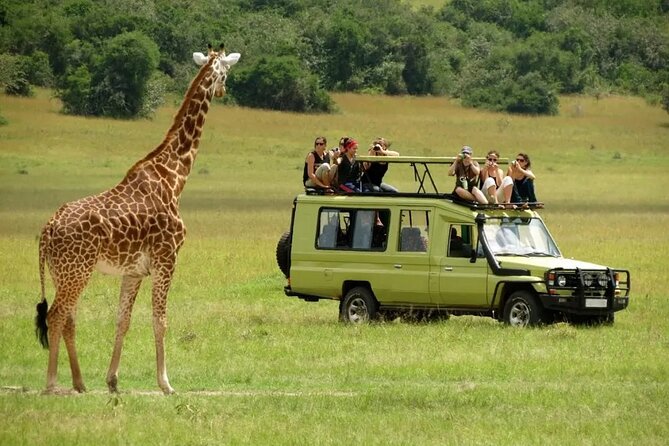
The operator is Kilipath African Safaris. Communication is one of the clearest strengths attached to this trip. Heaven Light is repeatedly named as a responsive contact, and Felix is also described as quick to answer questions by WhatsApp and phone.
On the road, named guides include Felix, Simon, Christian, Mike, and Bulldozer. These names come from different departures, so they should not be read as a guarantee of who will lead your trip. Still, the pattern is encouraging: the guide is central to the quality of the safari.
A good guide does more than point at animals. You want clear explanations of the parks, sensible decisions about where to drive, and help when plans change. One strong account described the driver as friendly and willing to help, while another praised the cook for catering to different needs.
With a group limit of six, you should have a manageable vehicle rather than a crowded bus. Even so, ask how many people are booked on your departure. A smaller group gives you more room for cameras and a better view, while a full vehicle may feel less personal.
Timing, pickup, and practical questions
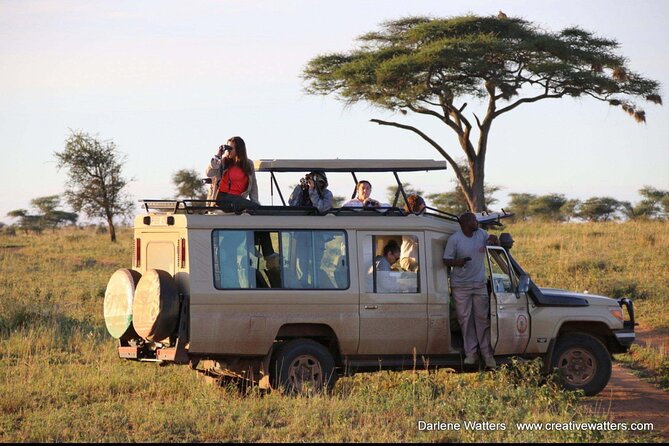
There is one timing detail you should clear up before booking. The itinerary says pickup is at 8 a.m. after breakfast, while the meeting-point information lists a 3 p.m. start time. Those details do not match.
Use the booking confirmation or contact the operator directly to confirm your exact pickup time, location, and first-night plan. This is especially important if you are arranging airport transfers or staying outside central Arusha.
Pickup is offered, and confirmation is provided when you book. Most people can participate, but the schedule involves long drives, several hours of vehicle-based game viewing, and camping. You should be comfortable with those conditions.
The tour has free cancellation up to 24 hours before the local start time. Cancellations or changes inside that window are not refunded or accepted. Visas are not included, and tips for the driver-guide and cook are separate costs.
Who should book this three-day safari?
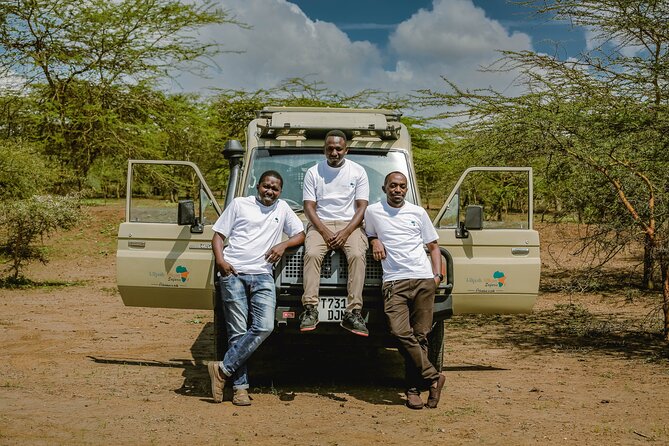
I would choose this trip if you have limited time in Tanzania and want the two major northern parks in one compact program. It also suits first-time safari visitors who want a clear introduction without planning each transfer, park entry, and meal themselves.
It is a good fit for you if:
- You want Serengeti and Ngorongoro in three days.
- You are comfortable with camping and long drives.
- You value a small group more than private control.
- You want meals and safari logistics arranged together.
- You are willing to accept that wildlife sightings cannot be guaranteed.
I would look elsewhere if you want luxury lodging, slow mornings, or several full days in Serengeti. I would also hesitate if you have a fixed flight soon after day three, since the crater visit and return to Arusha can make the final schedule tight.
Should you book it?
Book this safari if your priority is maximum park variety in minimum time. The combination of southern Serengeti, Moru Kopjes, central plains, a hippo habitat, and Ngorongoro Crater gives you a strong first look at northern Tanzania.
Before paying, confirm the pickup time, camping arrangements, group size, and likely guide. If those details suit you, $810 can be fair value for a three-day, small-group safari with meals included. If you want comfort and unhurried wildlife viewing, spend more for a longer or private itinerary instead.
FAQ
How long is the safari?
The safari lasts approximately three days.
Where does the safari begin?
The safari begins in Arusha, Tanzania, with pickup offered from your accommodation.
Which parks and conservation areas are included?
The route includes Serengeti National Park and the Ngorongoro Conservation Area.
How many people can join the tour?
The maximum group size is six people.
Are meals included?
Yes. The package includes three lunches, two breakfasts, and two dinners.
Are visas included?
No. Visa costs are not included.
Are tips included?
No. Tips for the driver-guide and safari cook are not included.
What is the cancellation policy?
You can receive a full refund if you cancel at least 24 hours before the local start time. Cancellations or changes made less than 24 hours before departure are not accepted or refunded.
More Tarangire and Serengeti Safaris in Arusha
- Arusha: Tarangire National Park One-Day Trip
★ 3.9 · 8 reviews - Day trip to tarangire national park
★ 4.7 · 6 reviews - Private Guided Day Trip in Tarangire National Park
★ 5.0 · 5 reviews - Serengeti National Park: Balloon Safari at Dawn
★ 4.2 · 14 reviews
More Volcano National Park Tours in Arusha
- 4 Day Ngorongoro Crater Tarangire and Serengeti National Park
★ 5.0 · 44 reviews
Just added for the parks around Arusha
- Private 4×4 Vitara Safari in Arusha National Park★ 5.0 · 3 reviews
- Day trip to tarangire national park★ 4.7 · 6 reviews
- Arusha: Tarangire National Park Full-Day Wildlife Safari★ 4.8 · 6 reviews
- Arusha: Arusha National Park Day Trip w/ Game Drives & Lunch★ 5.0 · 4 reviews
- 3 Days Safari to Serengeti National Park & Ngorongoro Crater in Tanzania★ 5.0 · 34 reviews
- Arusha National Park: Private Jeep Tour★ 4.8 · 9 reviews
- The Amaizing Private Day Trip to the lovely Arusha National Park★ 5.0 · 5 reviews
- Private Guided Day Trip in Tarangire National Park★ 5.0 · 5 reviews
Tarangire and Serengeti Safaris, compared.
3 Day Serengeti National Park & Ngorongoro Crater Camping Safari
Read our review →
4 Day Ngorongoro Crater Tarangire and Serengeti National Park
Read our review →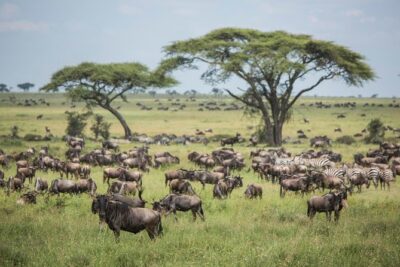
6 days 5 nights safari Ngorongoro, Serengeti and Tarangire National Parks
Read our review →
3 Days Safari to Serengeti National Park & Ngorongoro Crater in Tanzania
Read our review →
Serengeti National Park: Balloon Safari at Dawn
Read our review →